
Deputy Fire Chief talks child car seat safety for National Road Safety Week
The Fort St. John Fire Department has members who are BCAA-accredited child seat safety educators
FORT ST. JOHN, B.C. — May is the home of National Road Safety Week in Canada, with road safety and increased road compliance being major priorities.
One component of keeping every family member safe is ensuring younger family members have car seats.
While the first car seats were manufactured in the 1930’s, their initial aim was not to ensure a safe ride, but rather to elevate younger passengers in a motor vehicle to view their surroundings.
It was not until three decades later, in 1962, when a car safety seat was first introduced. Today, there are various models, beginning with a rear-facing car seat to a booster seat for older children.
Several members of the Fort St. John fire department are British Columbia Automobile Association (BCAA) accredited child seat safety educators.
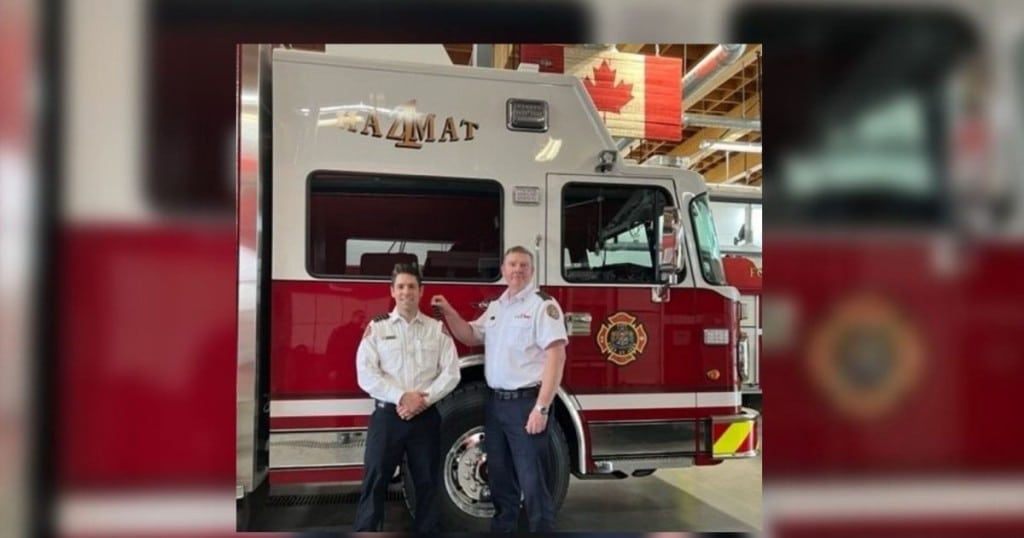
Fort St. John Fire Department deputy chief Matt Troiano spoke to Energeticcity.ca on the importance of the apparatus, adding the department runs a course for parents to learn how to install a child seat.
“Through our website, there’s a form people can fill out if they want some help learning how to install their car seat properly,” said Troiano. “They can fill out the form and arrange a time for us to help guide them.”
Latest Stories
“We typically focus a lot on car seat education, living in a young community with an abundance of young people. Our department having some capable members that are trained to the BCAA accreditation helps ease that concern new parents might be going through.”
For proper installation, Troiano points out a car seat and vehicle operator manual are the references for correct anchoring and usage of a particular car seat model.
According to the Canadian Automobile Association’s (CAA) website, car seats can reduce injuries to infants under a year of age by 71 per cent.
While regulations within Canada are standard, regulations for the final stage of car safety seats, a booster seat, vary depending on the province or territory.
In British Columbia, the standard for discontinuing a booster seat is 145 centimetres (4’9”) or nine years old.
National Road Safety Week concluded on Monday, May 18th 2026.
To sign up for the fire department’s car seat safety program, refer to the department’s website. Included in the registration will be personal information, alongside details about the car seat and vehicle and child’s proper height and weight.
Stay connected with local news
Make us your
home page
Authors

Related Articles

Expansion project delaying shipping and receiving of core from Fort St. John
The core facility in Fort St. John will be unable to ship or receive core due to a warehouse expansion, BCER said.

Court Report: May 11th to May 15th
Today’s court report contains all the sentences handed down in the Peace region between May 11th and May 15th, 2026.

Chetwynd and District Hospital Foundation seeks new board member
The Chetwynd and District Hospital Foundation is looking for a general member to join its board.