
Up to 36 turbines: Details of proposed wind farm south of Taylor revealed
The Peace River Regional District met with Renewable Energy Systems (RES) about the Sweetwater Wind Project between Taylor and Dawson Creek.
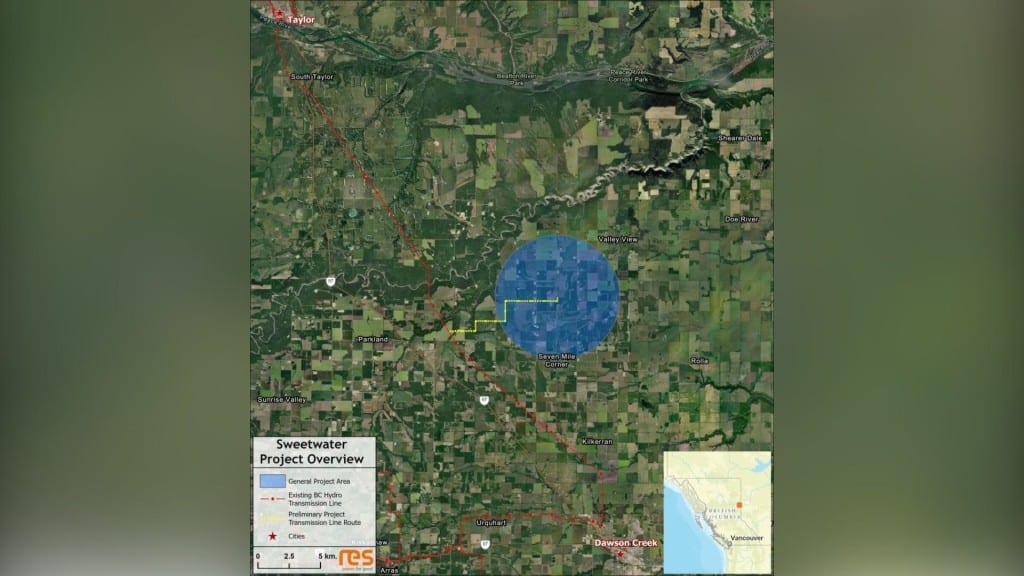
FORT ST. JOHN, B.C. — The regional district met with a delegation for a new 200 megawatt wind energy project being developed between Taylor and Dawson Creek.
During the November 20th meeting of the Peace River Regional District (PRRD) board of directors, a delegation from Renewable Energy Systems (RES) Canada detailed the proposed Sweetwater Wind Project.
Jon Cooper, a project development manager, explained the project was being developed for submission to the 2025 BC Hydro call for power, which opens in January.
The call requires at least 25 per cent ownership by a First Nation in the region, and when asked by the directors, the delegation confirmed they were in the final stages of confirming a partnership and looked forward to sharing information “soon.”
“We’ve been actively working on securing land for this project since the spring of this year,” Cooper said.
Located between the District of Taylor and Dawson Creek off Highway 97, the project had first been explored in 2010. However, the land agreement contracts lapsed because “it didn’t look like BC Hydro was interested in pursuing renewable energy projects with private power producers,” Cooper stated.
Approximately 9,000 acres of land for the project was then re-secured in October 2025, with current estimates stating it will consist of between 25 and 36 wind turbines to produce 200 megawatts of power.
Latest Stories
Leonard Hiebert, director of Electoral Area C, expressed his disappointment in the delegation’s timing, citing calls from his constituents in previous months asking about rumours of a wind energy project being developed in the area, and stating the board’s lack of knowledge on it put the directors in a “sticky situation.”
“I didn’t hear [about this project] from you, I heard this actually from landowners,” Hiebert told the delegation.
“I had to go dig and find [information about this], which doesn’t leave us, as elected official[s], in a really good position when things are happening and we don’t know about it.”
The director encouraged the delegation to hold open houses and answer questions from residents adjacent to the project, not just properties the turbines will be located on.
When asked by the directors when an open house would be planned, the delegation explained it would not be able to do one prior to BC Hydro’s January 5th deadline for the call for power, but would “for sure” have one in 2026, and promised engagement with landowners in the immediate area of the turbines before any open houses take place.
According to the delegation, the project is located within an area with significant oil and gas development. As such, Cooper explained the project intends to utilize existing roads, and bury the collector lines that connect the wind turbines to the project’s substation in order to reduce obstructions for farmers and the appearance of “spaghetti” transmission lines.
Cooper assured the directors that if the project was granted an electricity purchasing agreement by BC Hydro, studies would be conducted to ensure the turbines were set back as much as possible from environmental features, roads, industry facilities and other existing community structures.
“You can’t hide the fact that turbines are massive,” Cooper explained.
“From the ground to the tip of the blade would be over 200 metres, and so you’re not going to be hiding these things with a bush, a fence, a noise wall or something like that.”
Cooper also explained local parks and recreation areas were considered as part of the project.
“There are three parks or recreational areas within the area, we’re 10 kilometres away from all of them; the Peace River Corridor [Provincial] Park, Kiskatinaw [Provincial] Park and [the] Rolla Canyon Ecological Reserve,” Cooper noted.
“All three of those parks are predominantly within [the river valley], so it would be challenging to see [the turbines] regardless.”
The delegation also noted it intended to support the region with a community benefit fund to give back to the area hosting the project.
Cooper explained the project was anticipated to be in operation for at least 30 years, and was just now entering a 12-24 month period of project development.
Following this, RES estimates 12-24 months will be required for permitting and 24-36 months will be needed for construction, ultimately meaning the project could begin generating power in between 2029 and 2032.
RES has also invited residents to submit feedback on the project by contacting sweetwaterwind@res-group.com and visiting the project website.
Stay connected with local news
Make us your
home page
Authors

Related Articles
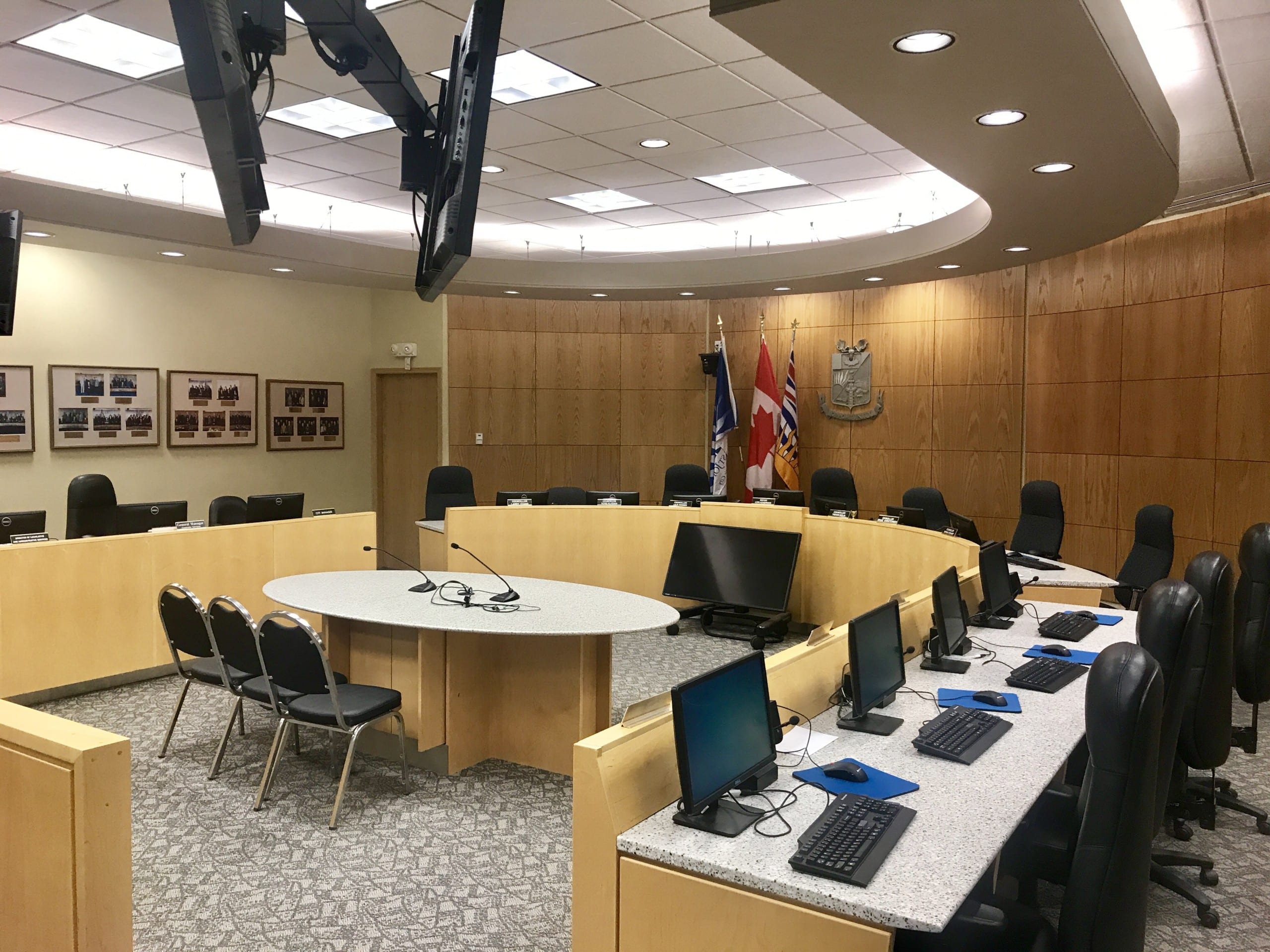
Fort St. John council to move forward with referendum on new pool borrowing
The City of Fort St. John council has begun the legislative approval process involved with borrowing for a new facility to replace the North Peace Leisure Pool.
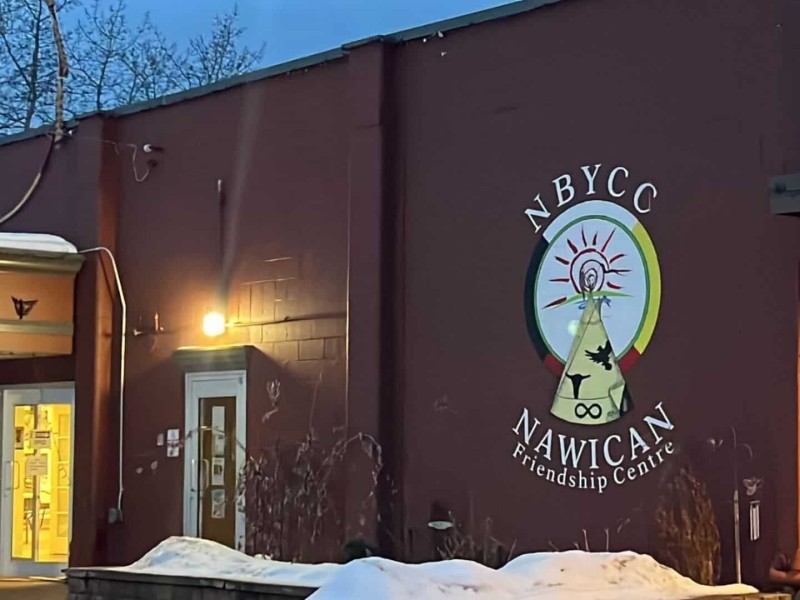
Dawson Creek reopens warming centre due to cold weather
The City of Dawson Creek has reopened its warming centre at Nawican Shelter on 102nd Avenue until March 15th to support the community as the cold weather continues.
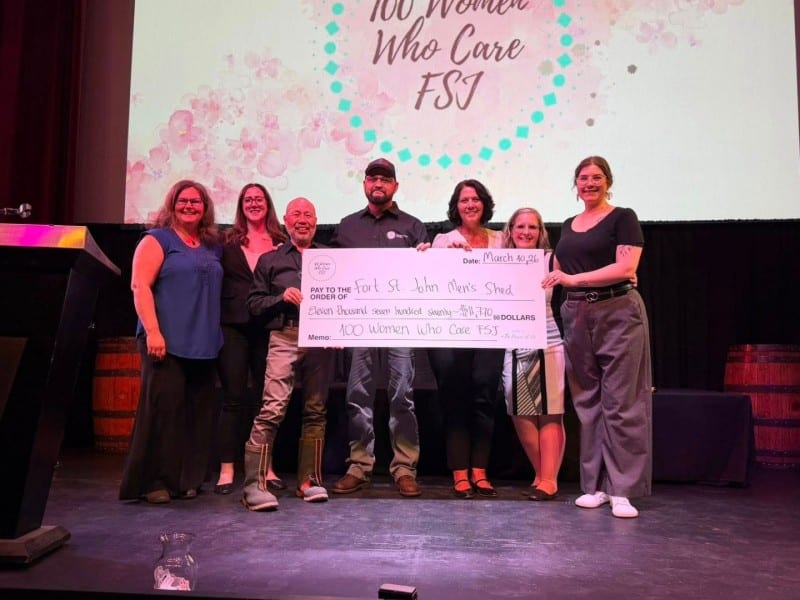
Men’s wellbeing non-profit recieves more than $11K after 12th 100 Women Who Care event
The 100 Women Who Care movement, which traces back to 2006 in Michigan, donated $11,770 to the Fort St. John Men’s Shed after the event on March 10th.