
Drought Assessment sees improved drought conditions amid high precipitation
Multiple snow events in the month of March have contributed to drought conditions in northeast B.C., according to Agriculture and Agri-Food Canada.
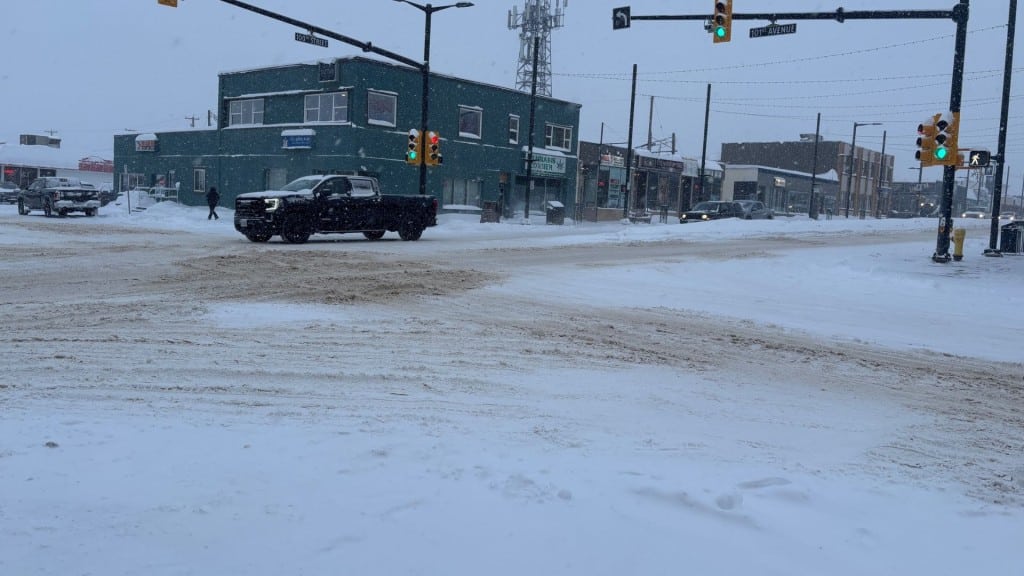
FORT ST. JOHN, B.C. — Northeast B.C. has seen improved drought conditions this fall and winter, leading up to the end of March, Agriculture and Agri-Food Canada said.
In a statement provided to Energeticcity.ca, Agriculture and Agri-Food Canada said “multiple snow events” in March have resulted in slightly above normal precipitation and improved drought conditions throughout northeast B.C.
“Snowpack through the northeast region and specifically Fort St. John’s remained above normal at the end of March.”
In December 2025, Fort St. John recorded 103.9 centimetres of snow, the highest snowfall for that month since December 2013.
Due to the level of snowfall, the City of Fort St. John was forced to hire extra contractors to assist with snow clearing, which resulted in the city exceeding its snow clearing budget for 2025.
While Agriculture and Agri-Food Canada said drought conditions have improved, it also said minimal precipitation through April may result in “degrading conditions” once the April drought assessment is completed.
Soil moisture throughout northeast B.C. remains variable, according to Agriculture and Agri-Food Canada. Despite significant improvement over the past six months, it said soil moisture is still below normal for most southern areas within the region.
Latest Stories
According to the Agriculture and Agri-Food Canada March 2026 Drought Assessment, “In northern British Columbia, drought conditions also improved with reductions in abnormally dry conditions, including throughout the northern portions of the Nechako and Peace River regions.”
The assessment also reported reductions in moderate and severe drought conditions south of Dawson Creek, which it said are the result of high precipitation, which reached up to 200 per cent of normal levels.
Despite recent improvements, ongoing concerns remain regarding longer-term moisture deficits, according to Agriculture and Agri-Food Canada.
Agriculture and Agri-Food Canada says drought conditions can change quickly during spring, depending on spring rain and snow events and the rate of snowmelt.
For more information on current drought conditions, visit the Agriculture and Agri-Food Canada website.
Stay connected with local news
Make us your
home page
Authors

Related Articles

Taylor Fire Rescue responded to 196 calls for service in 2025
Taylor Fire Rescue reported it responded to 196 calls for services in 2025, matching the numbers in 2024.

Drug trafficking investigation leads to arrest for privately manufactured firearms operation
Fort St. John RCMP say a 37-year-old man was arrested in relation to a 3-D printing firearm operation.

Fort St. John RCMP arrest man in Mathews Park robbery
A man was brandishing what appeared to be a gun at staff members of a Fort St. John business on June 18th.