
LNG Canada flares up to 15 times more gas than expected, documents reveal
LNG Canada should be fine to operate by burning 11,000 cubic metres of gas per day, but due to a flaring issue, it reported flaring an average of approximately 205,000 cubic metres per day between July 1st and November 30th, 2025.
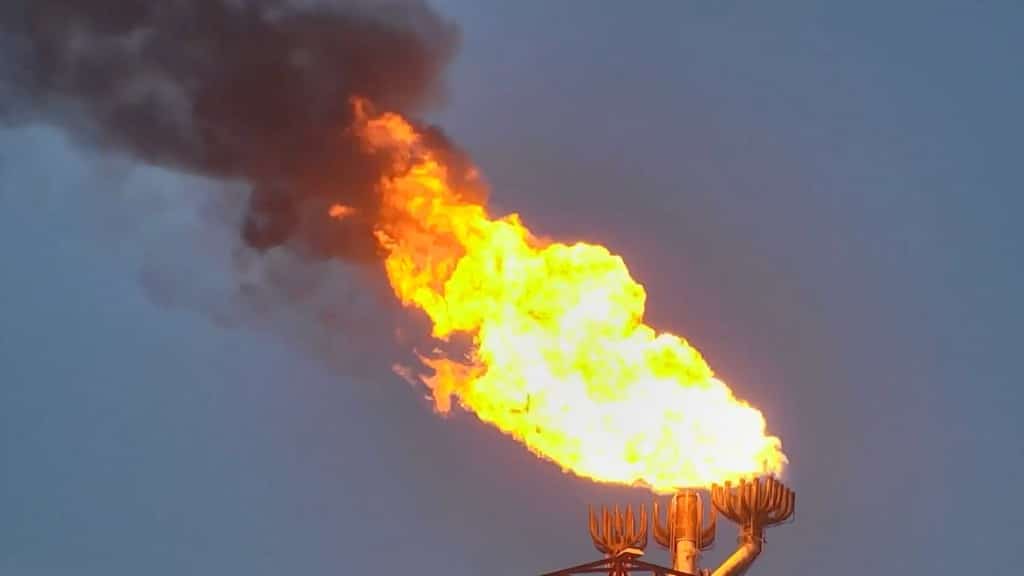
KITIMAT, B.C. — In the fall of 2024, LNG Canada fired up its flare in Kitimat, B.C., for the first time, burning off gas to test its systems. By December, company officials knew something was wrong.
Residents were also concerned, but had little explanation as 90-metre-high flames lit up the night sky and a deep roaring sound permeated the town.
More than a year later, complaints escalated enough that the District of Kitimat council sat down for a special meeting with Teresa Waddington, the deputy chief operating officer at LNG Canada.
About an hour into the meeting, Councillor Terry Marleau asked specifically about flare tips. The response from Waddington was jumbled.
“Uh, I’d say we’re, we’re reviewing the flare tips design,” she said. “We are looking long term at what else could we do other than just reduce flaring in order to make sure that we get to a better place.”
A couple of minutes later, Marleau leaned into the mic: “So, is there an issue with the flare stacks themselves?”
“It’s part of the learning curve of new equipment,” Waddington replied. “So on one hand, you know, great that we brought in a technology that gets such high levels of incineration, which results in less slippage of gas, which means you have lower [greenhouse gas emissions] overall, but on the same note, it’s not perfectly working.”
Latest Stories
Just a few kilometres away from the nearest residential neighbourhood, LNG Canada had been feeding gas into its flaring system by a magnitude of more than 15 times the typical amount to compensate for what was described as an “integrity issue.”
Flaring is the burning of excess or waste gas produced during operations. Methane and other gases that escape the Kitimat facility during processing are sent up a metal tube that stands 122 metres high, where they meet a pilot flame and ignite, converting the raw gas into carbon dioxide, carbon monoxide and water vapour. There are also often additional gases such as nitrous oxide, sulfur dioxide, volatile organic compounds and particulates released during the process.
It’s a necessary safety protocol — if the flare is not designed correctly for the operating environment, the gas may not make it to the pilot flame and instead the flare can creep down the tube and melt the infrastructure. The solution is to increase the pressure, increase the volume of gas and increase the size of the flame. If all the gas is not fully combusted by the pilot, black smoke appears.
The Narwhal reviewed more than 2,000 pages of documents released through Freedom of Information legislation about the flaring issue in Kitimat. They showed how LNG Canada officials were discussing the flaring issues internally — and that they waited approximately four months to tell the provincial energy regulator.
We also spoke with several industry insiders, former employees and local residents and analyzed publicly available permits and other government documents to piece together a timeline of events and impacts on the community.
The documents reveal regulator and industry officials grappled with the issue for months while community members and local politicians asked questions about the flaring, some complaining about excessive noise and others expressing concerns about potential toxic emissions, black smoke and particulate matter.
Among the documents is one prepared by the BC Energy Regulator (BCER), a government agency that oversees the oil and gas sector and other industries.
It detailed an “emerging integrity concern related to one of LNG Canada’s flares” in April 2025, and noted LNG Canada said the issue would take three years to be resolved.
In the meantime, the facility was “routing additional gas” to the flare to mitigate the problem, according to the document. The system should be fine to operate by burning 11,000 cubic metres of gas per day, but due to the issue, it would need to burn at least 170,000 cubic metres daily, the document stated.
Burning the extra gas would result in “a noticeable impact in the community with respect to noise, light and visual disturbance,” according to the regulator’s internal briefing note.
When asked about this document, a spokesperson with the regulator confirmed awareness of the issue and said the average numbers were even higher.
LNG Canada reported flaring an average of “approximately 205,000 cubic metres per day between July 1st and November 30th, 2025,” the spokesperson said via email.
The email included detailed data and showed that on September 1st, 2025, LNG Canada flared 1,708,649 cubic metres of gas, making it the highest single day, according to the data.
The spokesperson did not answer questions about whether the government agency communicated the problem with flaring equipment to the public, instead explaining LNG Canada had “fully mitigated” the integrity issue by “ensuring additional gas is flowed through the flare tip facilitating appropriate combustion.”
The regulator spokesperson added LNG Canada is required to notify residents and local authorities “regarding certain flaring events.”
The Narwhal asked LNG Canada several detailed questions about the integrity issue, including why it did not appear to communicate clearly with members of the public, but a spokesperson with the consortium declined to answer.
“The LNG Canada facility has been commissioning and is currently in its early operations phase,” the spokesperson wrote in an emailed statement. “Flaring during commissioning and early operations is a normal occurrence in any LNG asset. In regular operations, flaring activities and associated noise reduce significantly.”
BCER officials kept the flaring issue quiet for more than six months
Kitimat sits at the end of a long fiord, surrounded by mountains and subject to extreme weather. Dramatic shifts in air pressure, high winds and other local environmental factors exacerbate the problems LNG Canada faced with its flare.
As The Narwhal previously reported, community members have documented black plumes of smoke from the flare and some residents living close to the facility have said their yards, houses and vehicles are often left covered in a thin film of black residue.
According to the documents, LNG Canada — a consortium of foreign-owned companies led by Shell — first reported non-compliance with government permits in May 2025, citing increased emissions were required to mitigate the integrity concern. The company said a replacement part, called a flare tip, would be needed and it could take up to three years to fully integrate the new equipment, but interim changes could be made.
The BCER responded, asking the company to clarify the environmental and health risks of any modifications and said the company might also need to apply to amend its Air Waste Discharge Permit.
In July, the regulator wrote to LNG Canada officials saying the company was on the hook for the additional emissions and needed to fix the problem. The reason, it explained, was that because the additional flaring was for the purpose of “long-term integrity management,” it was not considered a “process upset,” a designation that would exempt it from permit limits.
The regulator also required the company to report any emissions exceedances. After the consortium successfully sent its first shipment of LNG overseas in late June 2025, the regulator also issued a requirement for LNG Canada to file daily reports and updates.
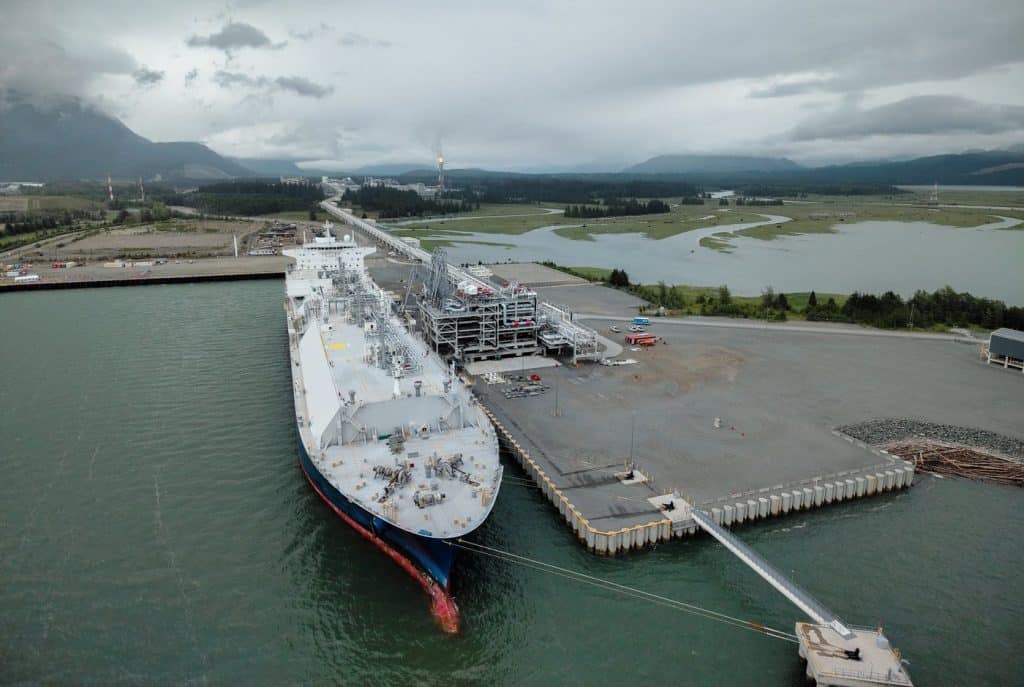
The regulator told The Narwhal the consortium filed six “monthly self-disclosures [related] to document flaring which is not consistent” with the facility’s permits and noted it has not issued any penalties for non-compliance.
“The [BCER] does not disclose information with respect to any ongoing investigations that may be underway, but to date, no penalties have been issued to LNG Canada.”
The regulator also noted it ordered LNG Canada to contract a third-party assessment of air quality in July, which concluded “no measured adverse impacts to air quality from the increased flaring rate.”
“The [BCER] is engaging with LNG Canada to minimize flaring rates from all facility flares,” the spokesperson added.
The Narwhal asked LNG Canada why it didn’t communicate the problems with the flare tip to the public. We also asked for clarification on the nature of the issue, its impacts on operations and the community, including noise, emissions and other issues raised by community members.
The Narwhal asked what had been done to ensure residents were kept informed about the risks posed by faulty or inadequate equipment.
LNG Canada did not directly answer these questions.
“We continue to remain focused on safely operating the facility and minimizing disruptions to the community,” the spokesperson wrote, adding the 37th shipment is scheduled to depart in the coming days.
“We continue to meet regularly with community members, First Nations, local stakeholders and government agencies to listen and respond to any concerns raised about our activities. LNG Canada extends its continued appreciation to the Kitimat community and to the Haisla Nation for their continued support.”
Between September 2024 and January 2026, LNG Canada posted more than 27 notifications of flaring events on its website and social media, some preparing the community for weeks or months of flaring.
“Flaring is a provincially regulated safety measure that ensures the controlled, efficient combustion of natural gas during specific operational phases,” LNG Canada regularly said in these notifications. “It is a critical part of safely operating a facility of this scale and is not expected to be routine during regular operation.”
But the consortium was not telling the public why the flare was so big nor explaining why so many “unplanned” flaring events were occurring.
In early November 2025, for example, LNG Canada published a notification warning residents flaring would extend beyond the “originally anticipated timeframe.” It noted this would mean more “intermittent” noise and more emissions, without explaining why.
Around the same time, the consortium offered to temporarily relocate some residents who had expressed concerns about the noise and emissions, if they agreed to “not make any complaints or raise any concerns or objections with respect to LNG Canada, the LNG facility or the works with any third parties, including but not limited to members of the media, the [BCER] or the District of Kitimat” related to flaring activities.
But complaints from residents continued to come in.
Just a few months ago, in that late November 2025 council meeting, Waddington addressed questions about the flaring from Marleau and other members of council. She was accompanied by a sound analyst hired to monitor ambient noise over Kitimat.
There had been more than 30 complaints from the town’s residents about unexpected noise since the LNG export facility started flaring excess gas a year earlier, Waddington said at the meeting. The council wanted to see the results of the consortium’s monitoring, understand the cause and hear how the company was managing the disruption.
Waddington assured Marleau and council, the company was investigating.
“If you look at how the LNG Canada startup has gone, it’s actually been smoother than most,” Waddington concluded. “We are actually kind of setting the bar.” On January 5th, 2026, LNG Canada published its first notification of the year, of a week-long flaring event that had already begun.
Stay connected with local news
Make us your
home page
Related Articles

Blueberry River First Nations signs revenue-sharing agreement with pipeline construction company Strait
The agreement with Strait announced in April means the company will be the official pipeline and mechanical contractor partner to Blueberry River First Nations
Report suggests a gap in B.C.’s ‘sustainable workforce planning’
A recent report from the Pembina Institute suggests a gap in B.C.’s “sustainable workforce planning”
BC Government investing in projects in Northeast B.C.
The B.C. government has invested in numerous energy projects across the province, including several in northeast B.C.