
BCER, First Nations and others ask questions of Dawson Creek’s Peace River pipeline plan amid water supply crisis
Dawson Creek’s proposal for a $100-million water pipeline to a new water source – the Peace River – has been met with both support and criticism in its early engagement.
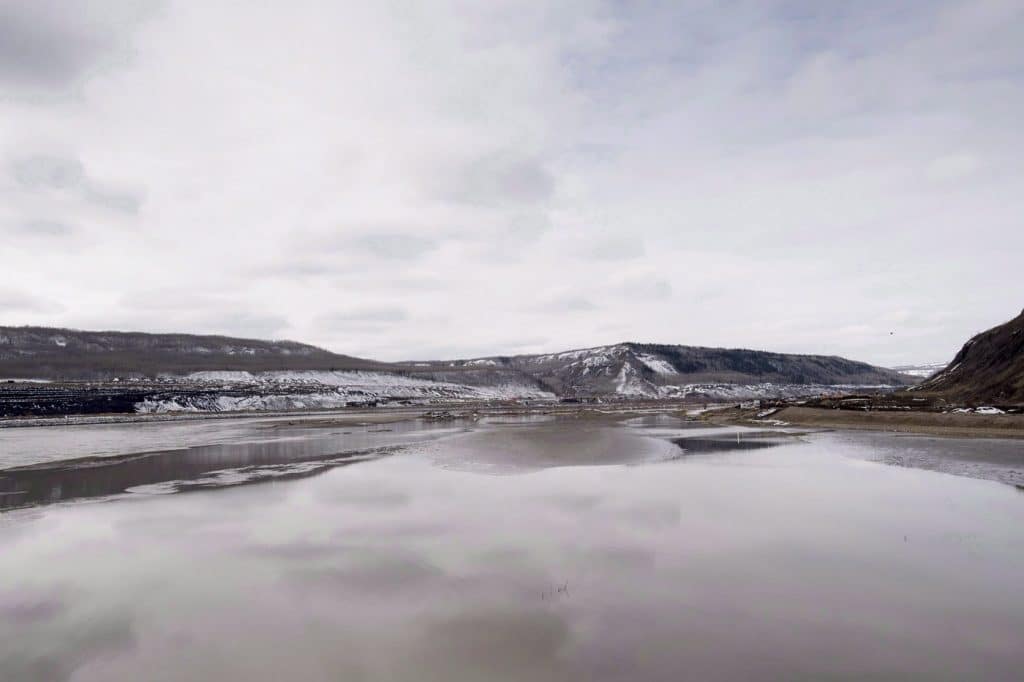
DAWSON CREEK, B.C. — Dawson Creek’s proposal for a $100-million water pipeline to the Peace River has been met with both support and criticism.
A document uploaded to the B.C. Environmental Assessment Office (EAO) platform, flagged as an ‘Issues Tracking Table for Early Engagement’, details written submissions about the project from organizations like the Peace River Regional District (PRRD), BC Energy Regulator (BCER) and Ministry of Water, Land and Resource Stewardship.
This comes after the city had applied to the EAO to exempt the project from a full environmental assessment certificate.
It is trying to fast-track approvals for the project because Dawson Creek is currently in a “state of emergency” as it faces low water levels in the Kiskatinaw River, which is the city’s current water source.
The City of Dawson Creek hopes the Peace River represents a permanent and long-time solution to meet the water demands of the city.
The construction of the water pipeline would include the installation of four to six groundwater extraction wells, a river intake pipe, pumping stations and a water pipeline spanning 52 kilometres from the Peace River to Dawson Creek.
In its EAO submission, the BC Energy Regulator wrote it supports the proposal to secure the Peace River as a long-term source for the city but does not support the city’s daily withdrawal volume.
Latest Stories
It said: “Not in support of augmenting their daily withdrawal volume by more than double and more than four times annual allocation to facilitate industry water sales.
“There is minimal rationale provided supporting such a massive increase in water demand.”
The regulator suggested the city should consider decreasing the withdrawal and annual allocation request to below Environmental Assessment triggers.
Addressing this demand, Devon Aaroe, water project head and general manager of major infrastructure and development for the City of Dawson Creek, told Energeticcity.ca: “We’ve asked for 14.6 million cubes a year. Our community only takes about two to 2.5 million cubes per year.
“I guess that you really ask for what you think you’ll need and you ask once, because you can’t really reopen those negotiations with the ministry.”
Aaroe said this is a 50 to 100-year project, it raises many questions.
“What does that look like for our population? What does it look like for industry needs, for agricultural needs, what kind of water would we need to use?
“And that’s where we kind of landed on that number.”
Talking about how the city is going to fund the project, Aaroe said: “We’re looking at it being $100 million for capital costs and then millions of operational per year.
“And our community just simply can’t sustain that. So one of the models we were looking at when we went through the exemption process was an industrial model where we sell a portion to offset the costs of operation.”
However, the BCER had doubts about industry wanting to purchase surplus water from the city.
It said: “Industry is unlikely to commit to additional cost of trucking or additional pipeline for water transfer when they are increasingly securing their own long-term licences at their strategic points of need.”
The BCER also asked the city if it will give up its current water licence and cease to draw water from the Kiskatinaw River.
On the other hand, McLeod Lake Indian Band pointed out the city had not set up a meeting to discuss the project.
It also raised concerns about water sales to the oil and gas industry, the potential for high water use and the impacts that could have on treaty rights.
Additionally, Saulteau First Nations had concerns about the water levels in the Peace River.
They said: “We understand the Peace River is overallocated with water licences even without adding the Dawson Creek new withdrawals.
“We are concerned about upstream impacts on water levels and water availability.”
Aaroe said: “We are going to use this year to have more conversations, to come back to our First Nations neighbours, come back to our agencies, speak with those technical advisors who provided comment, and really understand where they’re coming from, and see if we can find a solution that fits for our region.”
Stay connected with local news
Make us your
home page
Authors

Related Articles

Measles cases remain static across B.C. in latest report
The BC Centre for Disease Control has reported no increases in measles cases in its second weekly report of March 2026 on the 12th.

Fort St. John woman alleges mother sexually assaulted at Peace Villa
Amber McGill alleges her mother, who currently lives in Peace Villa, was the victim of sexual assault at the long-term care home.

Man sentenced to nearly four years jail time for Dawson Creek home invasion
Adam Dahr was sentenced on March 10th, 2026, to jail for nearly four years for a home invasion in Dawson Creek in 2024.