
Researchers raise alarm over carcinogenic chemicals found in hair, urine of pregnant women in South Peace
Canadian Association of Physicians for the Environment are raising awareness about data suggesting adverse health outcomes of people living near oil and gas operations.
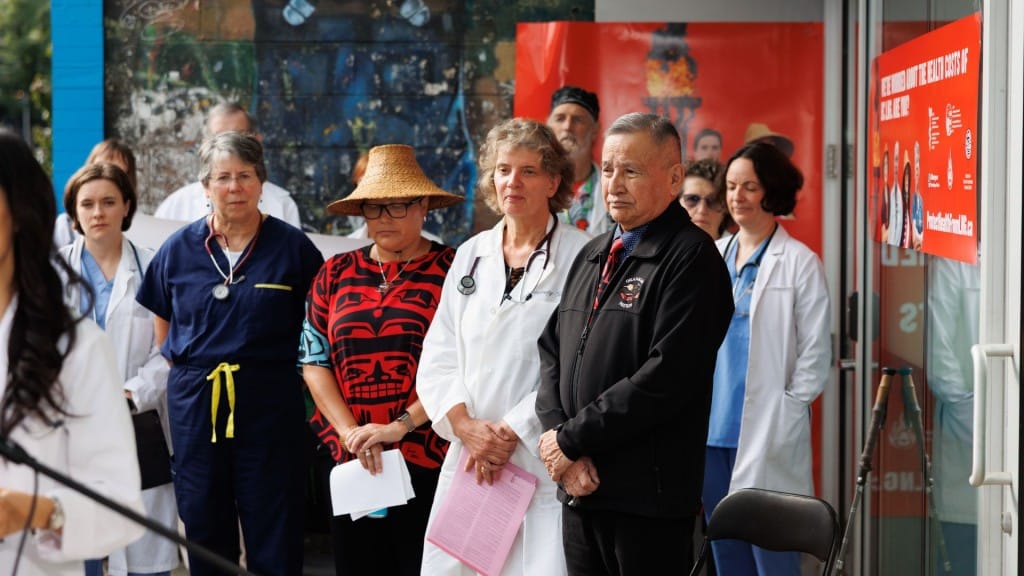
FORT ST. JOHN, B.C. — Researchers are trying to raise awareness about data suggesting adverse health outcomes of people living near oil and gas operations.
Dr. Ulrike Meyer is a physician based out of Dawson Creek and a member of the Canadian Association of Physicians for the Environment (CAPE).
Meyer, alongside colleagues from CAPE, urged the federal and provincial governments to fund a review of the health impacts the liquidified natural gas (LNG) industry has on residents back in September.
Local News Straight
to Your Phone
Download our app today!
Available on Android and iOS devices
Some of the claims made by Meyer and her CAPE colleagues have been disputed by groups like Resource Works, which describes itself as a not-for-profit advocacy group championing Canadian natural resource development.
In an interview, Meyer told Energeticcity.ca that research into the health impacts of LNG and fracking activities only really began after 2014, with much more done in the United States than in Canada.
“We had the fortune of [a researcher who] came for a pilot study in 2016 in the South Peace,” Meyer explained, “and did a toxicology study on pregnant women.”
Energeticcity.ca wasn’t able to ascertain the exact location where the pilot study was conducted.
Latest Stories
That pilot study, according to Dr. Meyer, saw hair, nail and urine samples collected from those pregnant women, analyzing them in an effort to identify substances related to fracking and drilling.
“She found benzene metabolites being elevated in these women, and the levels were higher in the Indigenous population,” she said. “Then, the hair showed increased levels of trace metals — manganese, aluminum, strontium — and the barium was really shocking, because barium is rock bound in the Montney formation.”
Barium isn’t found in its pure form in nature, due to its high reactivity; it’s only found within other rocks and ores that would be disturbed and destroyed by processes like fracking.
Pilot studies are small-scale research projects used to determine the feasibility of future, larger studies.
According to Meyer, the researcher ultimately returned to the Peace region in 2019 for a larger study, collecting samples from more than 80 pregnant women as well as of the air and tap water in their homes.
Meyer said the larger study’s assessment of hair and urine samples was similar to those of the pilot study, while the air and water samples raised some additional concerns.
“The indoor air of these pregnant women showed, in our region, in over 50 per cent of the households, over 40 volatile organic compounds,” Meyer explained. “That can be benzene, toluene, formaldehyde, a whole class of chemicals which can be damaging to your health and cancer-causing.”
Meanwhile, tap water samples showed four volatile organic compounds in over 50 per cent of the households that were involved in the study.
“This population lived closer to fracking compared to the reference population, who were not exposed to fracking,” Meyer said. A reference population is a group of people meant to represent the average being compared against in a study like this.
Meyer was later part of a team of researchers who looked into recent scientific literature regarding the effects of fracking and the LNG industry on pregnant women and their children. Her team consulted more than 50 studies, including the one focused on people in the South Peace.
“The large majority [of the studies we consulted] reported harmful effects from living near fracking sites, including impaired fetal growth, premature birth and congenital malformations on pregnant people and their newborns,” she said.
“Other studies found that living close to fracking sites may lead to a higher risk of asthma flares, heart disease, childhood cancer and overall mortality.”
Meyer said her team’s assessment also found that at least 14 chemicals used in the fracking process are known carcinogens, meaning they’re known to cause cancer.
She also said 43 per cent are “potential reproductive and developmental toxicants” and other substances can induce inflammation or disrupt hormone activity.
“I think, in the last five years, we also see higher cancer incidences,” Meyer said. “We do not have the statistics on it, because the BC Centre for Disease Control [BCCDC] recorded its last report from 2015 to 2020.”
In that timeframe, Meyer said the only community in the area that stands out is Chetwynd, which has a higher rate of breast and lung cancer in women.
“It would be interesting to find out what the current data is and what the course is for Chetwynd,” Meyer said. “Chetwynd also had an increased rate of COPD.”
Also known as chronic obstructive pulmonary disease, COPD is a group of lung diseases that gradually make breathing more and more difficult.
Data on the BC Cancer analytics dashboard, which includes up to the year 2022, indicates higher-than-average rates of lung cancer in the Peace River South local health delivery area in recent years.
Despite lacking more recent hard numbers, Meyer says she’s had multiple colleagues over the last few years remark anecdotally that they see higher incidence of cancer in Dawson Creek and the surrounding area than in other places they’ve worked.
“Overall, it’s concerning that we ignore the potential harm to those living nearby this industry, and [the government] is so enthusiastic to expand this industry,” Meyer said. “They neglect to look at these important findings.”
Meyer said the fracking industry is overwhelmingly located in rural and remote parts of Canada with large populations of Indigenous people, who she says are already compromised in some ways due to systemic and structural inequities.
Alongside her colleagues within CAPE, Meyer advocates for pausing expansion of the Canadian LNG industry until further research can be conducted into the health impacts it’s having on residents.
“The study quality and data [available now] remain imperfect,” Meyer said. “We have a small population in the northeast, but there’s lots of studies in areas where there are denser populations, so maybe it’s time to reconsider our policy direction and look at the available evidence.”
In a rebuttal of Dr. Meyer’s public comments as part of CAPE, Resource Works argued that cancer rates in Chetwynd aren’t linked to fracking.
According to the rebuttal, the majority of wells near Chetwynd were drilled decades ago and are no longer active, meaning there’s little evidence to connect fracking activity to local cancer rates.
According to reporting from the Narwhal, Resource Works received seed funding from the Business Council of British Columbia in 2014. At the time, the council’s members included a large number of oil and gas companies.
Energeticcity.ca approached Northern Health to ask about data on health outcomes in the South Peace, but it said it cannot comment.
Energeticcity.ca also reached out to the District of Chetwynd and some energy companies with significant operations in northeast B.C., but did not hear back in time for publication.
Stay connected with local news
Make us your
home page
Authors

Related Articles
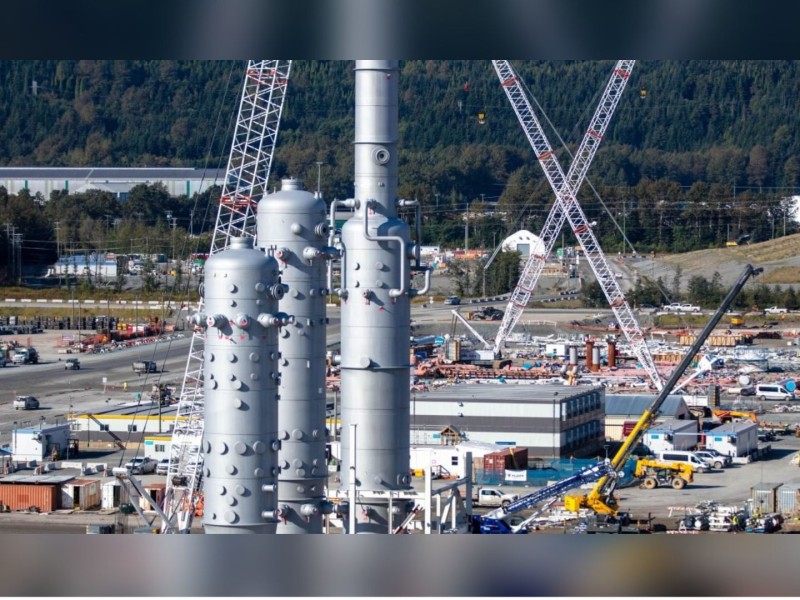
New agreement moves Coastal GasLink pipeline project closer to second phase
TC Energy has reportedly signed agreements with LNG Canada to expand its Coastal GasLink pipeline.
PRRD to talk wind energy at local government convention
The Peace River Regional District is raising concerns about wind energy projects in a resolution to the North Central Local Government Association (NCLGA) convention in May 2026.
Innergex moves forward with two Peace region wind energy projects
Innergex has updated the Peace River Regional District about the Stewart Creek and Bessie wind projects.