
Massey Lectures makes stop in Fort St. John
Universal Human Rights: In Fort St. John and Beyond took place at a packed Lido Theatre on Saturday, October 4th.
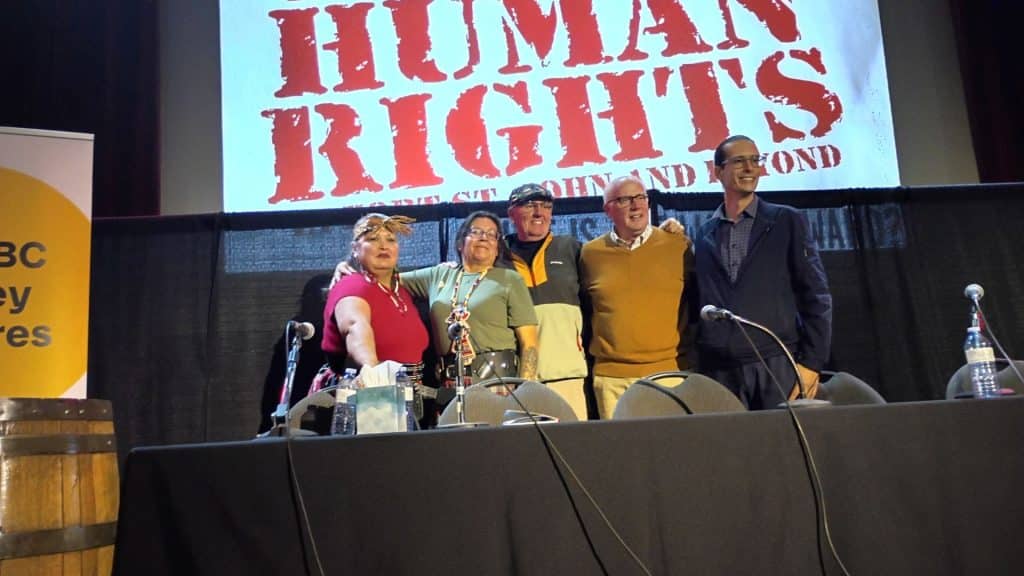
FORT ST. JOHN, B.C. — Human rights in the Indigenous community was at the forefront of a discussion in Fort St. John.
Moderated by human rights lawyer Alex Neve, ‘Universal Human Rights: In Fort St. John and Beyond’ took place in front of a packed crowd at the Lido Theatre on Saturday, October 4th.
Named after the former Canadian governor general Vincent Massey, the series highlighting complex contemporary issues first began in the 1960s and is organized by the CBC.
Local News Straight
to Your Phone
Download our app today!
Available on Android and iOS devices
The gathering was opened by Walter White from Enoch Cree Nation, who opened and closed the event with a drumming performance.
The crowd was welcomed by Paul Plater, the chief financial officer of the Indian Residential School Survivors Society (IRSSS), who reminded the crowd of the “troubling and turbulent times” in the world in 2025.
“[With] the rise of hate, racism, sexism, the climate crisis, wars and genocide, trade wars and the economy, housing and affordability, what is the way forward?” said Plater. “How significant [is] the promise of universal human rights when it comes to reconciliation with Indigenous peoples and to addressing violence against Indigenous women and girls?”
Plater then introduced the crowd to Neve, a former secretary at human rights advocacy group Amnesty International Canada, who spoke to those in attendance about people “feeling worried, fearful [and] off balance,” not just in Canada, but around the world.
Latest Stories
He added it was “a somber honour” to be speaking about Indigenous rights during the National Day of Action for Murdered and Missing Indigenous Women, Girls and Two-Spirit persons (MMIWG2S) with vigils happening nationwide.
“We don’t know where to look for answers,” said Neve. “All of you coming out this afternoon reminds us of exactly where we need to look, and that’s to each other.
“It is a day, obviously perhaps above all, for remembrance, but it is also a day to lift up resilience and courage. It’s certainly, and here’s the proof of it, a day to come together in solidarity and common cause.”
Neve then introduced the panellists for the afternoon, which included Angela White, executive director of the IRSSS, and the society’s MMIWG2S coordinator for the north Connie Greyeyes.
They were joined alongside Saulteau First Nations (SFN) councillor Donovan Cameron and his father, former SFN chief Stewart Cameron.
Each told their story, with White speaking about human rights, saying “knowing all these little things” the Indigenous fight for are “not meaningless.”
She added that racism she has encountered throughout her life, even in the present day, puts “the shackles on our ankles” of both the non-Indigenous and First Nations communities moving forward together.
White said: “My late grandmother has always said, ‘we are not going anywhere as a people…you aren’t going anywhere as our neighbours.’ So doesn’t it make sense that we start living in harmony together so that we can grow with equality and the vision that is for the betterment of our community?”
The younger Cameron talked to the crowd about the importance of recognizing and acknowledging Indigenous rights in terms of industry, especially in the digital age.
He spoke of initially working at the Treaty 8 Tribal Association as a receptionist, where his knack of computer knowledge led to a career in geographic information systems.
“They said because of my technical background, they had another job for me,” said Donovan. “This gentleman was there making maps…and he just wanted me to make him a spreadsheet. It was my job to do for the summer, and I did it in three days.
“He’s like, ‘make a map.’ When I made that map, we went downstairs and there was a meeting with all the chiefs and the Oil and Gas Commission [now the BC Energy Regulator]. They were trying to figure out where these Nations had interest. This map that I printed had a big boundary on it, and we put it down there…
“This [BCER] man’s ears went red, and he started to sweat. And I had never seen a reaction like this before, because it showed me that what I was doing was extremely important. What I was doing was collectively acknowledging my people’s universal rights and their ability to assert that, to own their story, to capture their narrative, to interpret their own information.”
Greyeyes then spoke next. Fighting back tears, Greyeyes was raised by parents who were residential school survivors.
She talked about herself becoming an “accidental advocate” beginning with a cousin’s brutal murder in the 1990s.
Greyeyes contributed to the ‘Out of Sight, Out of Mind’ report from 2016 by Amnesty International, focusing on the effects of industry development and what it can do to Indigenous communities, saying during her speech about the racism both herself – and her children – experienced.
“I encourage you to look at it and read it,” said Greyeyes. “You can understand the impacts of resource extraction and what it does to communities and to our lands and to our people,”
“Working with families of missing and murdered kids, women, men. It really affected my parenting. Just recently, I had to apologize to my boys, because [unlike the Indigenous] you don’t have to worry that somebody’s going to hurt any kids because of the colour of their skin…
“I had to apologize to them, because it isn’t normal to not let your children walk to school. You know, people are like, ‘oh my God, you give your kids a ride to school every single day.’ There were very few days that I never drove them to school.”
The elder Cameron rounded out the panel, speaking of accepting and respecting each other, with the turnout “giving him hope” for future generations.
“We bless each other by coming together in unity, and it gives me hope,” said Stewart. “Basic universal, human rights in our society, in our world, we can all be a part of it just by you showing up.
“It’s about understanding each other’s world views without having a need to try and change each other. We can still be good neighbours.”
The Massey Lectures took place on Saturday, October 4th at the Lido Theatre and will be broadcast by the CBC at a later date.
Further details about the Massey Lectures are available on the event’s website.
Stay connected with local news
Make us your
home page
Authors
Related Articles
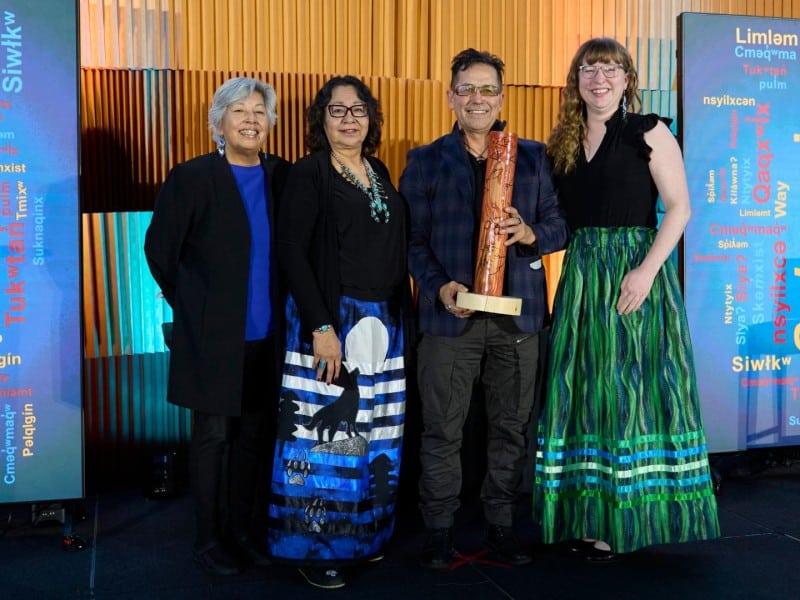
Tse’k’wa cave wins B.C. tourism award for Indigenous experience
Charlie Lake’s Tse’k’wa Heritage Society won the Indigenous operator or experience award at the Tourism Industry Association of BC (TIABC) conference in Kelowna.
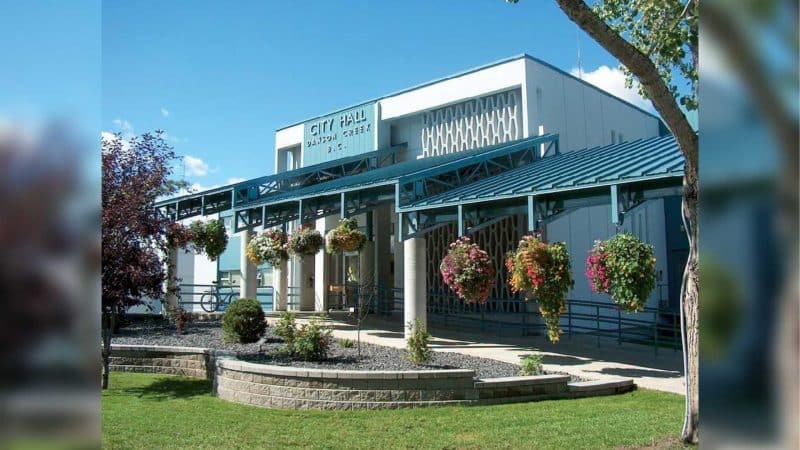
Organizers of second Cultural Gathering of Nations seek sponsorship from Dawson Creek council
The organizers behind the Cultural Gathering of Nations at the Ovintiv Events Centre have sought sponsorship from the City of Dawson Creek.

Election for Saulteau First Nations chief and council draws near
An election to select a new council and chief for Saulteau First Nations in Moberly Lake will take place on Monday, March 30th.