
Federal support falls short amid canola tariffs, says BC Grain Producers Association president
BC Grain Producers Association president Malcolm Odermatt said measures, which include $370 million in biofuel production incentives and expanded interest-free loan limits, won’t be enough to offset massive losses caused by trade disputes.
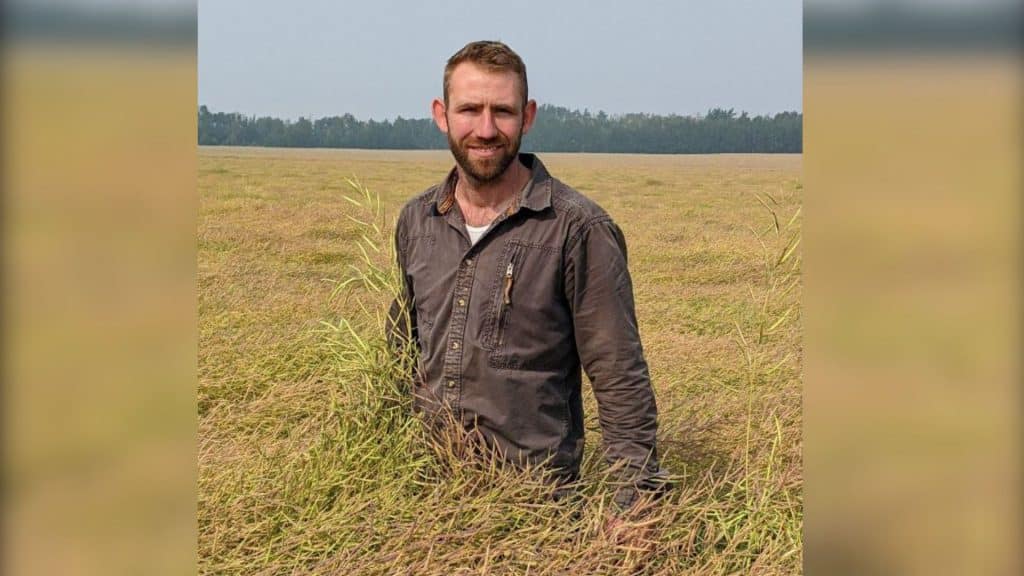
FORT ST. JOHN, B.C. — Some local canola farmers say new federal funding won’t be enough to offset massive losses caused by ongoing trade disputes and steep tariffs.
The measures, announced Friday, September 5th, include over $370 million in biofuel production incentives over the next two years, expanded interest-free loan limits and new investments in marketing Canadian products abroad.
“We cannot control what other nations do, we can control what we give ourselves – what we build for ourselves,” Prime Minister Mark Carney said in a statement announcing the measures and other broader plans for Canadian businesses and industries.
“In the face of uncertainty around the world, we are ensuring that our workers and businesses will prosper by building Canada’s strength at home.”
However, Malcolm Odermatt, president of the BC Grain Producers Association and farmer in Baldonnel, says many producers remain frustrated, especially as trade disputes continue to squeeze profits.
“I quickly did some calculations the other day, and with $370 million divided across about 43,000 canola producers in Canada, that works out to just over $8,000 per producer,” Odermatt told Energeticcity.ca.
“Most producers are losing between $100,000 and $150,000 minimum right now because of these retaliatory tariffs.”
Latest Stories
The primary driver, according to Odermatt, is the 75.8 per cent retaliatory tariff on canola imposed last month by China.
The government also announced changes to the Advance Payments Program (APP), which provides interest-free loans to help producers manage cash flow. The cap for canola producers has been doubled from $250,000 to $500,000 for the 2025 and 2026 program years.
Odermatt says the expanded limit will help producers in the short term but could also create longer-term challenges.
“Yes, it does help, but it just gets producers into more trouble because we’re able to dig a deeper hole,” he said.
“It’s not free money, it’s just an interest-free loan for up to 12 months.”
Despite the challenges, Odermatt remains cautiously optimistic about the long-term demand for Canadian canola. He noted Canada produces over 60 per cent of the world’s exported canola, making it unlikely that buyers, including China, can avoid Canadian supply entirely.
“Canada’s a heavy hitter when it comes to canola,” he said.
“If China wants to continue buying, they’re going to have to figure out a way to get Canadian product, even if it’s through other countries. We’ve seen it before: they stop buying directly, but the demand picks back up.”
Opposition leader Pierre Poilievre criticized the government’s approach in a statement issued Tuesday, saying Prime Minister Carney has failed to secure a deal with China to remove the tariffs.
He argued expanding the Advance Payments Program isn’t enough, pointing to comments from the Canadian Canola Growers Association that “farmers should not be expected to borrow their way out of this situation.”
For more information on the measures to support canola producers and other Canadian industries, visit the Prime Minister’s website.
Stay connected with local news
Make us your
home page
Authors

Related Articles
Economic growth now tops environment as priority in energy policy, poll suggests
OTTAWA — More Canadians now say economic growth should be a bigger priority in Canada’s energy policy than protecting the environment, a new Angus Reid Institute report suggests. The pollster released a report Monday indicating 61 per cent of Canadians now see economic growth as the biggest priority in energy

Northern Lights Choral Society to host annual spring concert
The Northern Lights Choral Society’s spring concert – From Earth to Sky – has been scheduled for May 31st at 6 p.m. at the North Peace Cultural Centre.

Energeticcity.ca Weekly Review: Wildfire Coverage 2026
In this edition of the Weekly Review, we share our plans for our 2026 wildfire coverage. Plus, the most-read stories of the week.