
Ministry of Agriculture lays out pressures on B.C farmlands
Greg Bartle, Land Use Planner with the Ministry of Agriculture, presented the Peace River Regional District (PRRD) outlining the pressures on the province’s farmlands.
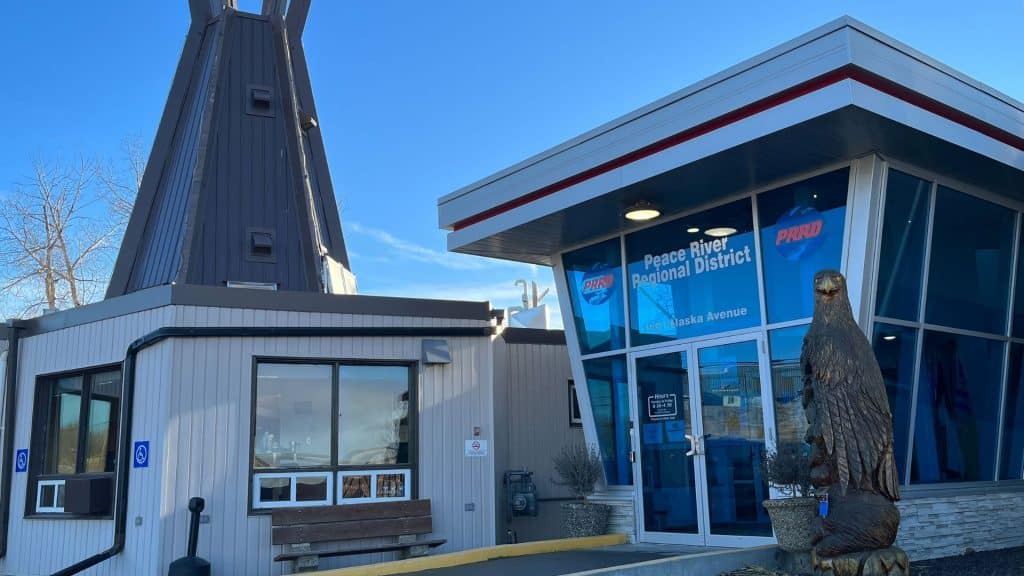
DAWSON CREEK, B.C. — Greg Bartle, Land Use Planner with the Ministry of Agriculture, presented the Peace River Regional District (PRRD) outlining the pressures on the province’s farmlands.
At the PRRD’s May 30th meeting, Bartle says he works with regional Agrologists to support initiatives and programs that strengthen farming in BC’s communities and regions.
According to Bartle, agriculture is a significant contributor to the province’s economy and continues to grow, generating $4.03 billion in 2020, $4.37 billion in 2021, and $4.85 billion in 2023.
“The [agriculture] sector holds its own, its stable,” said Bartle.
Bartle’s presentation laid out six pressures on the Agricultural Land Reserve (ALR) and farming.
The ALR is five per cent of the province’s land base showing a mix of capabilities. 54 per cent is crown land, and seven per cent is not available for farming.
“Even within that 5 per cent, roughly 3 per cent is either treed or made of lakes and rivers, so only 2 per cent is actually farming ready,” said Bartle.
Latest Stories
The cost of farming has seen significant increases in costs — 18 per cent in 2021, and eight per cent in 2020 and 2022.
“Agricultural land values in B.C are the highest in Canada,” said Bartle.
Another pressure is urbanization, with B.C’s population growing and urban infrastructure following as more people move to the province.
Housing demands and prices are rising with homes and rentals, and B.C. is the most unaffordable province for housing.
Area B Director Jordan Kealy noted the financial strains and impacts on farmers.
“Most farmers work a full-time job at the same time as to pay for their farms on top of that,” said Kealy.
“Children see their parents running a farm and the toll that it takes on the parents and the financial burden that they have to go through.”
The last pressure mentioned was the critical shortages of industrial land south of the province.
Bartle says redeveloping industrial land is incredibly profitable for developers and generates tons of new taxes for local governments.
Wrapping up his presentation, Bartle explained that local governments can help with agriculture with advisory committees, area plans, zoning bylaw updates, and more.
“Local government elected officials can make a difference through their decision-making,” said Bartle.
Bartle encouraged the board to help farmers by reducing burdens and enacting bylaws that are fair and easy to understand, while also creating buffers between farmland and other uses.
Kealy pointed out that he did not see anything that would alleviate financial costs, saying that adding regulation does nothing to bring down costs.
“I don’t see anything that by adding more regulation that you are helping the farmers, you need to make it easier for them to be able to farm,” said Kealy.
The full presentation can be viewed below:
Stay connected with local news
Make us your
home page
Authors

Related Articles
Staffing challenges necessitate diversion at Fort Nelson General Hospital
The closure will last until 7 p.m. on Sunday, May 3rd, according to Northern Health.

Energeticcity.ca Weekly Review: Youth Athlete of the Month
In this edition of the Weekly Review, the Youth Athlete of the Month is back. Plus, the most-read stories of the week.
(UPDATE) Baldonnel fire now listed as ‘under control’, according to BCWS
The four-hectare wildfire was reported during the evening of Saturday, May 2nd