
Doig River First Nation Elders lead burial ceremony for ancestral remains, share concerns over Site C environmental impacts
Elders of Doig River First Nation (DRFN) led a burial ceremony last month for ancestral remains exhumed from within the Site C reservoir inundation zone.
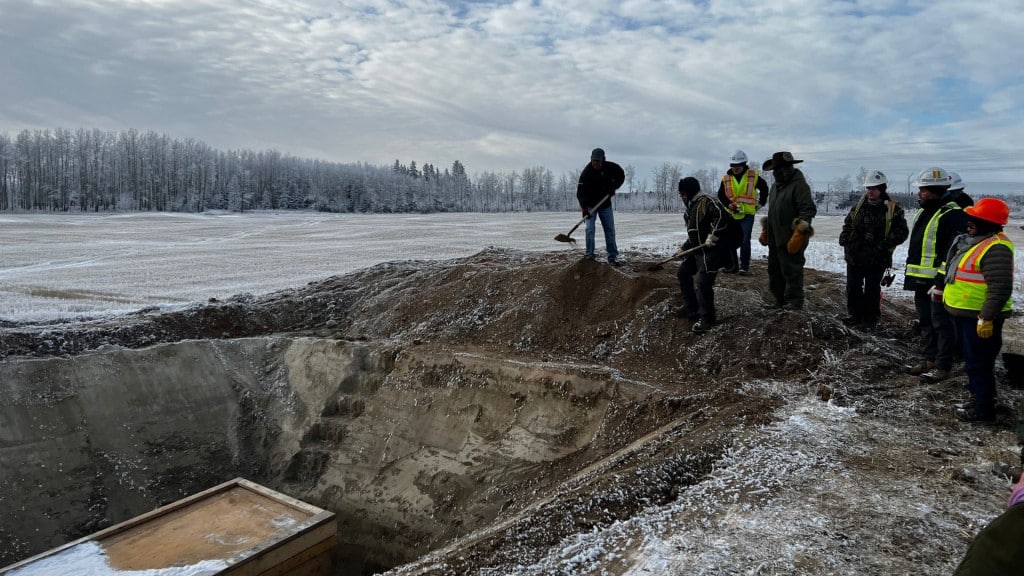
TREATY 8 TERRITORY, B.C. — Elders of Doig River First Nation (DRFN) led a burial ceremony last month for ancestral remains exhumed from within the Site C reservoir inundation zone.
The ceremony prompted one DRFN Elder to share his concerns over the impact Site C has had and will have on the environment.
DRFN Elders and members attended the burial ceremony, along with BC Hydro representatives.
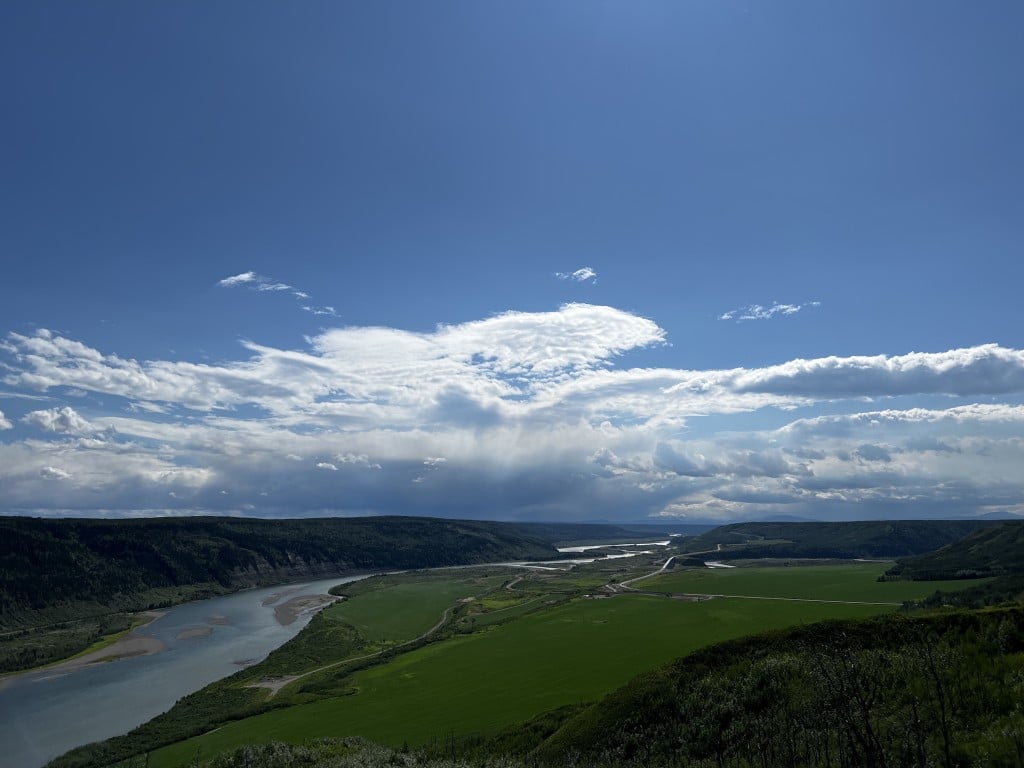
The ceremony took place in a farmer’s field on top of a plateau in the Peace River Valley, near where the Halfway River meets the Peace River.
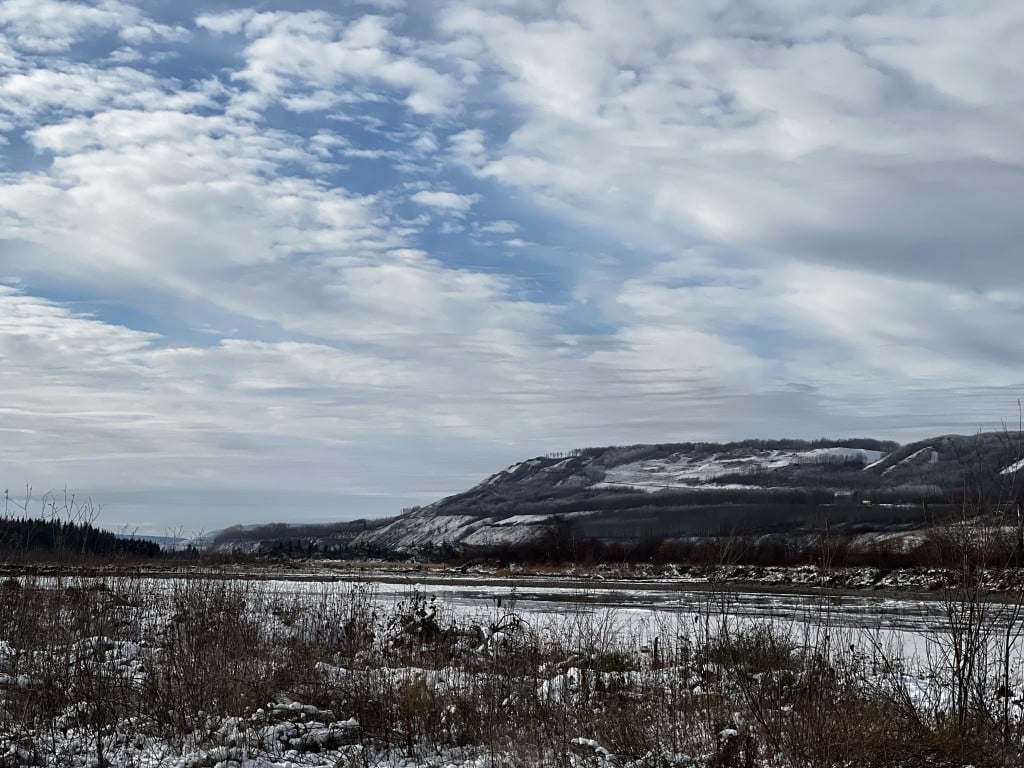
The farmer’s land is located in an area called “Attachie,” named after Dane-zaa Chief Attachie, who was a signee of Treaty 8.
Chief Attachie passed away in the early 1900s. His final resting place is located somewhere in the Attachie area.
Latest Stories
According to Jennifer Liddicoat, lands administrator for DRFN, BC Hydro purchased a section of the farmer’s land for use as a gravesite. The location was chosen because it will remain intact should the surrounding land degrade over time due to the Site C reservoir.
“Based on engineering and geotechnical assessments, the location of the gravesite was considered because it will be safe if, worst-case scenario, after one hundred years, the land starts to fly into the reservoir,” said Liddicoat.
“Where that gravesite is — it is considered safe.”
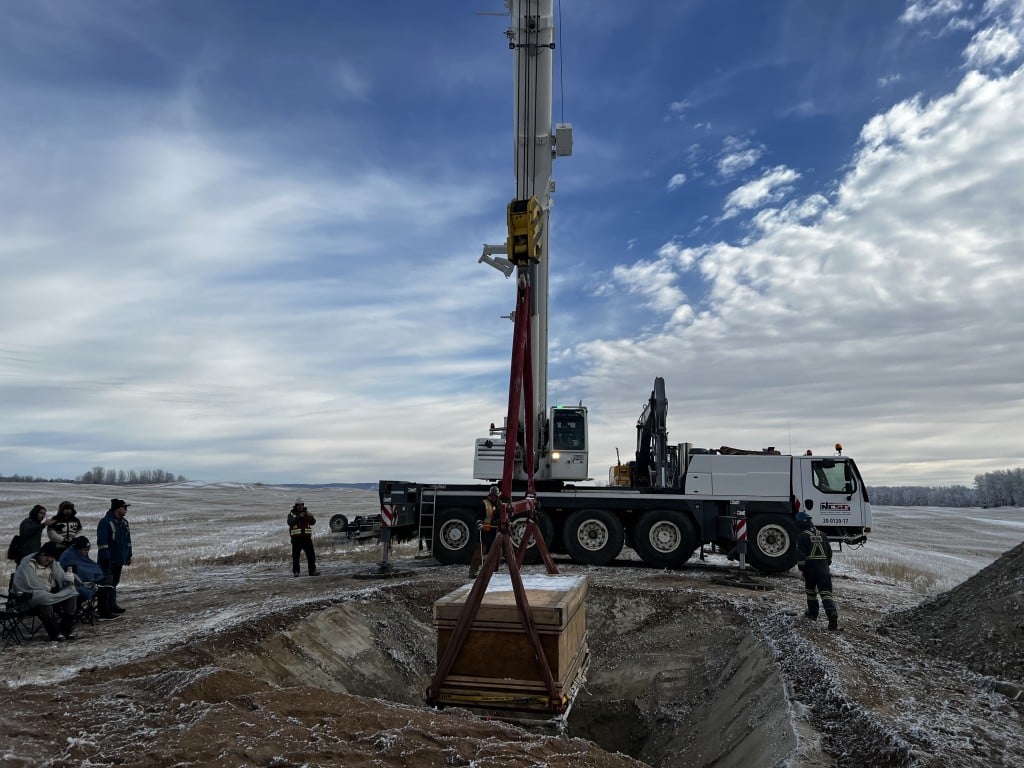
After travelling quite a distance to a far corner of the frost-covered field, attendees gathered around the gravesite. The earth had been carefully excavated, and a crane stood by in preparation for placing the remains in their final resting place.
Chief Attachie’s grandson, Gerry Attachie, who is a former Chief and current DRFN Elder, conducted the ceremony. He began by reciting a prayer in Dane-zaa Záágéʔ, which was followed by drumming from the Doig River Drummers.

The ceremony took place on a cold and brisk day with clear skies. The resonant voices of the drummers, accompanied by the powerful, rhythmic pounding of the drums, echoed across the field.
Following the conclusion of the drummers’ performance, a crane gently lowered the remains into the prepared ground. Attendees were then invited to take turns filling the grave with earth using shovels.
A first for Doig River First Nation
Attachie said the ceremony marked the first of its kind in DRFN history, where remains were exhumed and reburied. He concernedly referred to a Doig Prophet, who, during a time when First Nations were at war, slept for nine days and, when he awoke, shared his belief of heaven and hell.
“He told people about sin and to have no sin — to have only good. So, to move one of our graves, we have never done that,” said Attachie.
“We respect the grave. We don’t believe in cremation, we’ve never done it before. And so, it’s totally different for us to move a grave, but we don’t want it [drowning] underwater.”
Attachie said he “felt bad about how [the reburial was] going to look” on the morning of the ceremony, implying he was worried it would be considered a sin to exhume and rebury ancestral remains.
“So, I prayed and I feel good today, but I hope we will not do that again,” Attachie said after the burial.

Attachie believes BC Hydro funded the ceremony because they failed to meaningfully engage with the Fort St. John Beaver Band (DRFN and Blueberry River First Nation) prior to consulting with other First Nations and stakeholders on the Site C project in the early 2000s.
The Fort St. John Beaver Band were the first people to inhabit the Peace region. According to the DRFN website, archaeological evidence at the Tse’k’wa historic site in Charlie Lake shows the area was occupied by Dane-zaa peoples at least 10,500 years ago.
In 1977, the Fort St. John Beaver Band split into two communities — the Doig River and Blueberry River First Nations.
( Jordan Prentice, Energeticcity.ca )
Because Site C is located on the Fort St. John Beaver Band’s traditional territory, Attachie and the DRFN Elders believe BC Hydro should have engaged with these two Nations first.
“I know they want to get this [Site C reservoir filling] done right now, but they forgot a lot of things, but they never did too much studying, on this especially,” said Attachie before BC Hydro announced the reservoir will be filled next year.
“They never talked to the grassroots Nation first, we were left out, and that’s why we’re doing this grave [ceremony] now.”
Energeticcity.ca asked BC Hydro three separate times why they did not consult with the Fort St. John Beaver Band before consulting with other First Nations and stakeholders.
BC Hydro was unable to provide a direct answer to the question.
“BC Hydro is obligated under federal law to engage all First Nations potentially impacted by the project. However, we do work more closely with those Nations closest to the project, and that includes Doig River First Nations,” was BC Hydro’s response.
Reflecting on the construction of the W.A.C. Bennett Dam
The burial ceremony led Attachie to reflect on the history between local First Nations and BC Hydro.
He then shared his memories of the construction of the W.A.C. Bennett Dam, and the filling of the Williston Lake Reservoir.
The Williston Lake Reservoir is the third largest man-made lake in North America and the largest body of fresh water in B.C. Williston Lake runs 250 kilometres north-south and 150 kilometres east-west.

According to BC Hydro’s website, the generating capacity at the W.A.C. Bennett Dam’s G.M. Shrum Generating Station is 2,730 megawatts (MW).
Construction on the Bennett Dam began in 1961 and reached completion in 1968. Much like the Site C project, controversy surrounded the construction of the dam for its significant negative impacts on its immediate environment.
In the process of filling the Williston Lake Reservoir, 350,000 acres of forest land were flooded, causing the loss of plant and wildlife biodiversity, along with timber and mineral rights. DRFN’s website states the reservoir filling resulted in “drowning countless animals and blocking mountain caribou routes.”
The Williston Lake Reservoir filling also displaced members of the Tsay Keh Dene First Nation, who were known as the Ingenika at the time.
Attachie noted the difference he perceived in the local climate before and after the Bennett Dam came into operation.
“Before the Bennett Dam, it got really cold, with a lot of snow, which is okay,” said Attachie.
“By the time it was finished, in the late 60s and early 70s, the weather changed. It doesn’t get that cold anymore, and it’s a lot windier too.”
Site C climate change concerns
Attachie expressed concern over the rife environmental impacts that will occur and are already in effect as a result of the construction and operation of Site C, clear-cut logging, and the oil and gas industry throughout northeastern B.C.
“I don’t know what [Site C] will do here,” said Attachie.
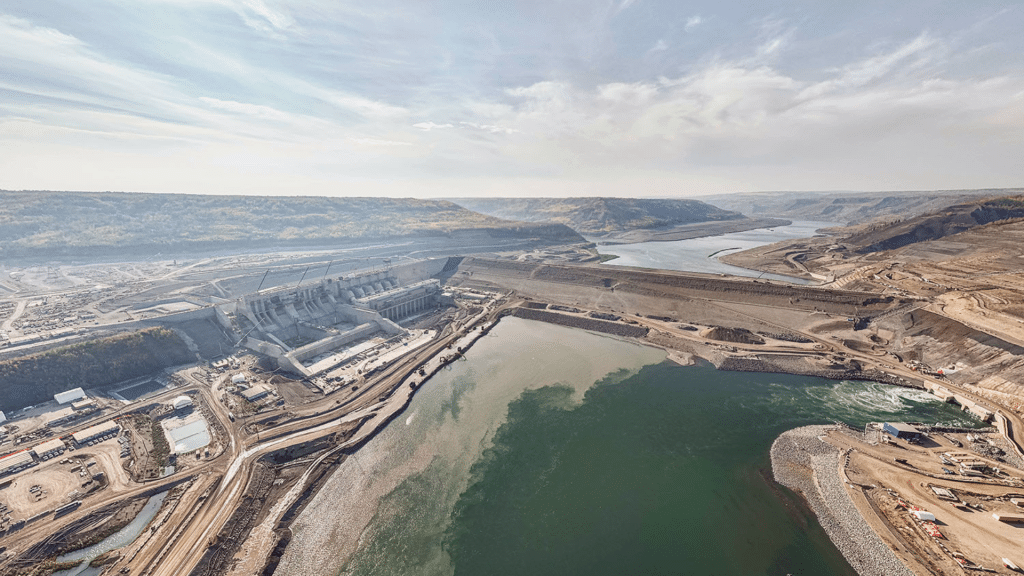
“The earth is drying already, and there’s a lot of [wild]fires [because of it]. It’s too dry. [Site C is] going to change our weather, we have already experienced some big winds. A few years ago, a tornado touched down in Blueberry [River First Nation], and after [Site C] is built, it’ll be windier and turn into a tornado again for sure.”
Jim Little, a lifelong Peace region resident who worked on the construction of the Bennett Dam and as a land inspector for the provincial government afterwards, says the amount of annual fog in the region has increased over the decades since the dam was built.
“We get a lot more fog in the fall, and with this new pond [BC Hydro’s] creating here, I wouldn’t be surprised if we’re unable to use the airport in the future [due to fog],” said Little.
According to BC Hydro, after the Williston Reservoir was initially filled in 1972, a microclimate assessment in 1976 found minimal impact, particularly on fog.
No other studies on Williston’s effects on the local climate are known.
Environment Canada’s historical records at the Fort St. John Airport weather station show variability in temperature, dew point, relative humidity, precipitation amount, wind speed and direction, visibility and station pressure annually from 1967 to 2022.
The Fort St. John Airport weather station is the closest weather station to the Bennett Dam, with decades of historical data recorded.
The 115-kilometre distance between the dam and the weather station makes it difficult to attribute climate change in the region directly to the Williston Lake Reservoir.
However, according to Environment Canada meteorologist Alyssa Charbonneau, though it’s difficult to pinpoint the exact cause of climate change due to multiple contributing factors, creating a new lake will influence the local climate.
“If you create a new lake, it follows that you would create a new microclimate that could see increased fog because you’re adding more water vapour to the air,” said Charbonneau.
“Lakes do impact the climate around them. If you create one where there wasn’t one before, it is going to change that local environment.”
This indicates the Site C reservoir will have a definite impact on its local climate.
According to BC Hydro’s Site C Environmental Impact Statement Fact Sheet, the climate in the Peace River Valley and Fort St. John Airport areas was monitored to predict potential changes to microclimate parameters as a result of the project.
Microclimate parameters include precipitation levels, fog, wind speed and direction, air temperature, barometric pressure, humidity, solar radiation and heat flux.
Results suggest a modest increase in annual fog hours in the study area, a slight increase in temperature in the winter and a slight decrease in the summer adjacent to the reservoir, and an increase of less than one degree in the annual average temperature within one kilometre of the reservoir.
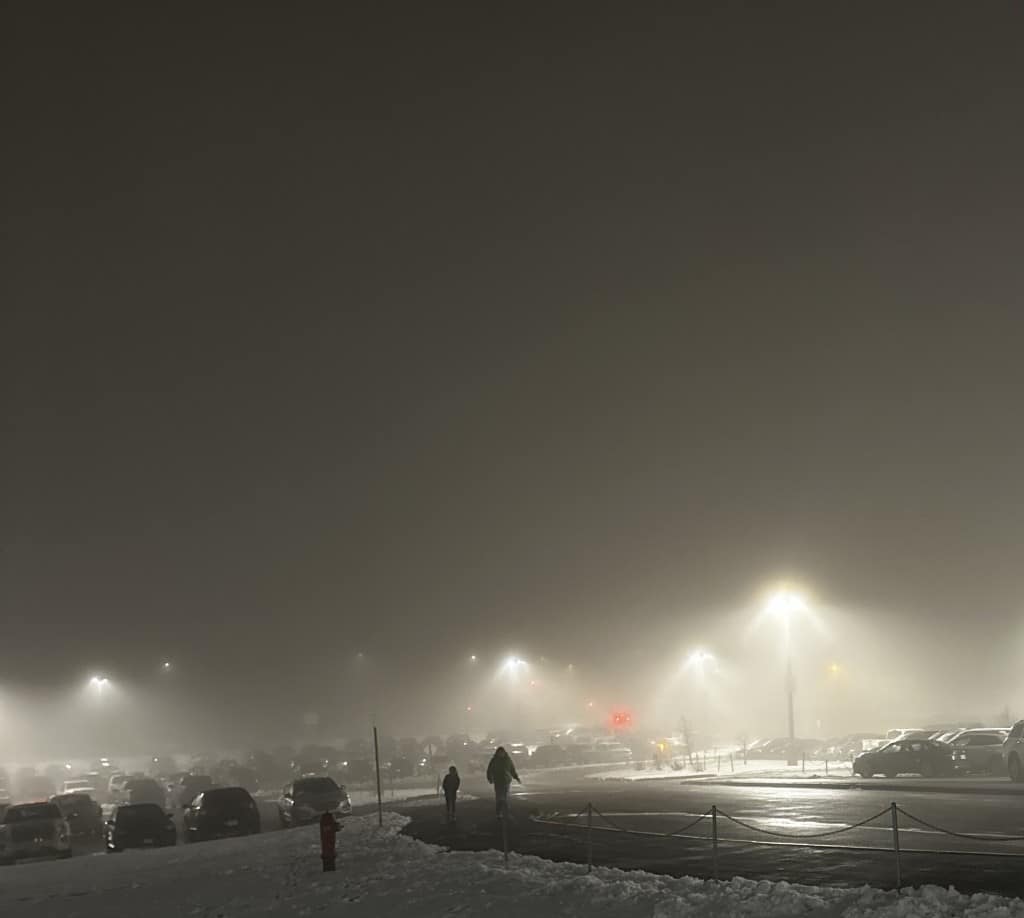
More specifically, in the Site C Clean Energy Project Environmental Impact Statement Volume 2: Assessment Methodology and Environmental Effects Assessment, the number of heavy fog hours is predicted to increase by six hours per year at the Fort St. John Airport Station and by 118 hours at the Taylor Bridge.
More details from the environmental impact statement can be found below.
According to BC Hydro, environmental certification for the Site C project includes two programs that address predictions in the Environmental Impact Statement — an agricultural monitoring and follow-up program, and a greenhouse gas (GHG) emissions program.
The agriculture monitoring and follow-up program runs for five years before and five years after reservoir filling and assesses changes in the local climate.
The GHG emissions program is required for the first ten years post-reservoir filling and monitors GHG emissions from Site C.
Treaty 8 Chiefs oppose Site C Project
Attachie recalled when he and several Treaty 8 Chiefs gathered in the 70s and discussed the impacts of the Bennett Dam and the concept of adding two more dams downstream.
“[We talked about] how the river had risen and damaged a lot of things out here — the wildlife, the earth, the timber,” said Attachie.
“Around that time, talk about a Site B Dam (Peace Canyon) came up, and later Site C came up and that’s when we said no more. It causes too much damage to the wildlife and the earth. We opposed it, and it seemed to die down.”

Located just below the Bennett Dam, construction on the Peace Canyon Dam reached completion in 1980, with a peak capacity of 700 MW, producing over 3,500 GWh of electricity per year.
Attachie said conversations surrounding Site C began again in the 80s.
“Again, we opposed it. We said no. We don’t need any more damage. And it seemed to die down again.” said Attachie.
“Then [the Site C conversation] came back sometime in the early 2000s. Around that time, [BC Hydro] went to each individual band, and they somehow signed an agreement. When they did — that’s when everything fell apart.”
BC Hydro’s Site C Clean Energy Project is the third dam and hydroelectric generating station along the Peace River. Once operating, Site C will provide 1,100 MW of capacity and produce 5,100 gigawatt hours (GWh) of electricity each year.
BC Hydro says Site C will gain significant efficiencies by using water already stored in the Williston Lake Reservoir. Site C will generate approximately 35 per cent of the energy produced at the W.A.C. Bennett Dam, with only five per cent of the reservoir area.
The provincial government approved the construction of Site C in 2014.
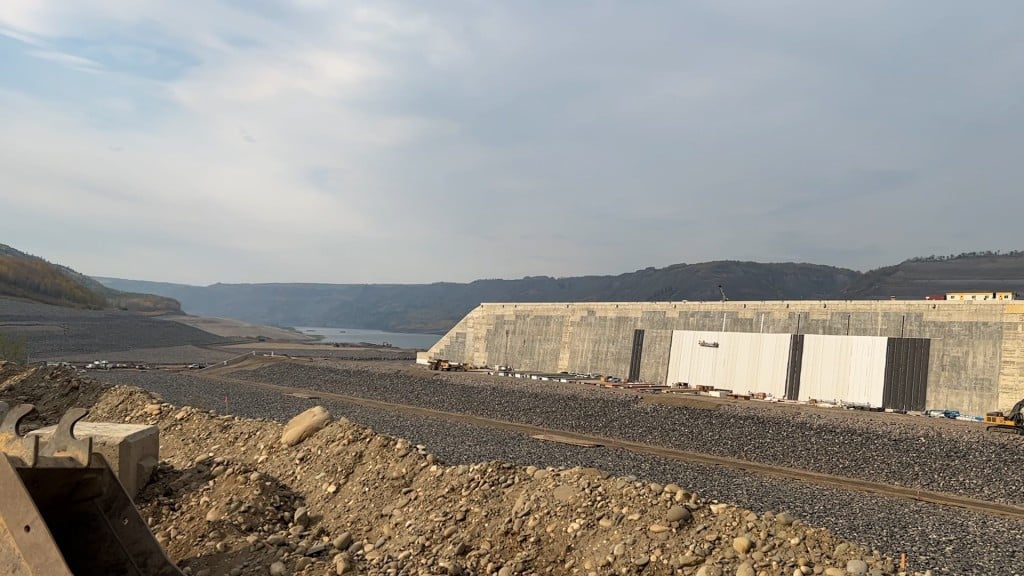
BC Hydro’s project overview states the decision came after an environmental assessment by both the federal and provincial governments found the effects of the Site C project are justified by the long-term benefits it will provide.
According to Attachie, BC Hydro initially signed Impact and Benefits Agreements (IBA) with Saulteau First Nation, Halfway River First Nation and the McLeod Lake Indian Band.
In 2014, DRFN, West Moberly First Nations, and Prophet River First Nation filed a judicial review against the Site C project.
BC Hydro and Doig River First Nation reach agreement
Eventually, on March 22nd, 2017, DRFN and BC Hydro signed a Tripartite Land Agreement.
The agreement states the provincial government’s agreement to transfer 3,000 acres of Crown land to DRFN and to develop recommendations for land management measures to protect the K’ih tsaa?dze area.
Two days later, BC Hydro published a media release stating they had “reached agreements” with DRFN that will “establish a forward-looking relationship between BC Hydro and the Tsááʔ ché ne dane people, as well as provide economic opportunities and other benefits related to the construction and operation of the Site C Clean Energy Project.”
The release says an Impact and Benefits Agreement and a Contracting Agreement were signed along with the Tripartite Land Agreement, with the provincial government as a third party. DRFN and BC Hydro also reached an agreement on how to engage and work together on how to manage ancestral remains and burials.
Doig River First Nation Chief Trevor Makadahay said DRFN felt pressured to sign the agreements.
“We felt pushed into a corner to sign an agreement because other Nations had already signed off on a deal, and we had little faith in the provincial regulatory process,” said Chief Makadahay.
“Doig felt we would make more of a difference mitigating the environmental and cultural impacts in the river valley through a negotiated agreement.”
Now that resolution seems to be in place, Attachie said he hopes all parties involved will recognize the entire process as a learning experience on how to move forward in the future with large-scale projects that will have a definite impact on the environment.
“We need to work together more, we need to communicate more,” said Attachie.
“Everything we’re talking about has already happened, and I hope it won’t happen again. I hope we will learn from it. We have done a lot of damage to the earth. We talk about reclamation, but we’ve done a lot of damage already. Even if we clean everything up just a little bit, it will never be the same again.”
Stay connected with local news
Make us your
home page
Authors

Related Articles
City proposes 100 projects worth $54.62 million for 2026
The City of Fort St. John has revealed its draft capital budget for 2026, which outlines almost 100 projects slated to cost $54.62 million this year. None of that funding would come from taxes.
(UPDATE) Pedestrian hit by vehicle in Fort St. John
A vehicle collided with a pedestrian on 100th Avenue on January 30th, 2026.

School trustee ‘terrified’ after police confront her at gunpoint related to investigation which saw Fort St. John, Dawson Creek people arrested
On January 28th, people from Fort St. John and Dawson Creek were arrested. The day before, school trustee Erica McLean was ordered from her vehicle at gunpoint by RCMP officers in a case of mistaken identity related to the investigation.