
‘How do we correct this?’ Kitimat residents seek solutions to LNG Canada flaring fiasco
The Kitimat community is asking questions after it was revealed LNG Canada has been consistently flaring more than 15 times the amount of gas than expected due to an equipment “integrity issue.”
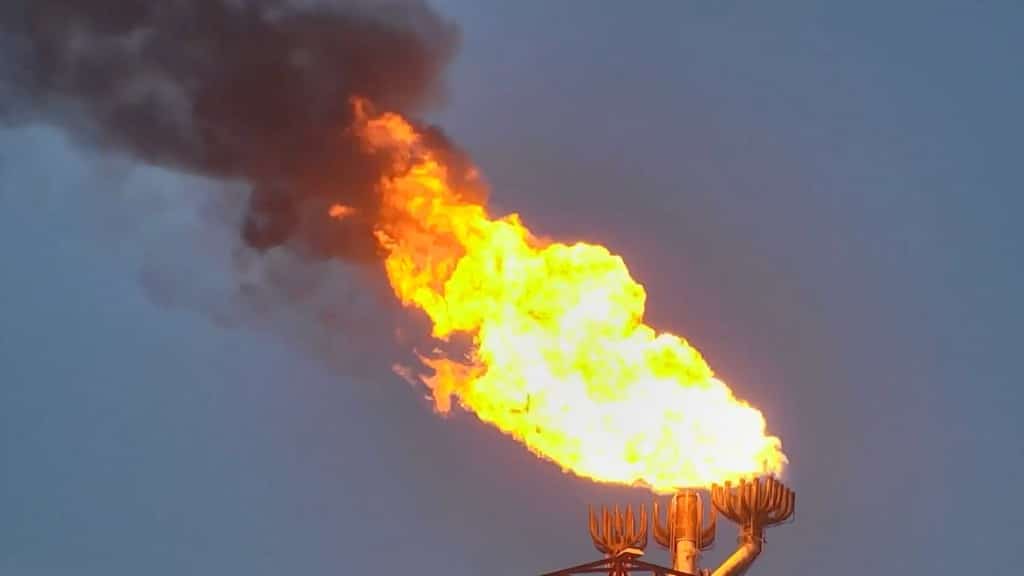
KITIMAT, B.C. — For more than a year, LNG Canada has been troubleshooting problems with its flare stack in Kitimat, B.C.
An “integrity issue” at the plant meant LNG Canada burned significantly more gas than expected, leading to increased noise and emissions for months on end. The problem could take up to three years to fix.
“It p****s me off — but it’s no surprise,” said James Smith, a community member whose name has been changed to protect his family from potential repercussions. “And it makes me say, ‘okay, so what do we do about it now? How do we correct this?’”
Smith said he feels a sense of relief now the truth has come to light, because people have accused him of “being insane or being alarmist” whenever he complained about the noise.
“I can’t take a s**t in my bathroom without my Apple Watch telling me I need hearing protection,” he said. “That’s a problem.”
It’s not just noise polluting the northwest B.C. community, however.
LNG Canada, a consortium of companies led by multinational Shell, has been consistently flaring more than 15 times the amount of gas it would need to burn if its equipment was working as designed.
Latest Stories
Provincial data shows the facility burned an average of 205,000 cubic metres per day between July 1st and November 30th, 2025. It was expected to only need to burn around 11,000 cubic metres per day.
“All I know is what I see every day: big clouds of black smoke floating over my house and flares keeping my backyard lit up all night long,” Kitimat resident Chris Godfrey told The Narwhal, adding he’s curious what LNG Canada will do now the data is public. “I don’t know what the people of Kitimat can do. They can sit and b***h about it and whine about it, but there’s nothing really we can do.”
District of Kitimat Mayor Phil Germuth said LNG Canada informed him about the issue, without specifying when he first became aware of the problem. He told The Narwhal he was unaware of many of the details, including the scale of the problem.
“They let us know a while back — I don’t know exactly when — the flare tips weren’t exactly operating as sold to them by whoever the manufacturer was,” he said. “Yes, it’s a disappointment, but it’s something that couldn’t have been predicted, right? I mean, LNG Canada was as surprised as we were.”
When asked whether he felt the district should have shared more information about the flaring problem with the community, he said: “We don’t actually do communications for LNG Canada.
“They do their own so it’s not really our thing to do.”
He added: “Most people obviously realize that, hey, this is just part of the process of getting a plant up and running and you have to put up with a little bit of short-term inconvenience to get that 40 years of economic opportunities that it brings to the community and the province.”
Cheryl Brown, a member of local environmental advocacy group Douglas Channel Watch, said she recalls representatives of LNG Canada being upfront about the problem during a technical meeting with the group.
While the industry officials acknowledged the issue early on, she said they didn’t fully explain the extent of the problem nor talk about solutions.
“How do they fix this? We meet with them in February, and that’s going to be my question,” she said. “Do you have to shut the whole place down? You can’t fix a flare with the other flares burning — that doesn’t make any sense at all. So how do you do this?”
Germuth said he believes the consortium adequately kept the public informed about flaring.
“It’s unfortunate that maybe a little more information could have been given out,” he said. “Absolutely, that’s unfortunate — but here we are. They put their communications out to the community, ‘this is more flaring than we thought, here’s what it’s going to be, and on this day we’re expecting this height.’
“…We think they’ve been fairly open and honest in that way, and doing as much as they can.”
Councillor Terry Marleau disagreed.
Marleau directly questioned Teresa Waddington, a senior official with the consortium, during a council meeting last November, and said she didn’t give him proper answers. He said he thinks LNG Canada should have done more to ensure the public was informed.
“You’d probably do better with people and journalists and council and everybody else, if you talk about the facts,” he said. “What’s it going to cost them? Not a heck of a lot, if you actually just work on saying, ‘here’s exactly what’s happening with those flare stacks and here’s what we’re trying to do.’”
He acknowledged Kitimat has a long industrial history and most residents, himself included, generally support industrial development, including LNG Canada.
“It’s a really big employer and it’s a really important part of our community,” he said. “But I also want to make sure we look after our environment and our community.
“The downside is not as big as they think it is, by actually coming across really openly to our small community.
“But we don’t control that. We can only try and work towards getting them to realize that.”
He said one resident told him he’s unable to work because the flaring has impacted his sleep so severely.
“I find that horribly sad,” Marleau said. “It’s obvious that the noise is to do with the [flare] stack. It’s nothing else in the plant — they’ve said that. They’ve checked all the parts of the plant and the noise is to do with the stack.”
Smith pointed out recent reports of Shell and Mitsubishi, one of the other members of the consortium, looking to divest ownership of LNG Canada. The same report noted Petronas, which also has significant stakes in natural gas wells near Fort St. John that supply the facility, already sold some of its shares.
“It’s like you realized you bought a Temu gas plant with AliExpress discount parts and you need to get out of it, because the liability risk is going through the roof,” Smith said.
A spokesperson with LNG Canada told The Narwhal in an emailed statement: “We will not comment on or validate speculation about our joint venture participants.
“For information regarding Shell or Mitsubishi’s respective interests, please contact those companies directly.”
Neither Shell nor Mitsubishi responded prior to publication.
Both Marleau and Germuth pointed out it’s in the consortium’s best interest to flare less gas — every cubic metre burned is less gas it can sell to buyers overseas. Germuth said that gives him confidence in the consortium to remedy the issue.
“It’s to their advantage to fix it as quick as possible,” he said. “We have no doubt they’re doing everything they can to rectify it, because it’s their bottom line. They’re burning gas that they don’t want to be burning. They’d rather be turning it into LNG. So, we’re confident they’re trying to find any way they can to alleviate this issue.”
Marleau echoed the thought and added he believes the consortium should also consider the costs of not being fully transparent with the residents most impacted by noise and emissions.
“I think you’d go a much further distance by actually owning up and talking about the problem,” he said. “Try and make life a little bit better in a community that you want to be part of for 30 or 40 years.”
Stay connected with local news
Make us your
home page
Related Articles
Premier touts further progress on Consensus Document with First Nations
B.C. Premier David Eby told attendees at Prince George’s B.C. Natural Resources Forum that signings were made in relation to the Consensus Document signed by Treaty 8 First Nations.
BC Hydro selects three Peace projects from 2025 Call for Power
Projects selected by BC Hydro from its 2025 Call for Power include Taylor South Wind, Sweetwater Wind and Bessie Wind.
Project to power LNG facility begins consultation with First Nation
BC Hydro is consulting with Squamish Nation over building a power line to provide additional electricity to the under-construction Woodfibre LNG.