
Indigenous revitalization grants boost Canada’s GDP by $91.2M in 2023-24
Economic think-tank the Conference Board of Canada released new figures on Wednesday highlighting the positive impact of Indigenous revitalization projects throughout Canada.
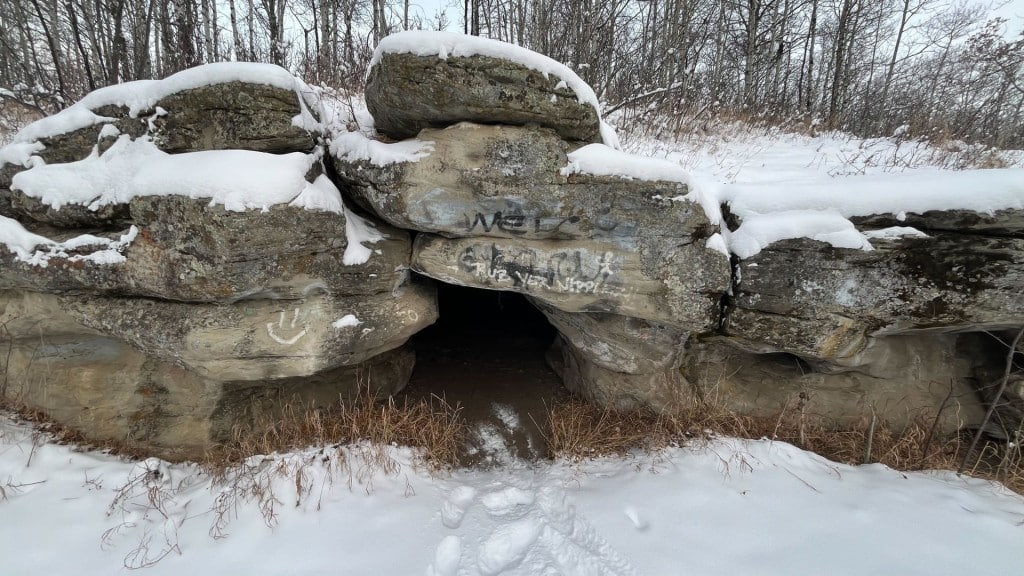
FORT ST. JOHN, B.C. — Economic think-tank the Conference Board of Canada released new figures on Wednesday highlighting the positive impact of Indigenous revitalization projects throughout Canada.
According to a press release, the $48.6 million in grant money delivered from the First People’s Cultural Council (FPCC) led to an unprecedented $91.2 million in gross domestic product (GDP) throughout Canada in 2023-24.
The report adds investments in revitalization projects from the FPCC, such as the Tse’k’wa Heritage Site located in Charlie Lake, helped contribute to $142.3 million in output in the economy through the implementation of grants.
Local News Straight
to Your Phone
Download our app today!
Available on Android and iOS devices
The grants also assist in job training and skill building, and added 1,822 jobs over the one-year period.
FPCC chief executive officer Tracey Herbert says the numbers released highlight revitalization projects throughout the country, which are a “driver of economic activity” in First Nations communities and beyond.
“This report demonstrates significant impact of this work beyond the programs we deliver, proving that the First Peoples’ Cultural Council and the communities we support are a great investment,” said Herbert.
“Our cultural revitalization work is a key contributor to the economies of B.C. and Canada.”
Latest Stories
Executive Director of the Tse’K’wa Hertiage Society Alyssa Currie confirmed that over $580,000 has been contributed by the FPCC to the site for infrastructure projects since 2018.
Revitalization grant funding assisted Tse’k’wa Heritage Society in celebrating the repatriation of excavated artifacts to the non-profit earlier in 2024.
In July, objects such as animal remains and notes from excavations by Simon Fraser University archeologists in 1979 and 1983 were returned.
The site is co-owned by Doig River First Nation, West Moberly First Nations, and Prophet River First Nation.
Diane Desjarlais, Project Assistant on the Repatriation for Tse’k’wa, said the site has created employment and economic opportunities for both First Nations and non-Indigenous communities.
She adds the site “opens doors” for First Nations to celebrate their history, educate visitors, and develop skills to preserve Indigenous heritage.
“I am so excited to be part of the work going forward as it allows me to learn, share, and strengthen the cultural significance of this incredible site,” said Desjarlais.
The full press release and report can be found here.
Stay connected with local news
Make us your
home page
Authors

Related Articles

Measles cases remain static across B.C. in latest report
The BC Centre for Disease Control has reported no increases in measles cases in its second weekly report of March 2026 on the 12th.

Fort St. John woman alleges mother sexually assaulted at Peace Villa
Amber McGill alleges her mother, who currently lives in Peace Villa, was the victim of sexual assault at the long-term care home.

Man sentenced to nearly four years jail time for Dawson Creek home invasion
Adam Dahr was sentenced on March 10th, 2026, to jail for nearly four years for a home invasion in Dawson Creek in 2024.