
Recent earthquakes caused by fracking: BCOGC
UPDATE: The BC OGC confirmed that Petronas was the company whose operations are related to the recent earthquakes.
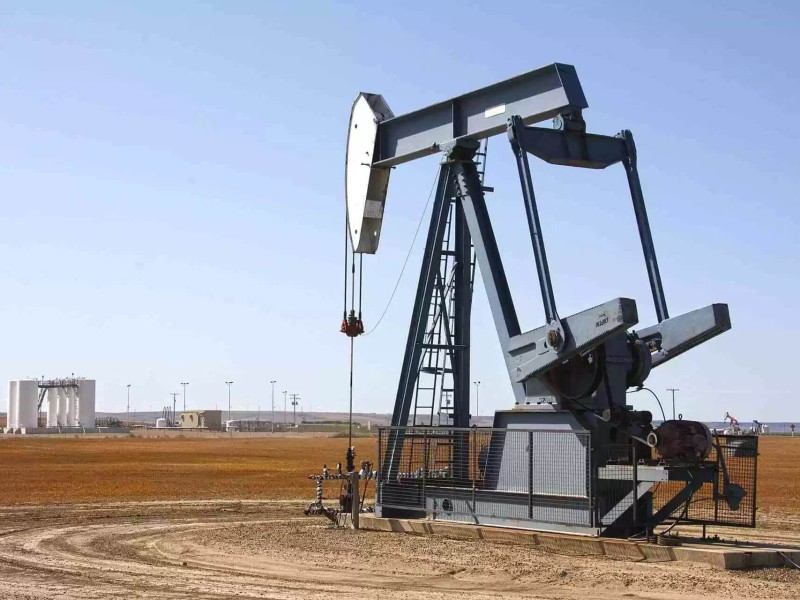
FORT ST. JOHN, B.C. — The BC Oil & Gas Commission (BCOGC) says the earthquakes that occurred near Fort St. John on November 11th and 15th were caused by fracking.
The BCOGC determined that these two seismic events, which occurred approximately 140 kilometres north of Fort St. John, were related to active hydraulic fracturing, or fracking, by Petronas.
The commission added that because it has three times as many seismic stations in the area as Natural Resources Canada, its measurements may differ from those reported by the government department.
Local News Straight
to Your Phone
Download our app today!
Available on Android and iOS devices
The BCOGC said that operations of the suspected well ceased for 24 hours after the earthquake on November 11th to allow for the built-up energy to dissipate.
Operations resumed on the well on November 12th before a second earthquake was recorded that evening, suspending operations again.
The following day, operations resumed with minimal activity until November 15th, when a 4.5 magnitude earthquake was recorded, so fracturing operations were again suspended.
Petronas was required to submit a new operational plan to reduce or eliminate further events, which has been implemented, according to the BCOGC.
Latest Stories
Fracturing operations at the well site have reportedly resumed and are expected to continue until Friday, November 25th.
This is not the first time seismic events happened in the area due to fracturing.
One of the most notable cases was in 2018, approximately 20 kilometres south of Fort St. John, where an earthquake was also determined to be caused by fluid injection during hydraulic fracturing operations.
The BCOGC explained hydraulic fracturing as the process of injecting fluid, typically water, at high pressures into the earth’s surface to create fractures or open existing fractures in the hydrocarbon-bearing rocks underground.
A substance called proppant, usually sand, mixed with the fluid, holds the cracks open once the pressure is lowered.
Hydraulic fracturing allows the natural gas to flow from the formation to the wellbore, according to the BCOGC.
While the fluids are injected, earthquakes sometimes occur as the rock is fractured, and slippage can sometimes occur on the fracture.
Visit the commission’s website for more information on fracking.
Stay connected with local news
Make us your
home page
Authors

Related Articles
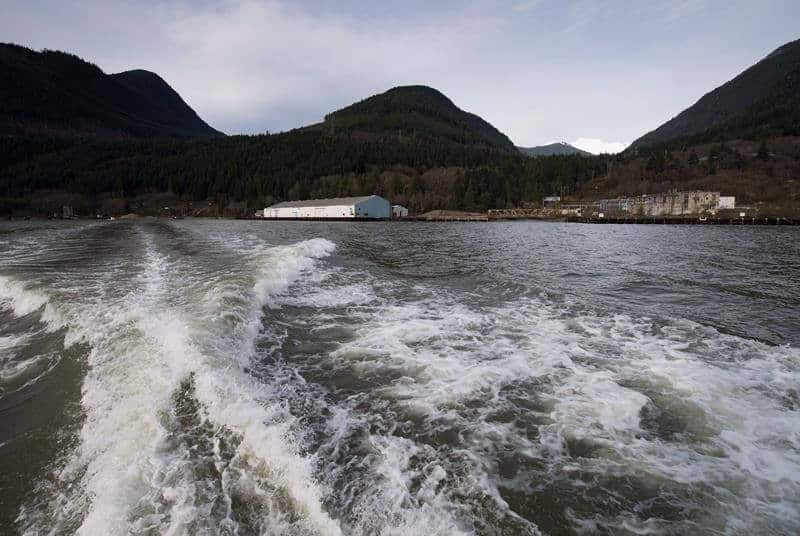
Key liquefaction module delivered to LNG facility in Squamish
The latest key module has been delivered to the site of a Woodfibre LNG facility in Squamish, British Columbia.
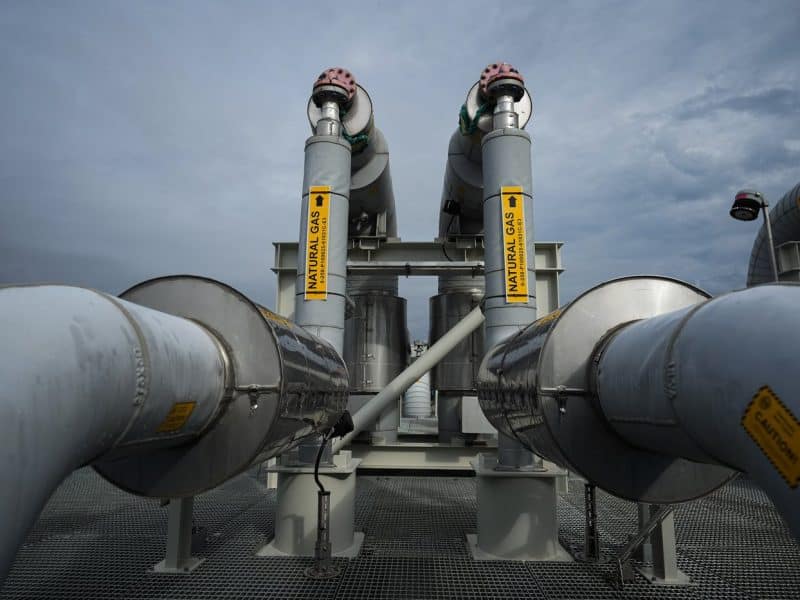
Canadian energy companies hail merger as opportunity to ‘enhance delivery of safe, reliable, efficient services’
Canadian energy companies – Step and Sanjel Energy Services- have merged in hopes of providing more streamlined service to western Canada.

Fort St. John talks potential west coast pipeline with Alberta minister
Fort St. John councillors joined the mayor, Lilia Hansen, to meet Alberta minister of Indigenous relations Rajan Sawhney to discuss the West Coast Oil Pipeline project.