
Federal committee warns of lack of preparedness for wildfires
A report published by the Standing Commitee on Agriculture and Forestry is raising the alarm about the countries response to wildfires.
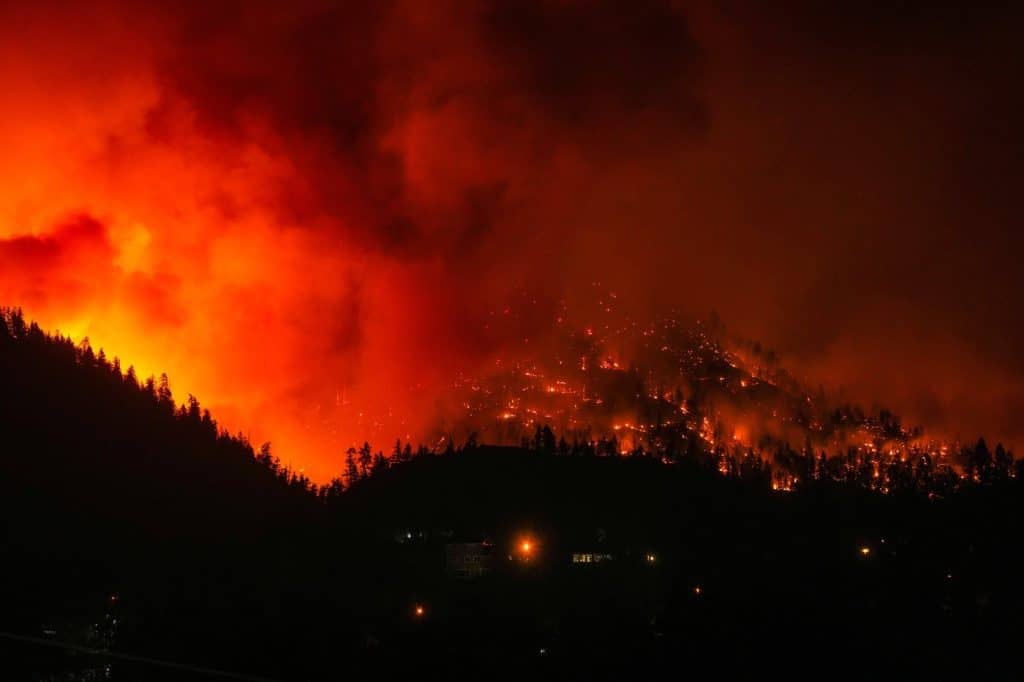
FORT ST. JOHN, B.C. — A federal committee is raising the alarm about Canada’s preparation and response to wildfires in a new report.
On June 10th, the Standing Committee on Agriculture and Forestry released a report raising concerns about Canada’s preparedness and response to wildfires.
According to the report, record-breaking wildfire seasons since 2023 have shown climate change is accelerating fire behaviour beyond “the capacity of existing systems.”
“Canadians have experienced numerous highly damaging fire seasons in the past decade,” Robert Gray, Wildland Fire Ecologist with R.W. Gray Consulting, said in the report.
“Unfortunately, climate change modelling suggests things will likely be worse in the future,” said Grey.
According to Grey, higher temperatures and longer fire seasons, accompanied by stronger winds and an increase in lightning, will lead to more area burned at a high severity
In a conversation with Energeticcity.ca, Mary Robinson, the chair of the Standing Committee on Agriculture and Forestry, said the committee consulted with 79 witnesses and received over 20 briefs from stakeholders between April 2024 and late 2025 while preparing the report.
Latest Stories
According to the report, the committee heard from first responders, government officials, Indigenous communities, medical specialists and other experts.
The report outlines a number of issues, including toxic smoke from wildfires, resources for indigenous communities, barriers faced by Indigenous firefighters and protection for the forestry and agriculture industries.
As part of the report, the committee developed a list of 15 recommendations.
One of the committee’s recommendations asks the Government of Canada to establish a federal office to coordinate wildfire and emergency responses, citing similar offices in the United States, the United Kingdom, Japan, Australia and New Zealand.
Robinson said it would be difficult to summarize the report because of its size, but she noted a few points, including one of the committee’s 15 recommendations.
“The first [point worth noting] would be that the committee recommended the Government of Canada designate forests as a strategic national asset and recognize forests as critical and renewable infrastructure,” she said.
Robinson mentioned this led to another recommendation.
“Within that, we move then into how we’re advising government to create a federal coordinating office for wildfires and emergency response,” she said.
“What we learned through testimony was there was a real need to better coordinate people, resources and policy in a modernized context,” Robinson continued.
According to Robinson, the committee wants the office to include representation from all levels of government, including indigenous communities.
The committee recommends that the office coordinate among people, resources, and policy in a “modernized context” and ensure that the office includes Indigenous representation.
The committee also urges the federal government to partner with Indigenous communities and governments to take immediate action to remove barriers faced by evacuees in host communities during wildfires, by ensuring fair access to housing, services, and supports that are responsive to culture.
According to the report, coordination challenges between provinces and territories, federal departments and municipalities contribute to delayed responses, inconsistent planning, and uneven access to equipment and personnel.
In a statement provided to Energeticcity.ca, a spokesperson for B.C.’s Ministry of Forests said working together is “essential” to protect people and communities as wildfires become increasingly impactful.
“Last year, B.C. hosted the first national wildlife symposium, bringing together wildfire leaders and experts to reflect on lessons learned,” the statement said.
“It is encouraging to see that hard work represented in the senate recommendations,” the statement continued.
According to the Ministry of Forests, the province is part of the Canadian Interagency Forest Fire Centre (CIFFC), which it says is the national coordinating agency with membership from all provinces and territories across the country, as well as Parks Canada and the Department of National Defence.
“B.C. supports a framework that can strengthen and improve coordination and response throughout Canada,” the spokesperson said.
“That is why CIFFC is growing to meet the demand in the coordination and the sharing of resources nationally, including equipment and recently announced aviation resources,” they said.
According to the ministry spokesperson, national and international resource-sharing agreements through CIFFC allow the province to both share and receive aircraft.
The committee said it supports a ‘whole-of-society’ approach with collaboration between all levels of government, federal, provincial, territorial, municipal and Indigenous in order to co-exist with wildfires.
Energeticcity.ca reached out to MP Bob Zimmer but did not receive a response in time for publication.
Stay connected with local news
Make us your
home page
Authors

Related Articles

‘So bizarre’: North Paw Animal Rescue brings light to abandoned dogs left on Alaska Highway
North Paw Animal Rescue in Fort Nelson reported three different dogs being abandoned on the weekend.

The Landing Place showcases Community-Based Employment Services
The Landing Post will be holding an open house to demonstrate some of the employment services it offers.