
Allies gather to support future Indigenous court during inaugural justice conference
The Walking the Path of Justice conference in Dawson Creek, hosted by Doig River First Nation, was looking to garner support for a future restorative justice court in northeast B.C.
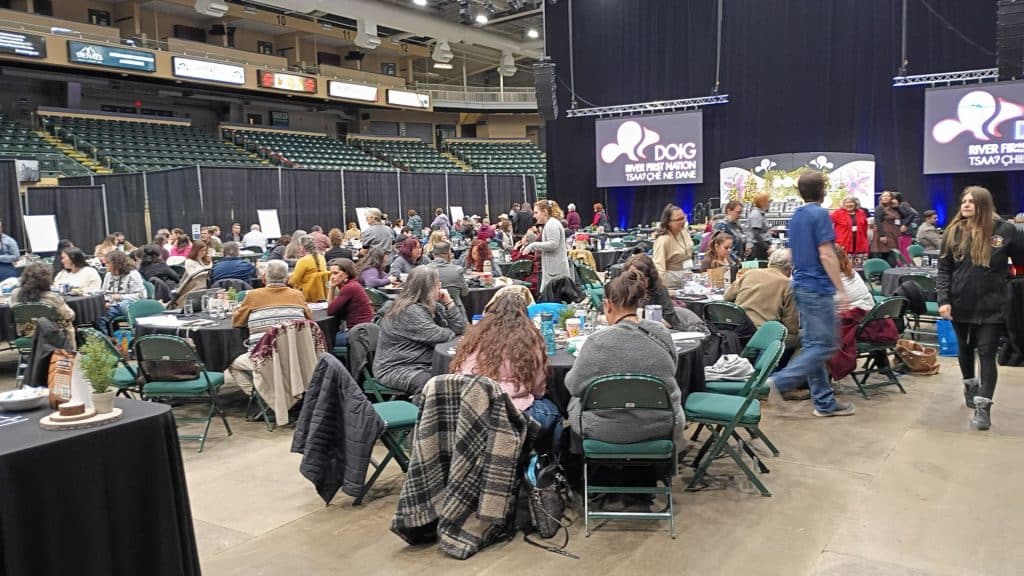
DAWSON CREEK, B.C. — A conference designed to garner support from legislators and the community toward a future Indigenous justice court took place last week in Dawson Creek.
Walking the Path of Justice was hosted by Doig River First Nation (DRFN) at the Ovintiv Events Centre, and featured judges, lawyers and keynote speakers to discuss a facility in northeast B.C. focusing on restorative justice.
The three-day event was attended by leaders, Elders and legislators from around Canada, who spoke about their experiences with a restorative justice system as opposed to punitive justice.
Local News Straight
to Your Phone
Download our app today!
Available on Android and iOS devices
Timing for the conference comes as the BC First Nations Justice Council recently opened an Indigenous Justice Centre earlier this year in Fort St. John.
Some of the prominent speakers during the event included associate chief judge Sue Wishart, who spoke to attendees about restorative justice programs within B.C.
Describing the restorative justice model as one of “layers”, Wishart said the approach offers a diverse alternative to the correctional system for First Nations offenders.
“It typically takes a much broader view of not only the offence, the offender and also incorporates the victim and the community,” said Wishart. “In a traditional court, you see just the offender [where] they are charged and sentenced, and the focus is really on the offender.”
Latest Stories
Wishart said she has seen success stories with restorative justice, and said there are also ways where both the traditional court system and Indigenous court system can learn from one another.
“The aspects of restorative justice that are brought into an Indigenous court could benefit anybody coming through the court system, Indigenous or not,” said Wishart. “It is absolutely a much better approach. We just typically don’t have the time or the resources to apply these principles to everybody.”
One of the Indigenous courts DRFN would like to model its system after is that of the Kenora Justice Centre in Northern Ontario.
Launched in 2023 in a partnership between the provincial government, Indigenous communities, the province’s court of justice and the community, the centre deals with not only holding parties accountable for their actions – but also gives them the tools necessary to properly rehabilitate, including healthcare, employment, housing and other social-service supports.
Ontario Senior Justice David Gibson oversees the northwest region of Ontario, which includes Thunder Bay and Kenora. He said the Kenora Justice Centre is “trying to light a fire.”
“We’re doing something that, to the best of my knowledge, hasn’t been done in the country before,” Gibson told Energeticcity.ca. “It is important that it maintains its balance.”
Gibson explained there are two administrative streams within the court in Kenora: those between 12 and 24 years old go to a young Indigenous people’s court, while those 25 and above go to an adult Indigenous people’s court.
Gibson sits with two Anishinaabe Elders in court, and said the centre in all cases takes an Indigenous approach to what he described as “restoring people to health.”
“Folks arrive and they get introduced to a case manager, who will talk to them confidentially about what’s going on in their lives. They don’t get shared with the court unless in some future time they want the court to know the work that they’re doing, which most of the time they do later on in the process.
“The indigenous aspect of what we’re doing, is our focus is on community health and not the punishment of the individual person for having violated a rule.”
Gibson, who spoke on the conference’s second day, said while ultimately the success of the justice centre is assisting the individuals in “getting to a position of strength,” in a majority of cases, charges end up being withdrawn.
He believes someone in the community “will have to step up,” “everyone benefits when traditional knowledge and Indigenous wisdom is brought into the justice system” and, from his experiences in Kenora and through his conversations with DRFN members and Elders, that “they want a new relationship with justice.”
Currently, the B.C. correctional system says while six per cent of the adult population are Indigenous, the number in custody is six times that, something former DRFN Chief Trevor Makadahay linked to intergenerational trauma, according to the CBC.
The Walking the Path of Justice conference took place from November 19th to 21st in Dawson Creek.
Stay connected with local news
Make us your
home page
Authors
Related Articles
Long-standing Spirit of the Peace Pow Wow president resigns
Connie Greyeyes has resigned from her position as board president of the Spirit of the Peace Pow Wow.

Attempt to withdraw guilty plea in Tsay Keh Dene double murder case denied
Orlan Marcel Dennis’ appeal to withdraw his guilty plea was denied by Justice Simon Coval on March 9th. He has yet to be sentenced for the second-degree murder of his wife and son in 2024.
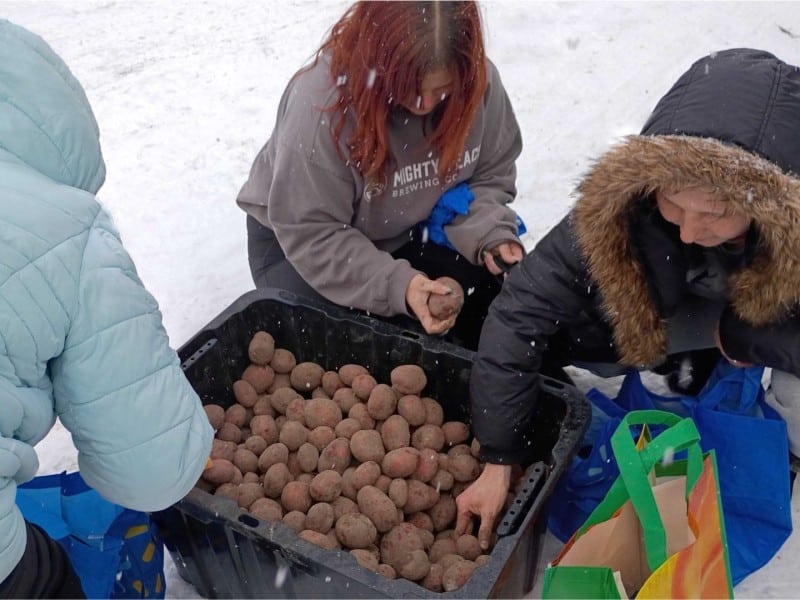
Fort St. John Métis Society to host potato giveaway, round two
A second potato giveaway is happening at the Fort St. John Métis Society on the afternoon of March 27th, 2026.