
(Opinion) Letter: Canada must lead with honesty or risk overpromising and underdelivering
In a letter to the editor, Fort St. John resident David Perkin calls for intellectual honesty and practical solutions in tackling global emissions.
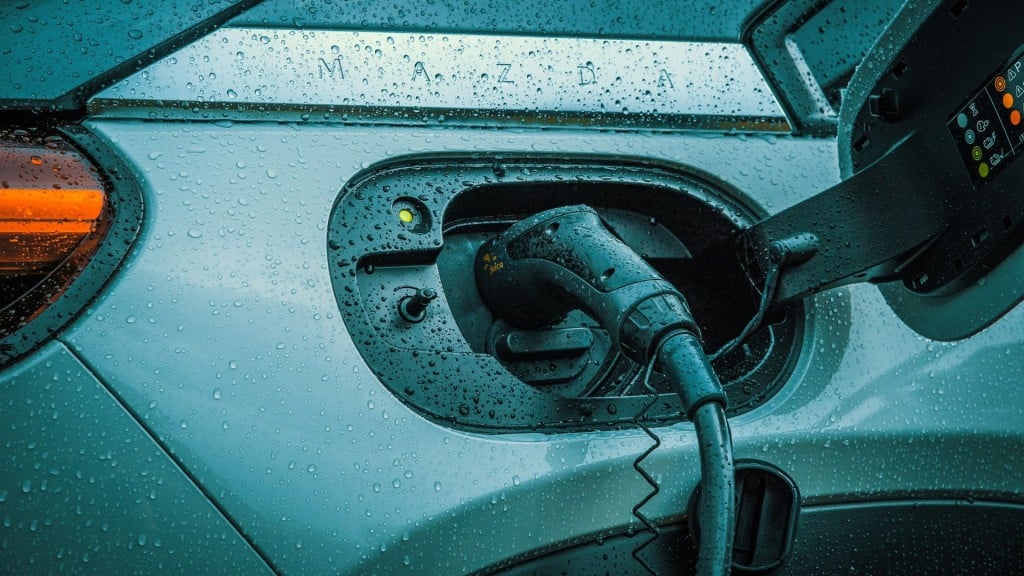
FORT ST. JOHN, B.C. — I share the goal of reducing emissions, but I am concerned that Canada’s exclusive focus on battery electric vehicles (EVs) is impractical, economically unsustainable and ill‑suited to our realities.
Canada is not Europe. While Europe has a similar land area, it enjoys a temperate climate and a population density many times greater.
These conditions make EV adoption far more efficient there than in Canada, where vast distances, extreme cold and sparse infrastructure pose serious barriers.
I live in northeastern British Columbia. A routine medical trip I make from Fort St. John to Victoria (1,365km one way) can be completed with two quick fuel stops. In an EV, the same journey would require multiple lengthy charging sessions—assuming chargers are available and functioning.
Infrastructure is the critical bottleneck. According to a Natural Resources Canada report published in February 2024, Canada has only about 30,000 public charging ports, against a forecasted need of nearly 700,000 by 2040.
Natural Resources Canada estimates at least $18 billion in capital costs for light‑duty charging alone, plus another $47 billion for medium‑ and heavy‑duty vehicles. These costs will inevitably drive electricity rates higher, undermining public support for subsidies.
And this is before we even account for the surging electricity demand from artificial intelligence and cloud computing — a demand curve that is accelerating faster than most policymakers acknowledge. The same grid that must support EVs will also be asked to power vast data centers, each consuming as much electricity as a small city.
Latest Stories
Canada’s role in global emissions must also be seen honestly. Our share is less than two per cent of the world total. Even if we cut by 25 per cent, the effect is marginal.
But if our LNG exports displace coal in Asia, the net global reductions are far greater. Here in northeastern British Columbia, the Montney formation and various Peace River BC Hydro sites – including Site C – give us the ability to deliver some of the cleanest LNG in the world, with lifecycle emissions far below coal. That is a contribution with real global impact.
We must also be honest about resource transport safety. Pipelines and modern tankers are statistically far safer and lower‑emission than rail or truck.
Yet opposition to pipelines and LNG shipping has perversely increased oil‑by‑rail traffic, which is both riskier and more carbon‑intensive. Policy should be based on actuarial evidence, not optics.
Finally, I urge you and your colleagues to confront the broader “mass balance” reality.
Every part of our modern lives — from homes and smartphones to vehicles, aircraft and even wind turbines and solar panels — depends on carbon‑based products at some stage of extraction, smelting, refining or manufacturing.
Even the greenest technologies are built on this foundation. The honest question is: how much of our current lived experience are Canadians truly prepared to give up, and at what cost? As Newton’s laws remind us, there is no free lunch.
Canada should lead with intellectual honesty and practical solutions: hybrids as a bridge, LNG as a global emissions reducer and policies that reflect the true costs and trade‑offs of transition.
Anything less risks overpromising and underdelivering.
Stay connected with local news
Make us your
home page
Letters to the Editor
Letters to the Editor should be exclusive to Energeticcity.ca. Include your name, address and daytime phone number. Keep letters to 500 words or fewer. Letters may be edited for length and clarity. To submit a letter by e-mail to contact@energeticcity.ca.
Related Articles

(Opinion) Bear Flat Dispatch: Caterpillars, Bears and Poplar Trees
Regular contributor Ken Boon writes about the turning of the seasons in Bear Flat.
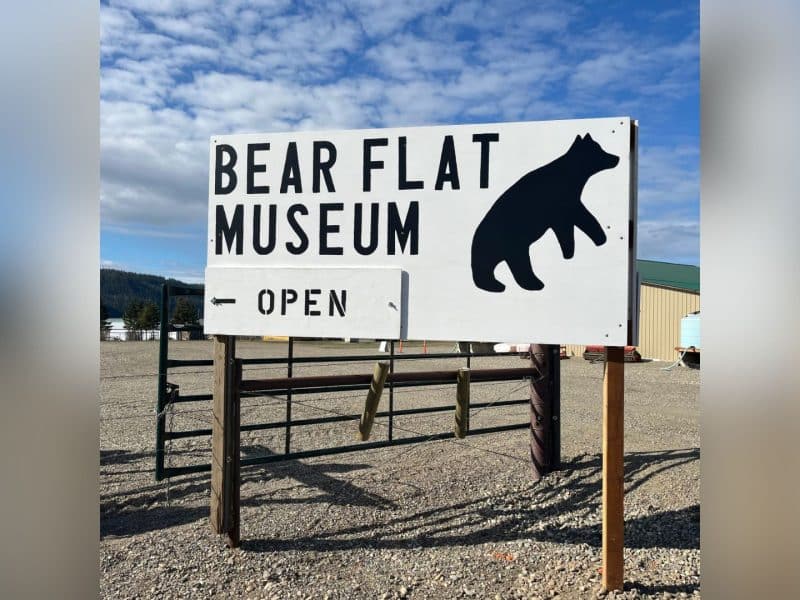
(Opinion) Bear Flat dispatch: Bear Flat Museum
Regular contributor Ken Boon writes about the Bear Flat Museum, which features a “Site C Sucks Museum” cabin, a sign cabin and old farm equipment.

(Opinion) Bear Flat Dispatch: Spring finally
Regular contributor Ken Boon writes on the return of spring and the ways its late arrival may impact the environment.