
Peace region and Liard are the ‘engine’ of B.C., says forestry minister
Ravi Parmar, B.C.’s minister of forests, considers the Peace region and the northeast “the engine” of the province and its economy.

FORT ST. JOHN, B.C. — B.C.’s minister of forests considers the Peace region and the northeast “the engine” of the province and its economy.
Ravi Parmar spent several days earlier in July visiting Fort Nelson, Fort St. John, Dawson Creek and other territories in the northeast to learn more about the region.
In an interview during the July 18th episode of This Week in the Peace, Parmar said it was the first time he had ever been to the area.
“I’m a kid from Langford who has not spent much time in different parts of British Columbia,” Parmar said, “so it’s been a true honour and privilege, not only to explore the beauty that is the province of British Columbia, but also meet incredible people, and that’s what this experience in the northeast has been about.”
During his visit, Parmar visited representatives from the Northern Rockies Regional Municipality, the cities of Fort St. John and Dawson Creek, and members of various First Nations communities in the area.
“This [area] is the engine of British Columbia, in so many ways,” he said. “I think when I’m back home in Langford, on Vancouver Island, I’m often talking to my constituents and people in the south island and the Lower Mainland about the importance of good-quality services and infrastructure.
“I think we often forget that much of that money to be able to pay for that infrastructure and services comes from the hardworking people here in the Peace country, and in the Liard as well.”
He also said he recognizes the forestry industry in the northeast has struggled through recent years, between global shifts like the ongoing trade war with the United States, mill closures and repeated severe wildfire seasons.
Latest Stories
Parmar held a press conference in Fort St. John during his visit to the city where he discussed wildfires in more detail, saying 30 per cent of the Prince George Fire Centre could burn by the end of 2025.
“It’s really important for me to be on the ground, to listen and learn from people here — local government leaders, First Nations, industry — but also, I wanted to take an opportunity to be on the ground and thank the hardest-working wildland firefighters you could ever imagine having on our team.”
Parmar also got to fly with BC Wildfire Service (BCWS) firefighters over some of the blazes in the region, which he said gave him a new perspective on the damage the fires cause.
“It’s one thing to see it on a video screen back home,” he said. “It’s another thing to see it in person. It was just a true honour and a privilege for me to be able to thank [the BCWS crews].”
To view the full interview with Parmar, look below.
Stay connected with local news
Make us your
home page
Authors

Related Articles

Registration for smart thermostats begins in a government effort to lower energy costs
Registration for BC Hydro’s Power Smart 2.0 program is available on the company’s website.
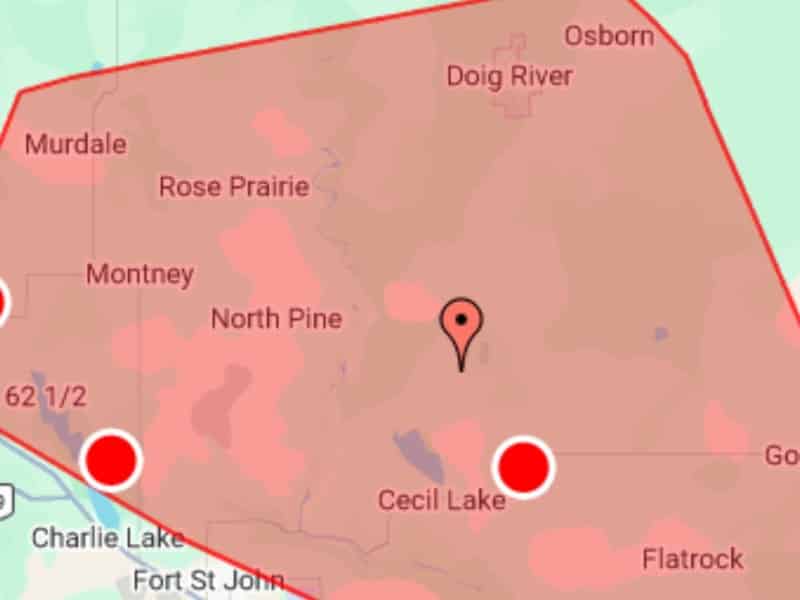
Several power outages reported near Fort St. John
BC Hydro has reported several power outages near Fort St. John affecting over 1,800 customers.