
Federal election: What to know before advance voting opens
Advance voting will be available over the holiday long weekend for Canadians interested in casting their federal election 2025 ballots before April 28th.
Update, April 25th, 12 p.m.: This story has been updated to clarify that electors cannot vote at Elections Canada’s returning officer or deputy returning officer’s offices on April 28th, they must go to their designated polling station.
FORT ST. JOHN, B.C. — Advance voter information is now available for those looking to cast their federal election ballots over the long holiday weekend.
Starting on April 18th and ending on April 22nd, Canadians are able to cast their ballots early for the 2025 Canadian federal election at any Elections Canada office and assigned advance polling locations.
In the Prince George, Peace River and Northern Rockies MP riding, there are three Elections Canada offices.
The main office is in Prince George at PRP Holdings Victoria Square, 1511 3rd Avenue Suite 2, and a second office is located in Fort St. John at 10003 110 Avenue. A third office is also in Dawson Creek at Mock Electric on 536 115th Avenue.
All three offices are open Monday to Friday from 9 a.m. to 9 p.m., 9 a.m. to 6 p.m. on Saturdays and 12 p.m. to 4 p.m. on Sundays.
Five candidates are running for the Prince George, Peace River and Northern Rockies riding: Bob Zimmer of the Conservative Party, the incumbent MP; David Watson of the People’s Party; Mary Forbes of the Green Party; Cory Longley of the New Democratic Party; and Peter Njenga of the Liberal Party.
Latest Stories
Voting day is April 28th, with early voting available from April 18th to 22nd at some polling locations and all Elections Canada offices.
To register to vote, individuals will need to provide information on their driver’s licence, be a resident of Canada and confirm they will be 18 years of age or older by April 28th. Residents intending to vote by mail must register online for their ballot package by April 22nd.
On voting day, all voters must head to their designated polling station, rather than an Elections Canada office, and identify themselves in one of a variety of ways.
They can present one piece of government-issued photo identification, such as a driver’s licence issued by any Canadian government – be it a provincial, federal or territory government, with a photograph, name and current address.
If you do not have photo identification, voters can declare their identity and address in writing, and have someone who knows them or who is assigned to their polling station vouch for them.
Stay connected with local news
Make us your
home page
Authors

Related Articles
Incumbent Saulteau First Nations Chief re-elected to post
Saulteau First Nations elections began with nominations for council in Late March
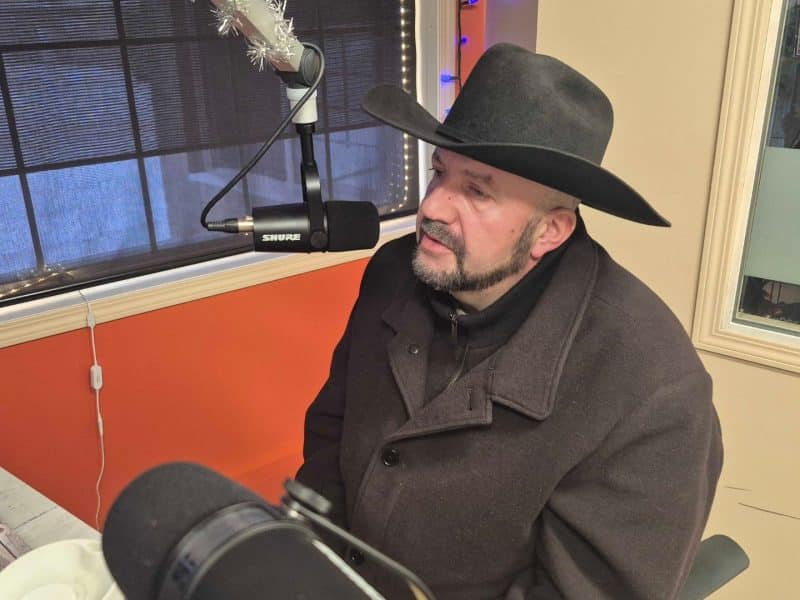
MLA’s financial agent fined after election campaign donation from business
Elections BC fined Kim Nadeau, the financial agent for MLA Jordan Kealy during the 2024 provincial election, $150 for “accepting a prohibited contribution.” Kealy said it was an “innocent mistake” which was “rectified very quickly.”

(Opinion) Bear Flat Dispatch: A ‘hostile takeover’ of municipal elections
In this column, regular contributor Ken Boon is adding his voice to those who oppose the registering of the Conservative Electors Association in Fort St. John and other municipalities around B.C.