
Fort St. John, Dawson Creek councils return to the Peace region with resolutions passed at UBCM Convention
The councils of Fort St. John and Dawson Creek have returned from the week-long 2023 UBCM convention hosted in Vancouver.
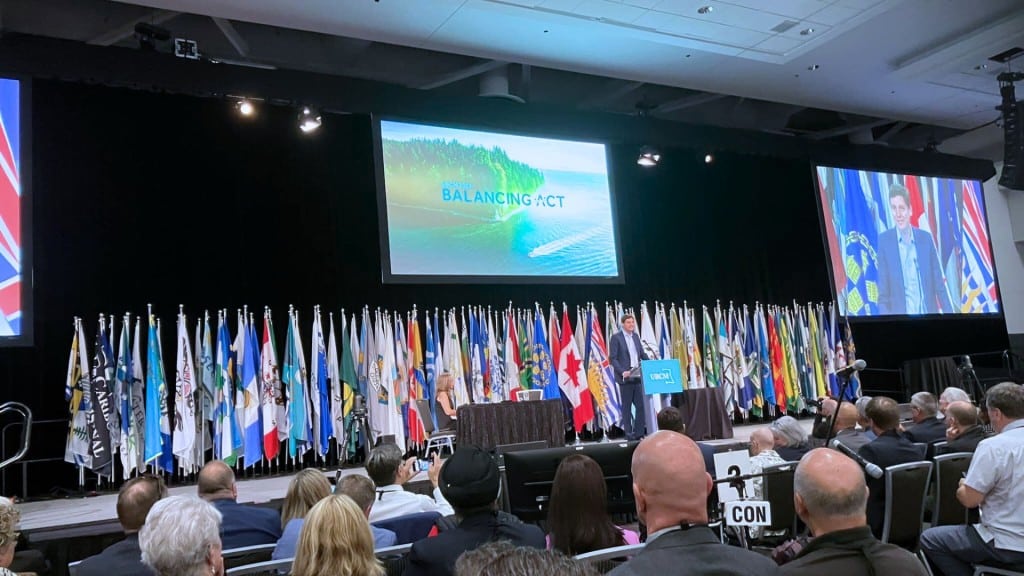
FORT ST. JOHN, B.C. – Fort St. John and Dawson Creek city councils have returned to their municipalities after having their main resolutions passed at the annual Union of B.C. Municipalities (UBCM) convention hosted in Vancouver.
The annual convention gives local governments across the province the chance to learn from other municipalities and engage in dialogue with the provincial government about their issues.
This year’s convention ran from September 18th to 22nd.
Amongst the many issues addressed during the convention, the cities of Fort St. John and Dawson Creek presented their main resolutions to the provincial government.
Fort St. John asked for more transparency in land titles, the implementation of a new economic immigration program and requesting additional addiction treatment capacities. Dawson Creek’s main resolution was a PST exemption on heating costs for northern B.C. homes.
Both city’s resolutions were passed by the resolutions committee.
Lilia Hansen, Mayor of Fort St. John, said she was pleased by the approval of the resolutions.
Latest Stories
“Our resolutions passed, so that was positive. We didn’t have any disputes on them,” said Hansen.

The City of Fort St. John’s first resolution consisted of registering all fees and information on land titles to increase transparency at the moment of purchase.
“There could be fees developers aren’t aware of until their tax notice the following year, such as a latecomer fee, or if they have a lot, a charge for them to connect to water and sewage,” said Hansen. This resolution will aim to be more transparent with land titles and show developers the total cost of the property at purchase.
Furthermore, Hansen said that for citizens owning land, sometimes land titles won’t show the buyer if construction is permitted on the lot or if they’ve purchased part of an archaeological site. These sites aren’t registered or highlighted on the land titles to protect them from people conducting searches on the internet and raiding them.
Hansen gave an example of a couple who fell victim to this non-transparency in the Okanagan area.
“There was a family who bought a piece of land, and they wanted to do gardening and build a small farm,” said Hansen, “After they made some investment in the property and went to BC Hydro to hook up services, they were told, sorry, but this land is deemed an archeological site. They were horrified.”
Hansen emphasized how the lack of transparency can have many negative impacts on landowners and families. This resolution will ensure buyers have all the information upfront about their property, so “everything is as transparent as possible, and there are fewer surprises.”

The second resolution was to create a new economic immigration program to approve foreign workers quicker for their permanent residency.
After talking to various businesses and industry leaders in Fort St. John, Hansen said although there are numerous opportunities for large companies to bid on bigger projects and generate more jobs, there isn’t enough manpower to carry out those jobs in the city.
“Fort St. John does a great job at job attraction and recruitment,” said Hansen, “Foreign workers are looking to be established with a permanent residency, so how do we motivate them to stay here?.”
A possible solution to her concern is the Alberta Rural Advantage Program, a pilot project focusing on encouraging foreign workers to move and work in rural communities in Alberta in exchange for extra points toward their permanent residency.
The neighbouring community of Grande Prairie is already implementing this program, making it very attractive for foreigners to move there and build a prosperous future in Canada.
With this initiative in mind, the city proposed to conduct a similar pilot project not only in Fort St. John but in rural communities in B.C. with less than 30,000 people.
Hansen stated she was delighted to hear the committee’s interest in this initiative, highlighting the success of many foreign workers in Fort St. John and how they’re actively helping the community by generating jobs.
“Fort St. John has seen a lot of success through Northern Lights College. We’ve had students who have taken the business program, purchased businesses and become entrepreneurs. Many of them are still here,” said Hansen.

The third resolution was to increase addiction treatment capacity in rural communities and install more detox facilities.
“We know that the prime primary health care services for things like addiction and recovery are in other areas. But hearing from people who have lived these experiences, when somebody is ready to say, okay, I need treatment, how do we access it?” said Hansen.
The closest detox beds available to Fort St. John residents are located in Prince George or Grande Prairie. Due to their distance and limited capacity, the city has asked to have these services and facilities available locally.
Groups like North Wind Wellness Centre Society, working alongside the First Nation Health Authority, are an example of local initiatives trying to provide these services to the community.
North Wind currently has a house in Farmington, which mainly serves Fort St. John and Dawson Creek. Recently, the group announced its plans to expand to Pouce Coupe by building a larger new addiction recovery and housing centre.
One week before the UBCM conference, the provincial government proclaimed they would change the areas where drugs could be openly used
The City of Fort St. John had been in contact with Northern Health regarding this issue with the desire to create a bylaw and prohibit the use in parks and playgrounds.
“We are not looking to re-stigmatize anyone, but we have to have safe spaces. If Northern Health is telling the government you can’t have open alcohol consumption in a park, why was there an allowance for open drug use? That made no sense to me,” said Hansen.
These rule changes and a greater investment for addiction treatment facilities in the region will ensure an improvement in the safety and well being of the community.

Dawson Creek submitted one resolution that also passed during the conference. The resolution asked for an exemption of provincial sales tax on heating costs for homes in northern B.C.
Darcy Dober, mayor of Dawson Creek, said he didn’t have many expectations before heading to the convention for the first time.
“It was just a real learning experience, which I felt was positive. In other aspects, you get to meet with ministers and also network,” said Dober.
In 2022, the provincial government included a PST surcharge on all fossil fuel appliances. However, “Appliances like heat pumps are proven not to work as efficiently below -20C for longer periods of time,” claimed Dober.
Dober indicated communities in the north should be exempt from the policy since locals have to use these heat pumps because there’s no other technology that can work in these colder climates.
“If we’re being forced into using them, it’s really affecting the safety of our families in our homes,” said Dober.
This resolution “narrowly passed” but will ensure heating costs for the winter are more affordable for communities in northern B.C.
In addition to the resolutions being approved, the City of Fort St. John was able to touch on many local issues with ministers at the UBCM.
Some of the biggest concerns brought up during the conference were related to the resource industry, which is “the bread and butter of the area,” said mayor Hansen.
The forestry industry has been one of the main industries struggling in the area.
“I can confirm that we haven’t had a sale to the BC Timber Sales in the last two years,” said Hansen. “That means our local forestry companies are struggling and using up all their reserves.”
Hansen stated the result of Blueberry River First Nations’ cumulative impacts case handed down in 2021 is one of the reasons behind the depletion of reserves and lack of sales. The agreement signed between the province and the First Nation following the case protects old growth near Fort St. John but also makes the consultation process more thorough between companies and First Nation communities.
“These companies realize it’s a new way of doing business, and they’re ready to go forward,” said Hansen.
Moreover, healthcare was also a very important topic the city touched upon.
Hansen said the city would like to encourage doctors and medical personnel to stay in the north by training locals and building assessment centres in Fort St. John.
“When we get foreign trained medical workers, they have to go down to the lower mainland for assessment. Northern Health does help them with many of those costs, but when they go down and spend so much time and effort, they end up moving their families down there,” said Hansen.
Hansen stated moving between Vancouver and Prince George is a lot easier than to Fort St. John, and doctors have made the recommendation to build these centres in the city to retain foreign doctors and facilitate their transition.
This would increase the number of medical personnel available and make them more accessible to the local population.
“Residents in small communities in the north deserve the same quality of care work that’s in the Lower Mainland,” said Hansen.
Other important topics discussed during the convention were the requests of School District 60 to expand Bert Bowes and Dr. Kearney middle schools, the lack of announcements and continuous work of the Taylor Bridge project, maintenance of highways, roads and roundabouts near the airport and other areas, as well as the request for hosting national sporting events in Fort St. John with facilities like the Pomeroy Sport Centre.
For more information, you can visit the UBCM’s website here.
Stay connected with local news
Make us your
home page
Authors

Related Articles

June’s Youth Athlete of the Month is willing to face new challenges in sport
Kenslee Hammond was nominated for her overall positive attitude and encouraging teammates to give their all.
Playing in the dirt: a day at Tse’k’wa’s Archeological Field School
Tse’k’wa, in collaboration with the University of Northern British Columbia and Simon Fraser University, has been holding field schools since 2021.

Energeticcity.ca Weekly Review: Get Ready for the Block Party
In this edition of the Weekly Review, get ready for the 2026 Moose FM Block Party. Plus, the most-read stories of the week.