
Structure protection personnel across B.C. dispatched to Red Creek
A number of structure protection personnel from across the province have been dispatched to the Red Creek wildfire due to the size of the fire and the fire activity.
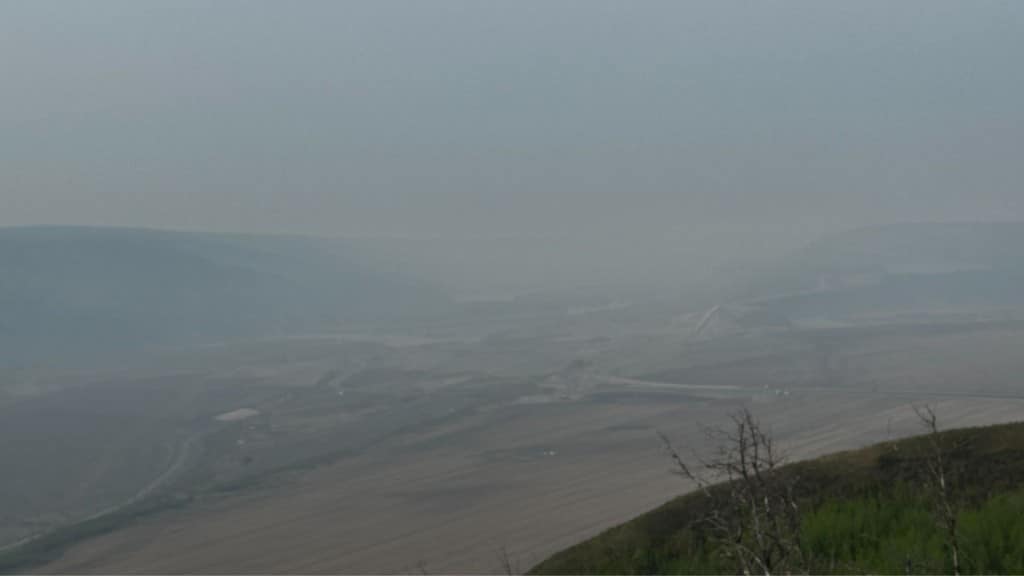
FORT ST. JOHN, B.C. — A number of structure protection personnel from across the province have been dispatched to the Red Creek wildfire due to the size of the fire and its activity.
Personnel have come in from Charlie Lake, Smithers, Kamloops, Columbia-Shuswap Regional District, Red Rock, Kelowna and other areas of the province.
The Charlie Lake Fire Department has deployed a water tender and crew to assist structure protection crews on the Red Creek Wildfire. The department is grateful to have the opportunity to assist our neighbouring community. Stay safe! pic.twitter.com/E0qnwDhs62
— Peace River Regional District (@prrdistrict) May 11, 2023
Looking for something to do?
Check out our new Events Calendar!
The North Peace complex brought in additional structure protection resources in anticipation of the warming and drying trend in the coming days.
Resources included structure protection specialists, engines and tenders, as well as a mass water delivery system being put in place on the south end of Charlie Lake to support refilling. Two portable refill tanks have also been set up to create additional water supply locations.
The North Peace Complex Incident Management Team says the Red Creek wildfire is at 2,716 hectares and is still considered out of control.
There are 54 firefighters, three operational field staff, structure protection teams and 24 pieces of heavy equipment assigned to the Red Creek wildfire.
Latest Stories
According to the management team, crews have used small-scale hand ignitions to remove unburnt fuel between the active fire perimeter and the machine guard on the fire’s east flank.
A guard is a wide path or dirt road where all fuel is removed and can be achieved by hand or machinery for larger guards, also known as a control line.
Crews are now working to extend hose lay and water delivery to secure the guard further.
On Thursday, heavy equipment will continue the construction of a machine guard on the fire’s south flank, starting at the southwest corner and working towards the southeast corners.
Crews will work towards the Red Creek drainage and continue constructing hand guards in the drainage to connect the heavy equipment guards.
An ignition operation of approximately 350 hectares is planned for Thursday afternoon on the south flank.
According to the team, the ignition will use a combination of aerial and hand ignition. Crews used heavy equipment to construct a machine guard from the southwest corner towards the Red Creek drainage in preparation for the ignition.
The ignition will remove unburnt fuels between the newly constructed guard and the fire’s edge to secure a control line.
The operation will be supported by ground crews, aerial resources and heavy equipment and will only happen if site and weather conditions are favourable.
The management team says planned ignitions are a useful and common tactic in fire suppression and management. It allows crews to bring the fire perimeter to control lines to create a continuous fire edge, making it easier for them to use direct attack methods.
Planned ignitions are also more time efficient and safer, as crews spend less time chasing hot spots and patches of fire in rough terrain.
Throughout the week, structure protection teams conducted assessments and set up equipment in subdivisions and properties along the north and east flanks of the fire.
The size of the Boundary Lake wildfire has been updated to 6,200 hectares on the BC Wildfire Service website. This update is due to the increase of visibility on the site, not a change in fire activity.
According to the BCWS, nine firefighters are responding on the British Columbian side of the fire.
On Thursday, crews will be mopping up the northwest and southwest corners of the Boundary Lake fire as well as increasing patrols to extinguish hot spots.
Crews continue to support the Clear Hills County on the Alberta side of the fire where the fire is most active.
The Cameron River wildfire has 31 firefighters, three field operational staff and four pieces of heavy equipment.
According to the team, they will be doing a roughly 30-hectare planned ignition operation on the fire’s northwest corner.
The planned ignition will remove some of the unburnt fuel patches under specific conditions instead of waiting for them to dry out and burn more intensely later.
The Peace River Regional District (PRRD) reduced the size of the evacuation order on Tuesday for the Boundary Lake wildfire while an evacuation alert remains in place.
Areas of Red Creek are also under an evacuation order, and others are under an evacuation alert.
Due to the smoke from the wildfires in B.C. and Alberta, the air quality health index says Fort St. John is at moderate risk.
According to FireSmoke.ca, the Peace region will continue to see smoke throughout the next few days.
In areas with smoke, people considered at risk, including older people, children and people with lung conditions, should consider reducing or rescheduling strenuous outdoor activities if symptoms are experienced.
According to the Air Quality Health Index, the general population does not need to modify outdoor activities unless symptoms are experienced.
One wildfire has now been extinguished in the region, and approximately eight wildfires are still considered active.
For more information on the wildfires across B.C., visit the BC Wildfire Service website.
Stay connected with local news
Make us your
home page
Authors

Related Articles
Staffing challenges necessitate diversion at Fort Nelson General Hospital
The closure will last until 7 p.m. on Sunday, May 3rd, according to Northern Health.

Energeticcity.ca Weekly Review: Youth Athlete of the Month
In this edition of the Weekly Review, the Youth Athlete of the Month is back. Plus, the most-read stories of the week.
(UPDATE) Baldonnel fire now listed as ‘under control’, according to BCWS
The four-hectare wildfire was reported during the evening of Saturday, May 2nd