
New report seeks to ensure locals get priority for jobs in ‘their backyard’
A Pembina Institute report is aiming to ensure local workers are given priority for job opportunities in their communities.

FORT ST. JOHN, B.C. — A new workforce report aims to ensure local workers are given priority for job opportunities “happening in their backyard.”
A Pembina Institute report titled “Northern Talent, Clean Future” by Mercer Pommer and Megan Gordon has found that workforce planning is not keeping up with the major investments happening in Northern B.C. and has raised concerns about the local workers missing out on new jobs.
The report said northern British Columbia is entering a period of economic transition and labour market conditions in the area’s economic region are diverse.
Local News You Can Trust
Label us as a Preferred Source to see our stories more often
Some communities are experiencing growth linked to major projects and clean energy development, while others are facing job losses due to downturns in forestry and manufacturing.
Gordon, co-author of the report and manager of the Sustainable Workforce Program at the Pembina Institute, said her team wanted to understand whether the North is well-equipped to supply a labour force for the clean energy transition, major projects and other potential economic opportunities.
She said, “There have been major impacts to our post-secondary institutions in terms of revenue and capacity, so we wanted to make sure these system in place are equipped to benefit people in the north and actually give them the skills they need to benefit from opportunities.”
Gordon said the Site C dam is a good example of a project where a significant part of the workforce has been brought in from outside the region and province.
Latest Stories
“While there are jobs for locals, we want to make sure locals are being given priority when it comes to things that are happening in their backyard.”
She said that although Northern Lights College has been working with industry to build a workforce, this has not translated into long-term careers.
“We’re in the boom and bust cycles of these big construction projects, but we’re not necessarily seeing those jobs translate into long-term careers that people can count on for decades,” she noted.
She believes that international cuts impact the revenue of smaller northern institutions, leading to program cuts and the loss of specialized programs.
“When it comes to their capacity to be able to offer specialized programs needed for some of the specific jobs seen in the clean energy industry, clean transportation, clean buildings and supply chains associated with mining and forestry, people leave the region or go out of the province for school,” she added.
This, she said, drains the local population and disadvantages small communities.
Through this report, Gordon and her team hope to see greater priority on local hiring and for industries to look to local communities for their labour.
In addition, Gordon said training capacity is a major barrier local communities face when it comes to employment opportunities.
She said, “Small communities in more remote locations don’t have the same access at all, so they’re required to travel several hours or have to relocate entirely, even within the north, to access education.”
Additional barriers include road transportation, harsh winter, attachment to a place and general dysregulation.
“There’s this need for us to be able to adapt different kinds of education provisions, so offering things like remote training or mobile training, where instructors go to communities,” she added. “You need a dedicated workforce development plan to expand it in a way that’s really going to serve local communities and First Nations in the north.”
She said the current system for properly connecting the workforce does not work due to a revenue and resourcing issue.
“It is just a lack of a dedicated mechanism for industry, post-secondary institutions, training providers and support from the government to put together dedicated plans that extend beyond individual projects,” she said.
Gordon said that, even amid a major construction boom, employment is collapsing.
She said, “Not only do we need to bring these different groups together to plan for major project implementation, but also to set up workers for careers in the long term and strike up more opportunities for workers through diversifying the economy to participate in careers not associated with the boom and bust cycle.”
Gordon said that having a robust, stable and skilled workforce is an asset for bringing new activity to the region.
When asked how it will benefit employers to hire local workers, she said, “We see in the resource industry, this camp-style model, which can be quite disruptive and very costly for employers to be flying workers in and out on a weekly or daily basis.”
She said employers will be able to save a significant amount because they will not have to provide housing, stipends or travel expenses.
“So having locals there, it’s going to create a more symbiotic relationship and social acceptance of those kinds of projects taking place within the community, because the benefits, wages and municipal revenues are being recirculated back within the places these projects are taking place,” she added.
Gordon believes there is limited access for First Nations communities in more remote areas to colleges and post-secondary institutions.
She said, “We want to make sure that training is culturally appropriate and job sites are safe and Indigenous people are protected from discrimination, which can be a major challenge.”
“Having one sort of centralized employment support systems is incredibly positive, particularly given there’s been so much downturn in certain industries, like forestry,” she said.
She said this will help people looking for local work, repurpose their skill set and provide support with job applications, resume building, interview preparation and job searching.
Through this report, Gordon hopes to shed light on unique circumstances in the North and on aspects overlooked and dismissed in the South.
“We’re hoping to see more attention being paid to local community diversification and workforce development,” she said. “We need governments paying attention to the unique workforce considerations, labour market challenges and ensuring there is fair distribution of opportunities, particularly for the folks who are going to be impacted by the development.”
She said local governments need to continue innovating, be willing to explore different pathways and work with new proponents to advance clean energy projects, such as wind and geothermal projects.
Stay connected with local news
Make us your
home page
Authors

Related Articles

AMBER ALERT – Missing 6-year-old, last seen in Fort St. John
An Amber Alert has been issued for a 6 year-old boy from Beaverlodge

Fort St. John RCMP searching for missing 15-year-old
David Yates was last seen on July 6
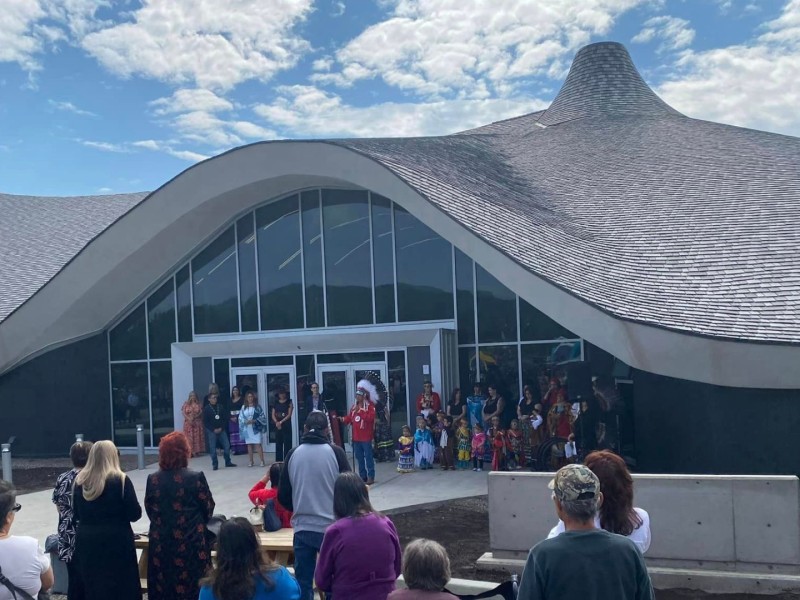
Saulteau Cultural Centre featured in 2026 A+ Awards by Architizer Magazine
American digital publication Architizer listed Saulteau’s Cultural Centre in its A+ Awards for 2026, describing the facility as ‘more than a museum.’