
City of Dawson Creek looks at alternative source of water
The City of Dawson Creek has been assessing potential water source options as phase one of its Water Supply System Project nears completion by mid-August.
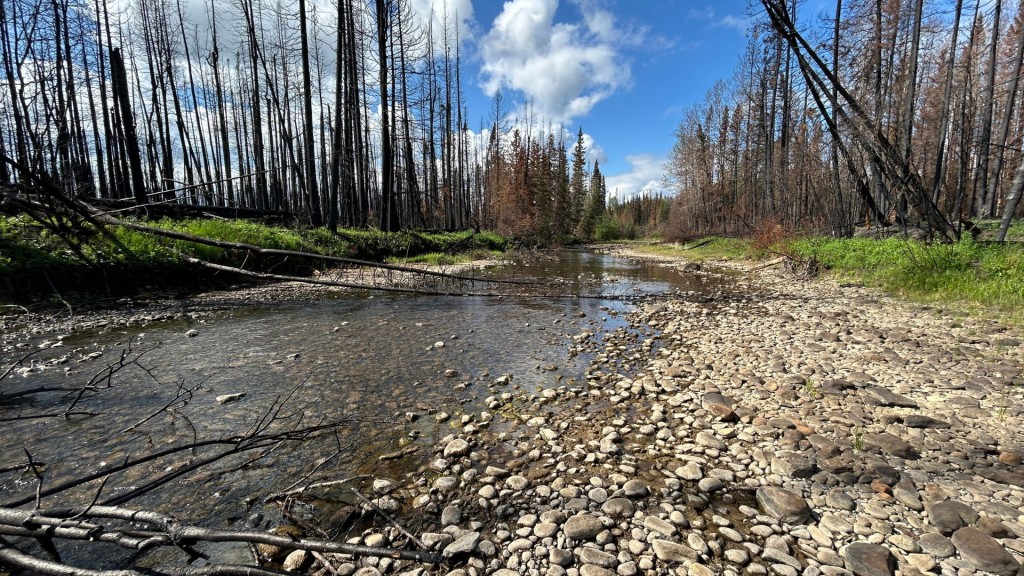
DAWSON CREEK, B.C. — The City of Dawson Creek has been assessing potential water source options for its Water Supply System Project.
According to a report presented during the City of Dawson Creek council meeting on June 15th, Devon Aaroe, the city’s general manager of major infrastructure and development, said a raw water sampling program is in progress to assess potential water source options.
This comes after the city announced it would revert to stage one conservation measures on May 25th, due to improved water conditions in the city’s water supply.
The City of Dawson Creek’s sole water source since 1942, the Kiskatinaw River, has been experiencing years of drought, prompting the city to first declare a SOLE (State of Local Emergency) in October 2025.
Dawson Creek ended SOLE on February 20th, as it believes it has enough water supply to last through the spring.
The June 15th report said initial route options have been developed and are being refined.
The current intake the project has selected for further analysis includes potential locations on the Peace River, the Pine River and the Murray River.
Latest Stories
The team identified two potential discharge locations: the Hansen Reservoir and the South Dawson Reservoir, both existing raw water reservoirs that form part of the city’s raw water storage system.
They will also be conducting seasonal sampling to capture variability in water quality and flow, and assessing the water treatment required for each water source.
The report presented to the council on June 15th said the return to stage one reflected improved short-term conditions but did not resolve the underlying risk to the city’s long-term water supply.
Aaroe said: “Work is now fully underway across all of our technical, regulatory and engagement streams.”
He added that during phase one, the team focused on three questions: future demand, viable source options and how to deliver this.
“[The] progress so far, we have built updated population and water demand forecasts out to 25 and 50 years,” he noted.
Aaroe explained that phase one will wrap up mid-August with a shortlist of viable options, high-level costs, risks and trade-offs.
“This phase is about narrowing the field and shortlisting,” he said. “Moving into phase two is going to require more funding, it’s going to require deeper analysis and multi-year planning toward design and construction.”
Councillor Jerimy Earl said: “It’s also worth looking at the fact that approximately a little more than a third of the people that are going to be using this water throughout the region aren’t residents of Dawson Creek”
He believes it is important the city, as it starts looking at possible funding models, engage with its “cohorts” in Pouce Coupe and the regional district at a very early stage.
In addition, the team has completed work to understand water demands beyond municipal use, including reviewing current industrial water use in the region, identifying key demand drivers related to regional activity and assessing potential future industrial demand.
In phase one, the team will conduct further technical reviews of the shortlisted options, and an evaluation will be carried out by a city team.
For phase two, if directed by the council, the project will focus on refining and confirming a preferred option and preparing for future implementation.
To read the full report, see below.
Stay connected with local news
Make us your
home page
Authors

Related Articles
Doig River First Nation councillors and Fort St. John Mayor speak of the opening of Naache Commons in the city
Both Doig River First Nation Chief and Council and Fort St. John’s Mayor had positive comments after the opening of the Nation’s Urban Reserve, Naache Commons in the city.

Arnie Isberg 1-pitch memorial tournament holds swansong this weekend
The tournament began in 2012 honouring Arnie Isberg, a Fort St. John resident who passed away from cancer the previous year.

(UPDATE) RCMP investigating possible human remains found near the city
The RCMP is investigating a report of possible human remains, BC Hydro crew discovered on June 8th near the city.