
‘There needs to be some sense of balance’: Cattlemen’s Association president talks DRIPA challenge
The BC Cattlemen’s Association will seek intervenor status in a case surrounding the Pendor Harbour and Area Residents Association on the Sunshine Coast.
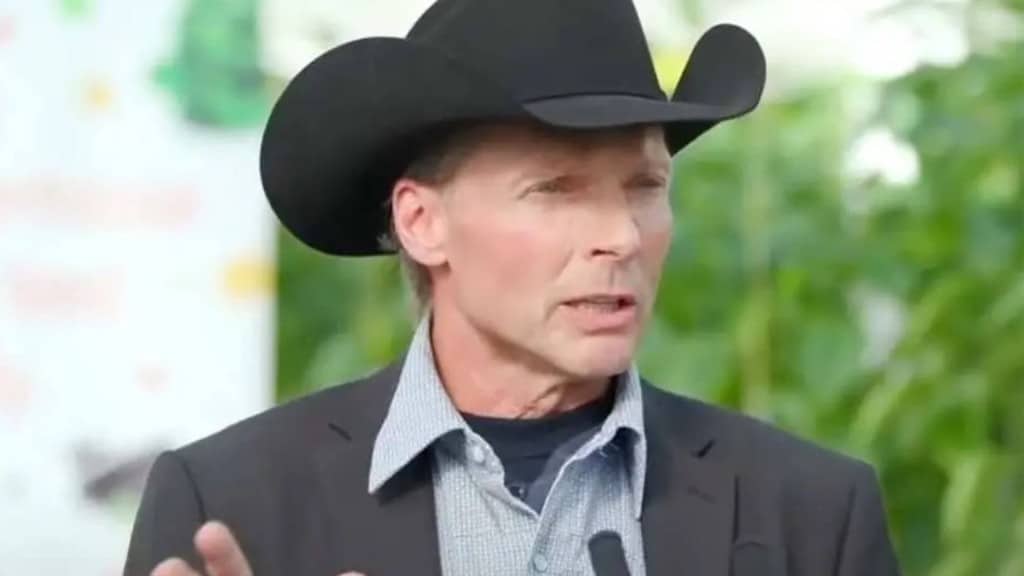
FORT ST. JOHN, B.C. — The president of the B.C. Cattlemen’s Association (BCCA) spoke to Energeticcity.ca about potential roles the organization would seek regarding a challenge to the province’s Declaration on the Rights of Indigenous Peoples (DRIPA).
A press release issued on Wednesday, May 6th, says the BCCA will seek intervenor status – a party acting on behalf of individuals or an organization – in the case surrounding the Pendor Harbour and Area Residents Association.
The Sunshine Coast-based organization has challenged the province’s DRIPA legislation in the B.C. Supreme Court, alleging it is unconstitutional and violates democratic rights.
The case was brought in February 2026 and is currently before the courts.
An organization acting as the voice of the cattle industry in B.C., BCCA president Werner Stump, addressed the reasons behind the announcement.
“We have been watching this play out here for probably a year and a half when it really started to pick up steam,” Stump told Energeticcity.ca. “There has been a lot of non-transparency, particularly from the government side. We thought that it was time to get some clarity on DRIPA and what it means.”
“[This is] so that people, including ourselves [and] our members, can properly evaluate what it’s about.”
Latest Stories
At a press conference announcing a new secondary school in Tumbler Ridge, Premier David Eby addressed the case on Thursday, May 7th.
“There is a matter in front of the court related to the Pender Harbour residents challenging the declaration,” said Eby. “I would say, big picture, we have a number of major economic agreements and social service agreements in the province that are underpinned by the declaration act.
“There are literally thousands of jobs in the province and probably in excess of 1,000 children and families that are being served under agreements under the declaration act.”
DRIPA was implemented in 2019, based on the United Nations Declaration on the Rights of Indigenous Peoples (UNDRIP).
It required the government to implement an action plan in consultation with First Nations Peoples to provide greater cultural, economic, and social opportunities to Indigenous Peoples in the province.
However, the Cowichan land dispute – where the Cowichan Band claimed land title over what is now Richmond – included private land in the area. The band says it has no intent to take over private land as a result of the decision.
The defendants, including the provincial and federal governments, are appealing the decision. The B.C. Supreme Court’s action sparked concern over potential property rights.
Stump has said it is an example of the government “flip-flopping” on making decisions surrounding DRIPA.
“I think it’s fair to describe what we’ve seen is a lot of unclarity,” said Stump. “We have seen mixed messages go out. On the one hand, they’re saying that private land is not in jeopardy. Then in the next breath, they are saying to the folks in Richmond that we understand that you’re concerned, and in fact, we’re going to backstop these mortgages in the event that the banks are not going to accept mortgage renewal in that area. It is just one area where we’re seeing a lot of confusion and lack of direction from the government.”
Stump, however, said his organization is not against reconciliation – just that the rights of private landowners are honoured with respect to DRIPA across the province, and potentially having a say in what reconciliation with First Nations communities could look like.
“This is entirely not about being against or opposed to reconciliation,” said Stump. “Quite the contrary. The BC cattle industry originated with First Nations being heavily involved, and they are to this day. We are a unique organization in that we have a very wide spectrum of cultures that we represent.”
“That’s not what we are trying to do, is to say that reconciliation isn’t important. But I think, just like anything that’s good and wonderful, there needs to be some sense of balance.”
Stay connected with local news
Make us your
home page
Authors

Related Articles

Tim Horton’s Smile Cookie Campaign raised thousands to support the Fort St. John Hospital Foundation
Tim Horton’s Smile Cookie Challenge has raised more than $24K to support the Fort St. John Hospital Foundation.

FSJ franchisee says community support was ‘unbelievable’ for McHappy Day
McHappy Day in Fort St. John and Dawson Creek raised over $30,000.
B.C. draining water off Old Fort landslide, no word when evacuation order may lift
FORT ST. JOHN — British Columbia’s Ministry of Transportation says workers have started draining water from a landslide in the province’s northeast that has forced residents out of their homes for weeks. An update on the slide blocking the road into Old Fort says the maintenance contractors began “dewatering” of