
BC Government investing in projects in Northeast B.C.
The B.C. government has invested in numerous energy projects across the province, including several in northeast B.C.
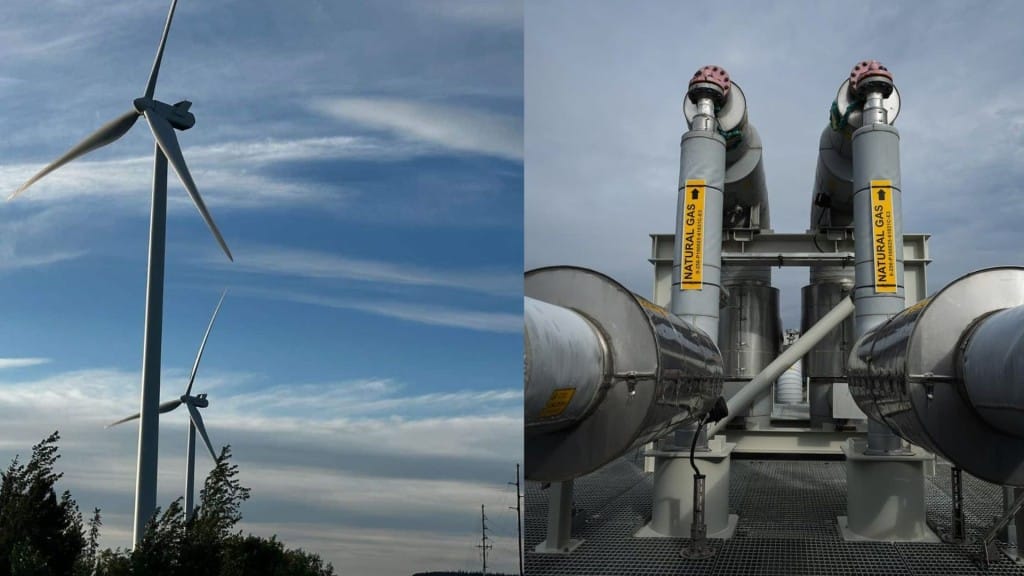
FORT ST. JOHN, B.C. — The provincial government is working to deliver major projects more quickly, including several in northeast B.C.
In an April 29th release, the province announced it was “moving major projects forward faster to create good jobs, grow our economy and secure our future as Canada’s economic engine.”
The government said it is speeding up permits and approvals to get shovels in the ground sooner and to create benefits and opportunities for people across B.C. during this time of ‘global uncertainty.’
According to the release, this project will deliver clean energy, critical minerals, and natural gas the world needs while helping to build a strong Canadian economy, reducing the country’s reliance on the United States, and giving B.C. a competitive edge globally.
It also said the projects will generate revenue for hospitals, schools, homes, and services that residents rely on.
The government said this work is part of ‘Look West’, a targeted plan to strengthen B.C. and Canada’s economic security amid global conflict and uncertainty.
The plan includes 35 major projects, including 18 initial priority projects that were announced in 2025, according to the release.
Latest Stories
Six of these projects are based in northeast B.C.,
TAYLOR WIND – TAYLOR
According to the Government of B.C., the Taylor Wind Project is a 40-turbine, 200-megawatt wind farm located 10 kilometers south of the District of Taylor.
The project was selected through BC Hydro’s 2024 Call for Power, which it said would provide clean and affordable electricity to serve the province’s expanding communities and housing needs.
The 2024 Call for Power secured a 30-year electricity purchase agreement with BC Hydro.
The Government of B.C. said the clean energy produced from the Taylor Wind Project will be enough to power over 60,000 homes each year.
It also said the project will provide good local jobs during both development and construction, as well as long-term jobs to support its operations.
The release states that the project will help the province meet its growing electricity demand, diversify its energy mix, and support Canada’s net-zero grid goals by reducing emissions.
The Peace River Regional District (PRRD), which serves areas of northeast B.C., has previously raised concerns about wind energy projects in the region.
In July 2024, the PRRD sent a letter detailing the district’s concerns around “cumulative impacts and regional benefits from wind farms in the region” to the Ministry of Energy, Mines, and Low Carbon Innovation, which has been rebranded to two separate ministries, the Ministry of Energy and Climate Solutions and the Ministry of Mining and Critical Minerals.
In response to the letter, then Minister Josie Osborne said all large clean energy projects in B.C. are subject to environmental assessments under the provinces Environemal Assement Act.
It is estimated that 150 jobs will be created during construction on the project, which is expected to begin in 2028, with operations scheduled to begin in 2031.
PEMBINA NGL PIPELINE EXPANSION – TAYLOR
A new 95-kilometer pipeline will be built in northeast B.C., adding 120,000 barrels per day of propane-plus and condensate capacity.
The Birch-to-Taylor Expansion represents an estimated $310 million in capital investment, according to the Government of B.C, while also responding to the growing production of natural gas liquids from B.C.’s Montney region.
The project is expected to strengthen B.C.’s role as a key energy supplier, supporting market access for producers across western Canada.
According to a February 26 news release, Pembina is proceeding with “two conventional pipeline expansion projects totaling $425 million.”
Pembina said the projects will “service growing volumes” in northeast B.C. and Alberta.
The Birch-to-Taylor expansion is included in the announcement, along with the Taylor-to-Gordonville expansion.
The Government of B.C. said Pembina has highlighted strong collaboration with both Indigenous and local communities. It said the expansion will support economic growth and opportunities for people in the Peace River Region.
The project is currently in construction, which has added an estimated 230 jobs.
PEMBINA TAYLOR TO GORDONDALE EXPANSION – TAYLOR
According to the Government of B.C., the Taylor-to-Gordondale pipeline is a 89-kilometer line connecting B.C. production to markets in Alberta, which the government said represents approximately $341 million in capital investments, responding to growing gas liquids production from B.C’s Montney region.
The pipeline expansion strengthens B.C.’s role as a “key energy supplier” while also supporting market access for western Canada producers, according to the government of B.C.
The Government of B.C. said the Ministry of Energy and Climate Solutions, in collaboration with regulators and permitting agencies, works to streamline, where possible, regulatory processes and address emerging issues for priority energy projects.
In February 2026, the Canada Energy Regulator approved the project, which is currently in the pre-construction stage. Once construction begins, it is estimated to provide 330 new jobs.
NORTHEAST BRITISH COLUMBIA (NEBC) CONNECTOR PIPELINE – FORT ST. JOHN
The NEBC connector is a project comprising two parallel, small-diameter pipelines totaling over 200 kilometers. According to the Government of B.C., the pipelines transport natural gas liquids and condensate to downstream markets in northwestern Alberta from the Montney region of B.C.
The project represents a $500 million investment and is expected to employ over 250 people during construction. The project aims to improve market access for B.C. producers of natural gas liquids and condensate, reduce transportation costs and emissions and support economic growth and employment opportunities in the area.
The Government of B.C. said the NEBC connector will strengthen B.C.’s role as Canada’s export gateway for natural gas products. The pipeline offers B.C.’s Montney producers a cost-effective transportation medium to Keyera’s liquid processing and storage hub in Fort Saskatchewan, Alberta, by connecting to Keyera’s KAPS Zone 4 expansion pipeline.
The project was among the initial 18 selected for an accelerated approval process and began construction in July 2025. The project is expected to be in service by 2027.
STEWART CREEK WIND – FORT ST. JOHN
Located in Fort St. John, the Stewart Creek Wind project is a 200-megawatt wind farm selected through the BC Hydro 2024 Call for Power and secured a 30-year electricity purchase agreement with BC Hydro. The agreement provides clean and renewable electricity to the provincial grid.
The government said the project will produce enough electricity to power about 25,000 average homes every year, while creating around 200 good local jobs during development and construction, plus an estimated 10 long-term jobs supporting its operation.
According to a government release, the project supports B.C.’s growing electricity demand, diversifies the province’s energy mix, and reduces emissions to help meet Canada’s net-zero grid goals.
The project was among the first 18 projects announced by the province. It is currently being reviewed through a streamlined process to expedite approvals while maintaining high environmental standards.
Construction on the project is expected to begin in the summer of 2028, with operations commencing in 2030.
ENBRIDGE T-NORTH EXPANSION – FORT ST. JOHN
The Enbridge T-North Aspen Point program is an expansion of the northern section of the T-North natural gas pipeline system’s Westcoast connector.
According to the government of B.C., the project adds 18 kilometers of new pipeline and 535 million cubic feet of transportation capacity per day, supporting increasing demand and Westcoast LNG exports.
The project represents an investment of $1.2 billion and directly employs over 300 people during construction. The government said the project’s peak workforce could reach up to 475.
The project focuses on bringing jobs to local communities, while contracting local businesses and supporting economic activity in the Peace River Region, according to the government. It also said the project will strengthen B.C.’s access to natural gas markets, supporting it’s role as Canada’s export gateway.
The government said new electric-driven compressors will reduce greenhouse gas emissions, supporting a cleaner energy future.
The project was among the initial 18 priority projects selected for an accelerated approval process. Construction began in April 2025 and is expected to be completed in late 2026.
For more information on these projects, and more across the province, refer to the B.C. government release.
Stay connected with local news
Make us your
home page
Authors

Related Articles

Memorandum of Understanding reached regarding floating LNG project
the agreement is a non-binding strategic partnership aimed at collaboration regarding a in-development liquified natural gas project