
Black History Month: Alaska Highway’s Sikanni Chief River Bridge built by black soldiers
Black soldiers from the US Army’s 95th regiment needed just 84 hours to complete the original Sikanni Chief River Bridge in 1942.
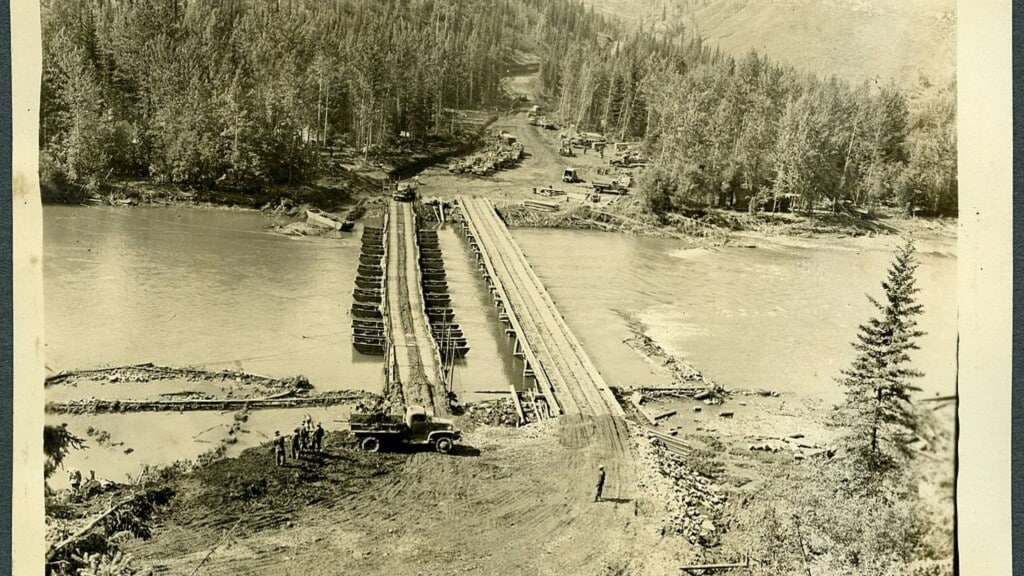
FORT ST. JOHN, B.C. — Although it is just rubble now, it was once one of the most important bridges during the construction of the Alaska Highway.
Built across the Sikanni Chief River, the Sikanni Chief River Bridge was built during construction of the highway by Black American regiments sent up to the North during World War II.
Lorelei McKenzie, the former head of the Pan African Caribbean Association of Fort St. John, said the war was still a time of prejudice for black soldiers.
Looking for something to do?
Check out our new Events Calendar!

“There was a white regiment that came up [to the area] already,” said McKenzie. “They were given new wheelbarrows and picks and axes. They couldn’t give it to the black soldiers, so they were given leftover equipment that was primitive back then.”
According to the historical site Alaska Highway Heritage, the US Army felt black soldiers “should be kept out of combat missions and should not congregate in bases located near American towns.”
This made it appealing to send African American soldiers north to a remote area to build the highway. The timeline
Alaska Highway Heritage writes three of the seven regiments working on the Alaska Highway’s construction – the 93rd, 95th and 97th regiments – were black.
Latest Stories
The website adds 3,695 of the soldiers – or roughly 34 per cent – of the army workers on the highway were African American.
“They slept in tents alongside the bay of the Sikanni Chief River,” said McKenzie. “It was cold.”
With second hand tools, soldiers from the 95th regiment bet their paycheques they could break a record building the bridge.
They did just that, with the completion less than four days later – in just 84 hours in August of 1942.
Eventually, the roadway was re-routed. Today, just the supports sit alongside the banks of Sikanni Chief River southeast of Fort Nelson.
McKenzie said the bridge is a continuous symbol of the black community contributing to the building of the region as a whole.
Stay connected with local news
Make us your
home page
Authors

Related Articles
Staffing challenges necessitate diversion at Fort Nelson General Hospital
The closure will last until 7 p.m. on Sunday, May 3rd, according to Northern Health.

Energeticcity.ca Weekly Review: Youth Athlete of the Month
In this edition of the Weekly Review, the Youth Athlete of the Month is back. Plus, the most-read stories of the week.
(UPDATE) Baldonnel fire now listed as ‘under control’, according to BCWS
The four-hectare wildfire was reported during the evening of Saturday, May 2nd