
Northern Health prepares for ‘minimal’ investment as it faces 200-strong seniors’ bed shortage
The Peace River Regional District reviewed a presentation from Northern Health about seniors’ long-term housing in the region.
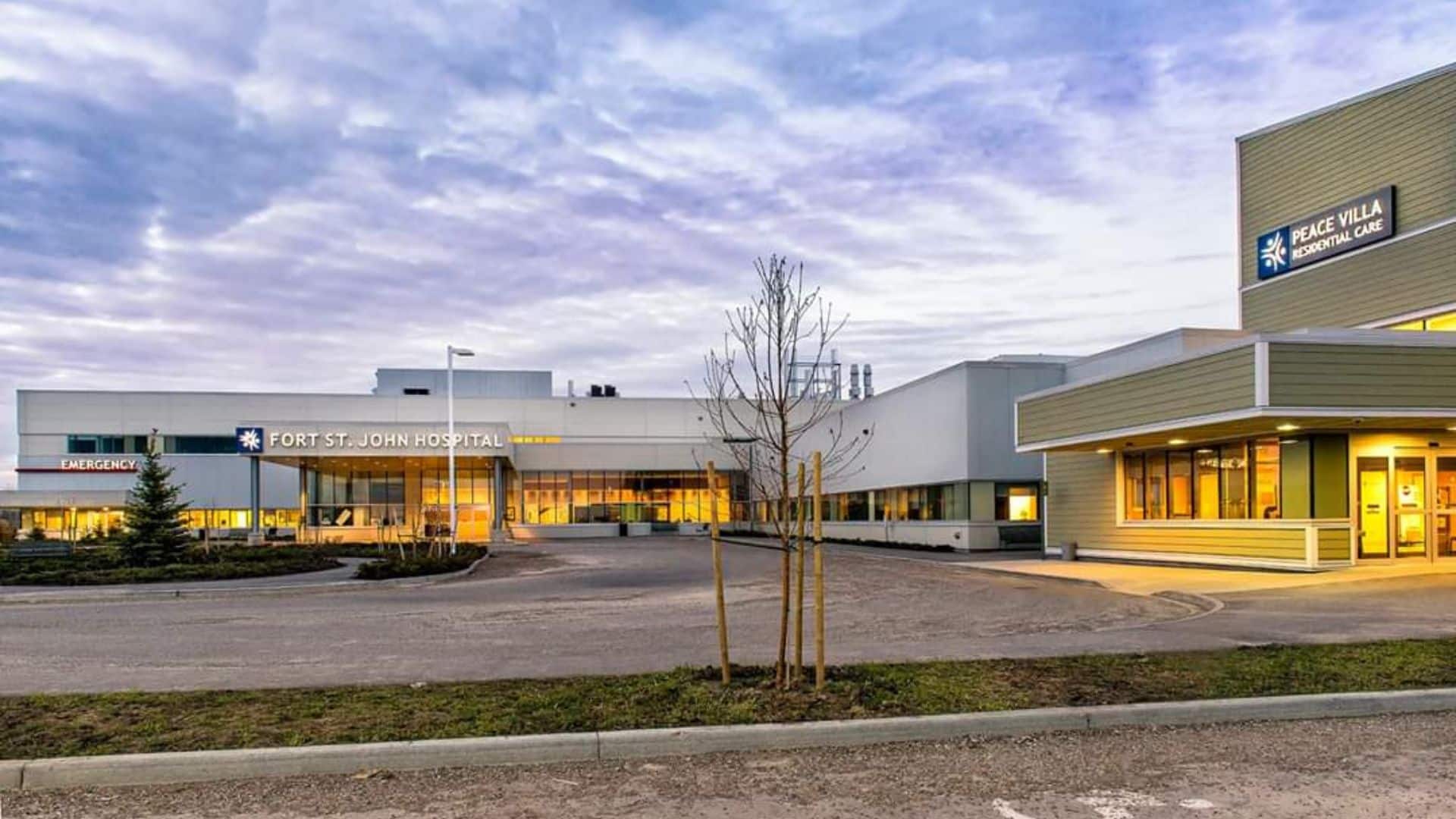
FORT ST. JOHN, B.C. — Northern Health is planning for “minimal” provincial investment over the next two years despite needing 200 extra seniors beds to cope with demand.
During the November 6th Peace River Regional District (PRRD) Regional Hospital District board meeting, directors reviewed a delegation from Northern Health regarding the future of seniors housing in the Peace River Regional Hospital District.
Mark De Croos, Northern Health’s vice president of finance and chief financial officer, and Aaron Bond, the executive lead of elder services, provided a detailed model compiled by Northern Health of communities across the region from Fort St. John to Smithers and Quesnel.
In the report, Bond noted an increase in the population of senior citizens, and a critical need for care in the future.
“Although population is the main driver of demand, there are other inputs that…went into our projections,” Bond stated.
Projections reviewed the populations of Quesnel, Smithers and Fort St. John, which was identified on the slides as Peace River North but verbally identified as Fort St. John.
When asked about this discrepancy by directors, and whether there were any beds not being accounted for, Bond stated the presentation and graphs only accounted for beds in Fort St. John.
Latest Stories
According to Northern Health, Fort St. John currently has 124 long-term care beds, and is expected to receive 84 new beds in the future to bring the total to 208.
In contrast, Quesnel currently has 120 beds, and will be receiving 221 for a total of 341, and Smithers currently has 70 beds, and will be receiving 160 new beds to bring its total to 230.
While the delegation acknowledged a modeled need for approximately 200 new beds in seniors facilities, they also stated the problem of seniors care was not one Northern Health could “build its way out of.”
When asked by Darryl Krakowka, director and mayor of the District of Tumbler Ridge, specifically how many seniors were receiving care at the Fort St. John Hospital while waiting for beds in the Peace Villa, the delegation stated they did not know.
“So to me, when we talk [about] modeling, we are actually not using real-life residents, community members,” Krakowka said.
“Because we’re talking modeling, but if we actually went to the Fort St. John Hospital, or phoned them right now and asked them how many people on floor two are waiting for beds in the Peace Villa, we wouldn’t have to model, because we’d have real-life patients.”
Bond explained modeling to assess future needs is a tool used to speak with communities and the government to approve business cases for new beds.
Krakowka then asked about other communities in the northeast, and their long-term care bed needs.
De Croos stated numbers from other communities had been considered, modeled and presented to the provincial government, however the health authority was told to ‘prioritize’ its list of needs.
“At the time [the government] were looking to build one long-term care facility where the need is great, so we were able to convince them that we need to build…in five locations,” De Croos said.
The five locations selected were Smithers, Quesnel, Prince George, Hazelton and Fort St. John.
“We did the modeling for all of Northern Health…but at the time we just received approval to proceed to business plans on just five of those communities,” De Croos said.
And when Krakowka asked how many beds communities in Peace River North and Peace River South were in need of in total, De Croos stated Dawson Creek required 29 new beds and Fort Nelson required nine.
When asked again by Brad Sperling, board chair and director of Electoral Area C, what the numbers were for rural communities, the delegation simply stated the province’s finances were “tight” this year, and explained Northern Health had been told to prepare for minimal capital investment in at least the next two years.
Sperling emphasized the need for statistics, so the regional district could continue to advocate for its residents and perhaps “think outside the box” for cost-effective solutions.
“Without numbers or the discussion going on, we really don’t have anything to advocate for other than to say, ‘yeah we need more seniors beds,’” Sperling said.
Dan Rose, director of Electoral Area E, also expressed frustration to the delegation regarding its lack of support for seniors at home.
“I recognize money is in short supply, so maybe we should shift focus,” Rose said.
“[The PRRD] spends a million dollars a year, and we service over 200 rural households with meals, snow removal and housekeeping, and that’s on our dime, over and above what we pay in taxes to the province.
“That’s one bed serving 200 people, it can be done, there’s a way to do it, [but] maybe it’s time to shift our focus until we learn how to build cheaper, take those dollars and stretch them into living at home and providing the services at home,” Rose continued.
“We don’t change anything and we don’t get any better, it’s time to think differently and start talking to some people on the ground that are getting it done.”
When Rose also asked what support the health authority offers to communities currently, Bond explained Northern Heath was focusing on improving home support services, adult day program spaces and partnerships with community organizations for daily activities such as housekeeping and grocery shopping.
“The more rural and remote the communities are, the more creative that you have to get because that is something that is not an easy answer,” Bond stated.
According to the presentation, Northern Health also intends to explore options for rural communities to help senior residents age in place, rather than transferring to a seniors’ housing facility.
To read the slides from the presentation, see pages eight to 11 below.
Stay connected with local news
Make us your
home page
Authors

Related Articles

Tentative agreement reached for community health workers in Peace Region and across B.C.
Community health workers in the Peace region are among 26,000 across B.C. covered by a new deal reached between the province and CBA.
Expanded hours, services to continue at Tumbler Ridge Health Centre
Northern Health has announced extended hours at the Tumbler Ridge Health Centre will continue “into the spring,” and it will become the “central location for mental health.”

(UPDATED) Hudson’s Hope Health Centre ‘temporarily closes’ for five days
The Hudson’s Hope Health Centre has “temporarily closed” until March 2nd.