
Geotechnical issues faced through Site C construction revealed in BC Hydro report
BC Hydro has published a report revealing the millions of dollars in geotechnical re-engineering which occurred through the Site C hydroelectric dam build.
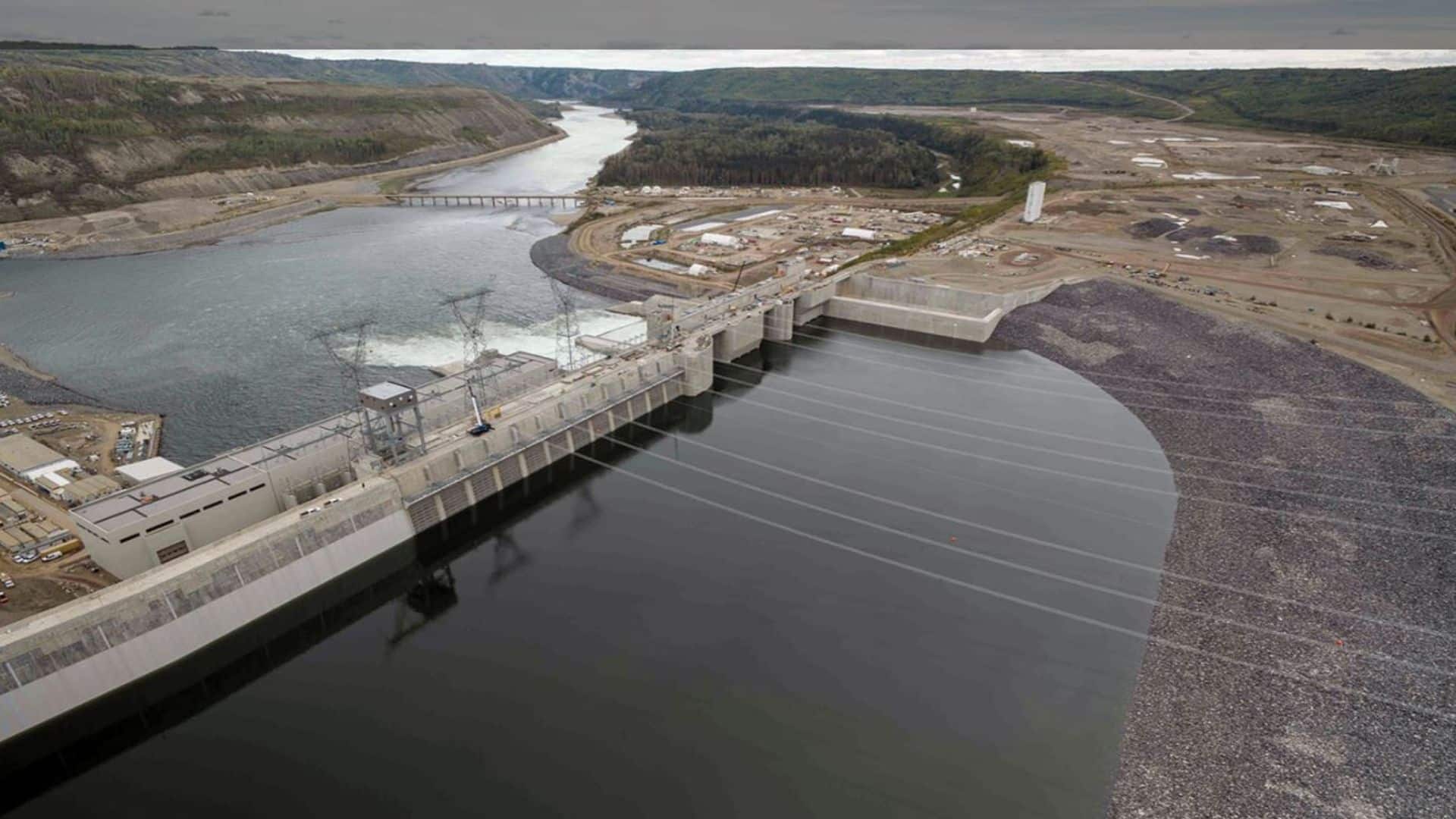
FORT ST. JOHN, B.C. — Geotechnical issues which plagued the Site C dam project throughout its 10-year construction have been detailed in a new report published by BC Hydro.
In a more than 200-page report, BC Hydro detailed the lessons it learned from the Site C hydroelectric dam project on the Peace River in Fort St. John.
Construction on the project began in 2015, and it became fully operational in August 2025. It is expected to produce enough power for 500,000 homes a year across the province.
In the report, BC Hydro said: “Overall, BC Hydro reflects on the Site C project with pride and a commitment to learn and improve.”
It also details geotechnical issues which negatively impacted the planning, design and execution of the dam.
“In February 2017, a tension crack developed on the left bank excavation while constructing a haul road resulting in the temporary stoppage of some construction excavation activities,” the report noted.
Later, in May 2017, a second, smaller crack was found which required fixing with a solution that “integrated with the final slope” of the dam.
Latest Stories
The “tension cracks” resulted in redesigning, as well as several construction roads being moved to maintain the “long-term stability of the slope.”
Alongside these issues, the utility explained the left bank of the dam had contained several “ancient slides” and “weak sliding planes,” despite being “investigated extensively prior to construction.”
Throughout the project, BC Hydro says crews encountered “unstable slides” impacting access roads, and a portion of the foundation needed to be reinstalled in 2018.
In conclusion, the utility stated it had learned to “identify and engage geotechnical experts early, particularly on complex issues,” and “maintain their involvement throughout design and major change processes.”
“The project benefited greatly from a large and varied group of internal and external experts who provided guidance and advice throughout the project, from investigations and through the construction period,” the report noted.
BC Hydro also noted in future projects it would “develop robust geotechnical models to evaluate performance and proactively support required enhancements.”
According to a table within the report which contained “key budget drivers” from 2018, two “risk re-assessment updates, including slope changes,” resulted in a total budget increase of $319 million.
This comes after BC Hydro says, in the same report, that it should have been more proactive as Site C costs ballooned.
Stay connected with local news
Make us your
home page
Authors

Related Articles
PRRD-based Site C workers increase as overall employment declines slightly
The number of Site C workers from the PRRD saw a significant increase in October, rising to 281 people from 205 in September.

(Opinion) Just and Reasonable: BC Hydro’s operating expenses are growing too fast
In this column contributed by Richard Mason, a former commissioner at the BCUC, he puts his case that BC Hydro must reduce its operating expenses.
BC Hydro to investigate impacts of Site C on Charlie Lake sewer and water
BC Hydro has agreed with the Peace River Regional District to a three-year investigation on the impacts of its Site C hydroelectric dam and reservoir on water and sewer in Charlie Lake.