
Canada Post strike shuts down mail delivery nationwide, including in Fort St. John
Postal workers across Canada walked off the job on strike on September 25th, something Canada Post called ‘disappointing.’
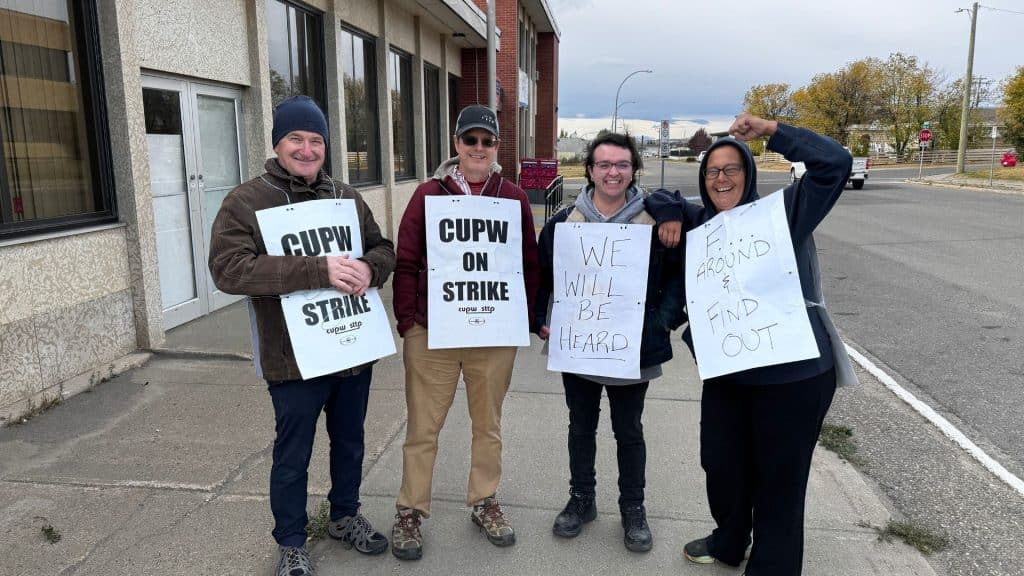
FORT ST. JOHN, B.C. — The battle lines have been drawn between Canada Post and the union representing its letter carriers, as a nationwide walk-out has workers demonstrating in front of postal offices across Canada.
The strike includes the post office in Fort St. John, as workers in solidarity with signs strapped to them, showed up in unity at 10351 100th Street.
Canadian Union of Postal Workers (CUPW) local chapter 738 shop steward Paulette Yunker told Energeticcity.ca both she and her fellow workers were “blindsided” by the announcement in an exclusive interview.
Local News Straight
to Your Phone
Download our app today!
Available on Android and iOS devices
“This came as a surprise to a lot of people,” said Yunker. “We had no idea it would go in this direction this fast. Most people are not happy with the minister.”
The CUPW made the announcement on Thursday, September 25th after citing the Canada Post minister, Joël Lightbound had “announced massive changes to the Government’s mandate for Canada Post” which included “huge service cutbacks to the public.”
This included adding four million addresses to community mailboxes, also known as super mailboxes, gutting the rural moratorium on post office closures, giving the postal service more flexibility by cutting the five-day a week delivery requirement and the ability to raise stamp rates on a more frequent basis.
Yunker said this will affect jobs, not just the estimated 40 postal workers in the Fort St. John area, but across the country.
Latest Stories
“The number of route holders would significantly diminish,” said Yunker. “[With community mailboxes], more mail can be added to the routes. Which means less people would own routes.”
“It’s definitely going to affect jobs, with them pushing their model of permanent part-time employees at 15 hours a week.”
“They would have no protections whatsoever; no pension, no benefits and no guarantee of full-time hours,” Yunker said.
The postal service said in a statement on September 25th it was “disappointed” in CUPW’s decision to escalate strike action, saying it will “further deteriorate” the postal service’s financial situation.
According to Canada Post’s website, the company has losses of $5 billion dating from 2018 to the second quarter of 2025.
CUPW workers recently went on strike in November 2024, which was suspended a month later after the Canadian Industrial Relations Board ordered workers back to work following an impasse in negotiations.
A strike was also threatened as recently as May 2025, with a ban on overtime work being imposed, averting job action.
Stay connected with local news
Make us your
home page
Authors

Related Articles

‘I couldn’t say no’: Indigenous artist becomes first to be featured by new project
Fort Nelson First Nation’s Amber Lloyd, who works with mocassins, has been featured by Northern Rockies Arts Council’s new project, ‘Artist Spotlight.’
Power outages in Peace region to affect more than 200 customers
BC Hydro has planned several outages in Dawson Creek, Chetwynd and Fort Nelson between March 29th and 31st, and they are scheduled to impact more than 200 BC Hydro customers.

Tumbler Ridge shooting victim Maya’s mom says UFC boss offering to fund care
The mother of Tumbler Ridge shooting victim Maya Gebala says Ultimate Fighting Championship (UFC) president Dana White has offered to pay for her daughter to be treated in California.