
‘Socializing costs, privatizing profits’: Indigenous, community groups take BC Energy Regulator to court over PRGT pipeline approval
Skeena Watershed Conservation Coalition, Kispiox band and Kispiox Valley Community Association have taken the BCER to court over the Prince Rupert Gas Transmission (PRGT) pipeline approval.
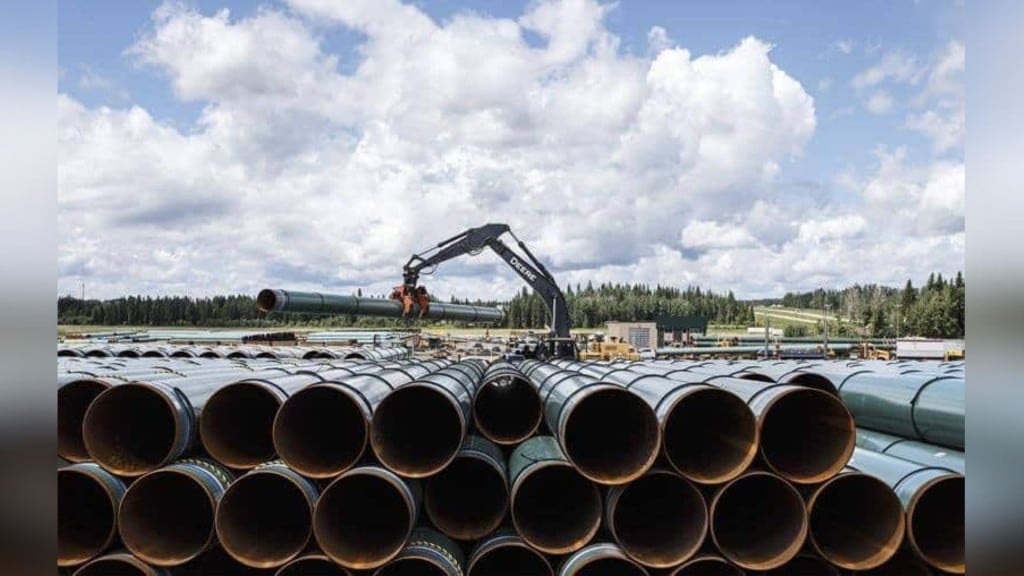
CHETWYND, B.C. — A coalition of Indigenous and non-Indigenous groups has accused the BC Energy Regulator (BCER) in court of bending its own rules to green-light construction of the Prince Rupert Gas Transmission (PRGT) pipeline.
Skeena Watershed Conservation Coalition, Kispiox (Anspayaxw) band — a Gitxsan Nation elected government — and Kispiox Valley Community Association allege clearing work for the 800-kilometre pipeline began last August before a legally-required assessment of the health of the land, water and wildlife was conducted.
PRGT will supply the planned Ksi Lisims liquefied natural gas (LNG) export project, which will process up to 12 million tonnes of LNG per year for markets primarily in Asia.
A four-day B.C. Supreme Court hearing begins today in Vancouver, after the groups filed for a judicial review last August.
“We have followed this project for over a decade now because it goes through some of the most critical salmon habitat [in the province],” said Shannon McPhail, co-executive director of Skeena Watershed Conservation Coalition.
“It’s going to impact water, it’s going to impact communities — all of these different issues were supposed to be assessed in a cumulative effects assessment.”
The groups, represented by the environmental law charity Ecojustice, are arguing the BCER, a government agency largely funded by the oil and gas industry, changed the PRGT’s permit conditions to allow preliminary construction even though an assessment of the project’s entire footprint hadn’t been conducted.
Latest Stories
The BCER did not respond to request for comment by publication time.
PRGT will run from Treaty 8 nations’ territories in northeast B.C. to the proposed Ksi Lisims LNG terminal near the mouth of the Nass River and the Alaska border.
It will cross more than 1,000 waterways, including major salmon-bearing rivers and tributaries.
Until last year, when the route was changed, the pipeline was slated to terminate in Prince Rupert, B.C.
The pipeline, formerly owned by TC Energy, the Calgary-based company that built the controversial Coastal GasLink pipeline, was originally approved in 2014.
In 2019, the B.C. government granted TC Energy a five-year extension to its environmental assessment certificate, which was set to expire.
In mid-2024, TC Energy sold the pipeline project to Texas-based Western LNG and the Nisg̱a’a Lisims Government. The Nisg̱a’a government and Western LNG also co-own the Ksi Lisims LNG export project, which is currently undergoing an environmental assessment.
The pipeline’s environmental assessment certificate expired last November, which meant Western LNG and the Nisg̱a’a government had a limited window to get enough work done to secure a “substantially started” designation and lock in the project’s approval indefinitely.
B.C. Environment Minister Tamara Davidson is expected to announce sometime this spring whether the government deems the PRGT pipeline is “substantially started”.
The expiring environmental assessment was likely behind the haste, McPhail said.
“So they were moving faster than they probably would have liked and as a result, what seems to have happened is that they missed a few of the steps.”
Kolin Sutherland-Wilson, Kispiox band chief councillor, released a statement alleging the decision to start building the pipeline “was not only hasty but…ignored the broader impacts by using outdated information and only focusing on small sections of the project.”
BCER previously told The Narwhal an effects assessment for a small section of the pipeline, known as section 5b, “was completed by the Nisg̱a’a Nation, with respect to cumulative effects on Nisg̱a’a lands.”
The regulator said the requirement to conduct an assessment is isolated to each section of the pipeline for which permits were issued, meaning the proponent isn’t required to assess the entire project as a whole.
McPhail said the regulator’s statement contradicts the purpose of a cumulative-effects assessment, which provides a holistic look at the impacts of past construction, ecosystem health and the potential impacts of a proposed project in the context of development that could take place in the future.
She said it is “a resource extraction region,” alleging: “We’re good at it and there is a good way to do it and there are ways that you just don’t do it.
“The BC Energy Regulator seems to be exemplifying what you don’t do — and that is hurry things through important processes like a cumulative effects assessment.”
She added: “It directly impacts me, it impacts my kids, my community, my family — not to mention water and land.
“We are socializing the costs and privatizing the profits. I’m tired of these major industries making billions of dollars on the backs of Indigenous people and on the backs of communities who have made a living here.”
Wilson called for a complete and up-to-date assessment that takes into account the “true scale of potential harm” to communities like Kispiox, located 15 kilometres from the pipeline.
“It’s crucial to ensure the safety and wellbeing of our communities against the very real threat of climate change.”
The 2025 Federal Election is happening on April 28. Let us know what topics are most important to you for the Prince George – Peace River – Northern Rockies riding by taking our survey at https://energeticcity.ca/election
Stay connected with local news
Make us your
home page
Related Articles
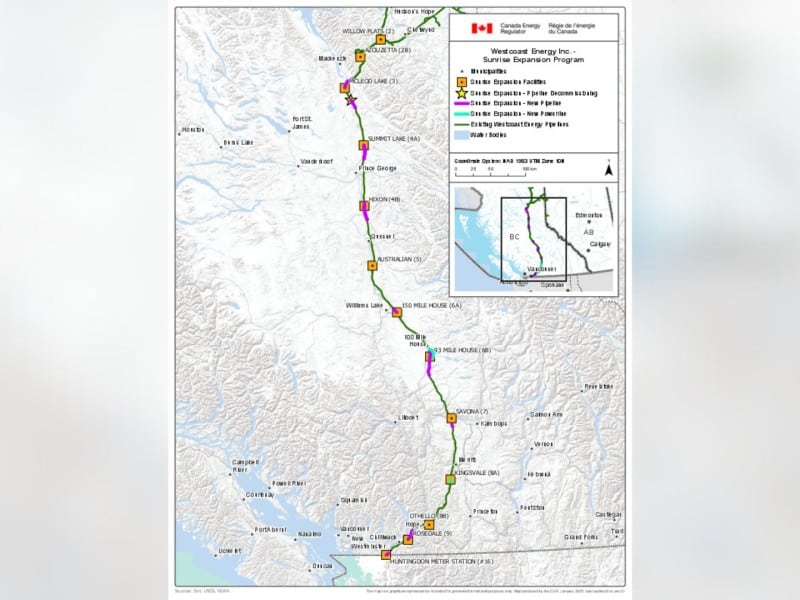
CER recommends approval of Westcoast’s pipeline expansion project
The Canada Energy Regulator (CER) found Westcoast Energy’s Sunrise Expansion Program to be in the public interest.

‘Borderline friendly’: Premiers of Alberta and B.C. meet with Carney, talk pipeline
Alberta Premier Danielle Smith met with her B.C. counterpart David Eby and Prime Minister Mark Carney in Ottawa to talk about various topics, including a potential pipeline through B.C. to the West Coast.
‘How do we correct this?’ Kitimat residents seek solutions to LNG Canada flaring fiasco
The Kitimat community is asking questions after it was revealed LNG Canada has been consistently flaring more than 15 times the amount of gas than expected due to an equipment “integrity issue.”