
Doig River First Nation discusses Land Use plan with Chamber of Commerce
Further discussion surrounding Doig River First Nation’s Land Use plans were the topic of lunch this week.
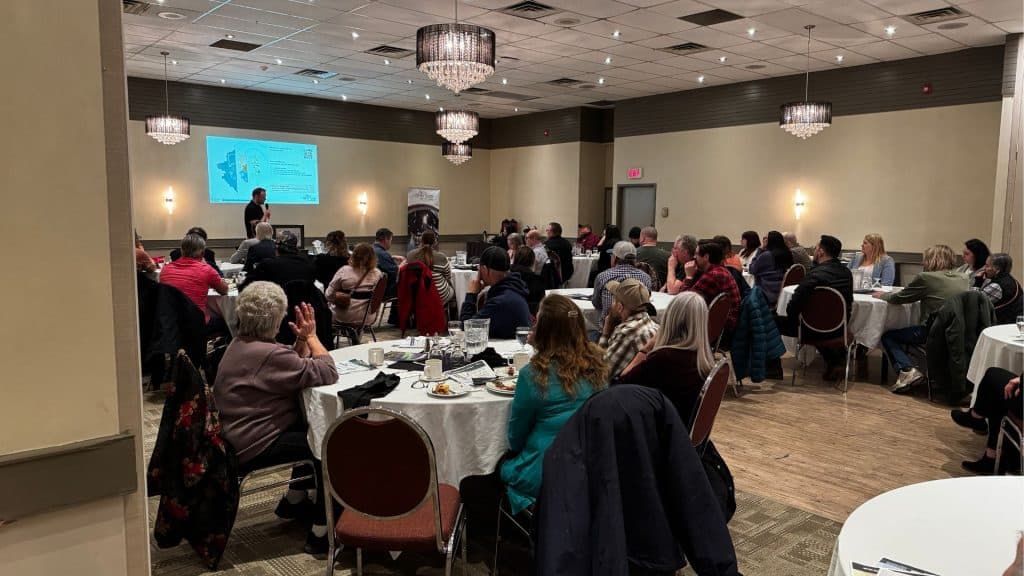
FORT ST. JOHN, B.C. — Further discussion surrounding Doig River First Nation’s Land Use plans were the topic of lunch this week.
The First Nation hosted a luncheon at the Northern Grand Hotel in Fort St. John, with an assist from the city’s Chamber of Commerce.
The presentation about DRFN’s land use plan and K’ih tsaa?dze Tribal Park were the focus of the meeting following the public World Cafe event in January.
DRFN Chief Trevor Makadahay said the key to the land plan’s success was finding a balance between industry and DRFN’s overall goals for land development.
“Misinformation can get out there,” said Makadahay. “We want to work with our neighbours. So we can do this together, for our children and yours.”
“There should be some input from everyone. But this is the way where we see it as land users, and it’s really important for everybody to get this right.”
The presentations to Chamber of Commerce members focused on restoring lands totalling 97,115 acres.
Latest Stories
This included the complete history of industrial development on the lands and their focus on restoring the land through ecocultural restoration.
Ultimately, by working together, the goal is finding “Ke Maah” which in the beaver language means “a good, unspoiled place in nature.”
Jake Hughson, who works with Urban Systems and is a land consultant with DRFN, pointed to themes in the land use planning process, which include cultural resiliency leading to healthy wildlife, water, land and prosperity.
“Doig is an active participant in the resource sector,” said Hughson. “but they also have concerns about the scale and the pace and how some of that resource development has happened.”
“[It’s about] finding the balance where you can have a resource sector and be prosperous extracting and developing resources.”
Members from the Chamber of Commerce, including chair and president Vince Van Wieringen, said co-hosting the event for its members underlines the organization’s commitment to advocacy.
“We live by our ABCs – advocacy, benefits and connections,” said Van Wieringen. “By bringing people together, the biggest part we can do is working in partnership with DRFN.”
Makadahay says plans to restore the land and K’ih tsaa?dze have been official since around 2009, but have been rooted since 2005.
Taking a “grassroots approach”, DRFN has been consulting with community members about land restoration solutions and “critical community use areas” starting around 2007.
DRFN’s full land use plan is available on their website.
Stay connected with local news
Make us your
home page
Authors

Related Articles
Cultural Gathering of Nations returns for 2026
The Cultural Gathering of Nations’ event coordinator Daniel Desjarlais said more Treaty 8 B.C. Nations will participate in the event’s logistics in 2026.
Charlie Lake historical site shortlisted for top Indigenous experience award
Tse’k’wa Heritage Society has been shortlisted for the Tourism Industry Association of BC’s (TIABC) ‘Indigenous operator or experience award’ for 2026.
Doig River First Nation to host land-use plan event in Fort St. John
Doig River First Nation’s long-term land-use plan engagements, including on February 24th, are the second of a four-step process between the First Nation and the province of B.C.