
Evan Saugstad: When the Narrative Shifts
I am a firm believer that no matter how far left or right we may swing, the worse things get, the sooner we will move back to the centre and correct our errors.

FORT ST. JOHN, B.C. — Elon Musk’s Tweet said, “Is this legal in Canada?”.
“Yes, it is” echoed the legal experts; “It is a federal mandate”.
All in reference to the University of BC (UBC) advertising a job (Research Chair for Dentistry) that limited applicants to, and;
“In accordance with UBC’s CRC Equity, Diversity, and Inclusion Action Plan and pursuant to Section 42 of the BC Human Rights Code, the selection will be restricted to members of the following federally designated groups: people with disabilities, Indigenous people, racialized people, women, and people from minoritized gender identity groups, …..”
Note: our Federal government funds research at our Universities and has threatened to cut off that funding if all Research Chair positions are not staffed to be a mirror image of Canadian population dynamics.
Legal in BC as the BC Human Rights (Section 42) allows for Special Programs to legally discriminate against identified groups or persons so “other” groups or persons can receive an advantage.
A “special program” is any program adopted to improve conditions for an individual or group that has faced disadvantage. It achieves this by treating them in a way which would normally contravene the Human Rights Code. (BC Human Rights website and my highlights)
Latest Stories
The question becomes, because it is legal, is it right?
Who or what are “people with disabilities, Indigenous people, racialized people, women, and people from minoritized gender identity groups” as the posting searches for?
A quick search of the internet and:
People with disabilities: “Under the Employment Equity Act, a person with a disability is “any person who has a long-term, reoccurring physical, mental, sensory, psychiatric, or learning impairment and who considers themselves to be disadvantaged in employment by reason of that impairment.” According to the Canadian Human Rights Act, a disability is “any previous or existing mental or physical disability and includes disfigurement and previous or existing dependence of alcohol or a drug.” (Gov of Canada definition)
Indigenous people: “Indigenous identity refers to whether the person identified with the Indigenous peoples of Canada. This includes those who identify as First Nations (North American Indian), Métis and/or Inuk (Inuit), and/or those who report being Registered or Treaty Indians (that is, registered under the Indian Act of Canada), and/or those who have membership in a First Nation or Indian band.” (Gov of Canada definition)
Racialized people: Members of racialized groups are persons who do not identify as primarily white in race, ethnicity, origin, and/or colour, regardless of their birthplace or citizenship. The term “racialized” is used as a more current term than “visible minority” from the Employment Equity Act (1995). (UBC definition)

Women: All people who identify as women, whether they are cisgender or transgender women. (Gov of Canada)
Minoritized gender identity groups: Gender identity is each person’s internal and individual experience of gender. It is their sense of being a woman, a man, both, neither, or anywhere along the gender spectrum. A person’s gender identity may be the same as or different from the gender typically associated with their sex assigned at birth. For some persons, their gender identity is different from the gender typically associated with their sex assigned at birth; this is often described as transgender or simply trans. Gender identity is fundamentally different from a person’s sexual orientation. (Gov of Canada)
Assuming one meets the required experience, credentials, and knowledge criteria, with a bit of spin, this is who could apply for this UBC job.
Could be a disabled Caucasian who used to drink a bottle of whiskey a day. Could be anyone in a formal relationship with an Indian Band member were the band recognizes that person as being part of their Band Membership Code (some Indian Bands do not require any blood connection to the band itself). Could be any “white” person who does not recognize themselves as being “white” by virtue of some long lost or distance relative that was of a different ethnic origin (Remember the box you can tick on the Canada Census or CRA tax form to self qualify?). Could be any man who claims to be a woman and ticks that same Census or Tax form box. And finally, as to gender identity – just wait another year or two and everyone that has not yet been assigned their own letter of the alphabet, will get one, and then also be able to claim their own unique group.
Before I offend to many, the point I am trying to make is not that affirmative action is wrong (trying to make identified persons or group’s lives better), but what we see today has become is sham and pandering nonsense to pacify the squeaky wheels. Literally, when one looks at the definition, the job application says, “Applications from heterosexual Caucasian men that are not a member of a recognized Indian band and claim no disability will be thrown in the trash”.
Didn’t always used to be that way, and yes, as a society we do need to address racism and/or discrimination in hiring practices, but oh have times changed. Now, it is an acceptable practice, and legal, to discriminate and use race as a means of disqualifying an identifiable segment of society. Just yell and scream about being a minority or victim or …. what ever, and you are in, eligible to go to the head of the line and ready to take your self described place in ruling society.
Interestingly, I too was once accused of doing this same sort of thing. Spent the better part of a decade working as a “Community Coordinator” for an energy company. I was tasked with creating more opportunities for local indigenous persons and their business and increasing local employment for all community members. Without any employment or economic opportunities, communities were beginning to oppose projects that required regulatory approval. One way to help garner community acceptance was to hire locally to the extent possible. (Glad to have such narrow parameters, as don’t know what I would have done if I was tasked with these same criteria as we see today!)
In the good old days, when the “big” contractor arrived to work in a small community, they brought all their employees, equipment, materials, even their outhouses. It mattered naught what the community or any first nation had to offer, as the contractors had all the answers; “We got everything we need so why would we hire or purchase anything locally? If you want to work for us, come to our office and apply like everyone else, and we will see if you are fit to be hired ….” and so it went.
A few tweaks to the contract language committing to local First nations and communities, buy in from senior management and things began to change. First Nations individuals and local contractors began to receive work, with economic benefits now accruing back into those communities our projects impacted the most. I also had regular discussions (arguments) about what we were doing, defended that it wasn’t racism, and that it was a corporate objective to grow the local workforces with the benefit of regulatory support.
Worked so well that eventually there were not enough local workers available for hire. Some First Nations then asked that we hire their “joint” venture” partners and just pay the band leadership a percentage of contract value and everyone would be happy. From that it evolved to paying up front for the right to be able to work in the area and until today, when we see that much of the original objectives have been lost is as it is no longer about leveling the playing field, creating equal opportunities and lifting disadvantage workers and business up so they could compete equally.
If I was to take a guess at what a poll would show as to what Canadians think about programs such as what UBC advertised, I would say the majority would say, “it has gone too far, means nothing, get rid of this and a whole bunch other like it”. And don’t buy the narrative that this is just excluding some old white guy with a PhD at UBC. It has become standard hiring practice for many of our government and government funded institution’s.
DEI (otherwise know as Diversity, Equity and Inclusion) is slowly dying a natural death as it flounders trying to explain why you can deny diversity, equity and inclusion to one segment of the population in the name of propping up and promoting of others, or that the BIPOC movement (Black, Indigenous and People of Colour) is also losing steam as it struggles to explain why those successful people of colour are excluded and are not accorded the same courtesy, while the rest of the population has had enough of the fake and phoney postering.
Did you know that you too can exploit the “racialized’ person designation if one of four of your grandparents is not Caucasian? In some cases, accepts even less blood percentage than that.
I am a firm believer that no matter how far left or right we may swing, the worse things get, the sooner we will move back to the centre and correct our errors.
As the old saying goes, you can fool some off the people some of the time, but not all the people all the time, and the majority are finally becoming tired of being fooled.
Evan, and happy to see the narrative shifting, and with a couple more elections, maybe see a complete re-imaging of it all.
Stay connected with local news
Make us your
home page
Letters to the Editor
Letters to the Editor should be exclusive to Energeticcity.ca. Include your name, address and daytime phone number. Keep letters to 500 words or fewer. Letters may be edited for length and clarity. To submit a letter by e-mail to contact@energeticcity.ca.
Authors
Related Articles
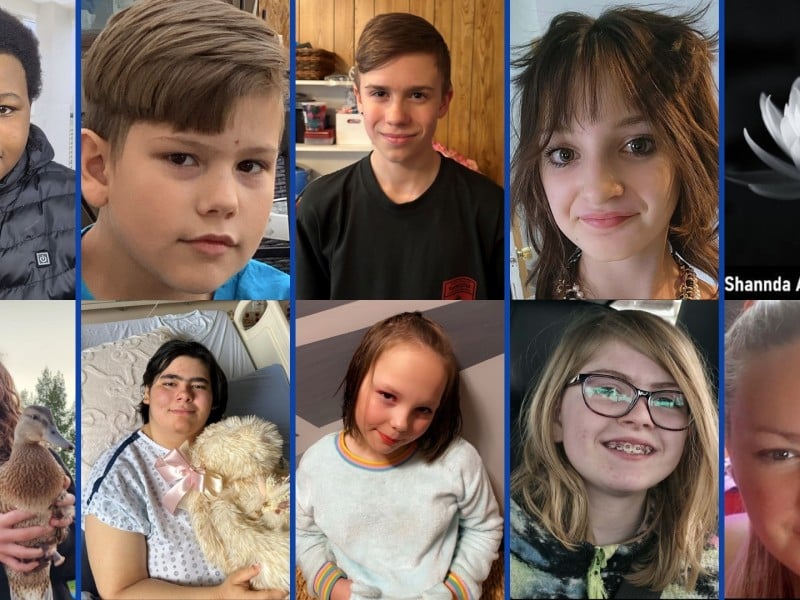
(Opinion) Bear Flat Dispatch: Thoughts on the worst of tragedies in Tumbler Ridge
Regular contributor Ken Boon writes in the aftermath of the Tumbler Ridge mass shooting, which took place on February 10th.

(Opinion) Bear Flat Dispatch: Relieved to be in the hot seat
Regular contributor Ken Boon recounts an incidence in 2018 when he was pleased to be routed through the perfume and makeup section of Shoppers Drug Mart in Fort St. John.
(Opinion) Bear Flat Dispatch: Looking back to 2016 and the difference a decade makes
To celebrate the 2026 new year, regular contributor Ken Boon uses a column he wrote in 2016 to illustrate all the changes in the Peace River region over the last decade, such as the construction of the Site C dam.