Evan Saugstad: BC’s New Reality Favors Few
Our current government does not respect the concept that BC belongs to all of us, and decisions to change that, or how we use the lands should be made by us all.
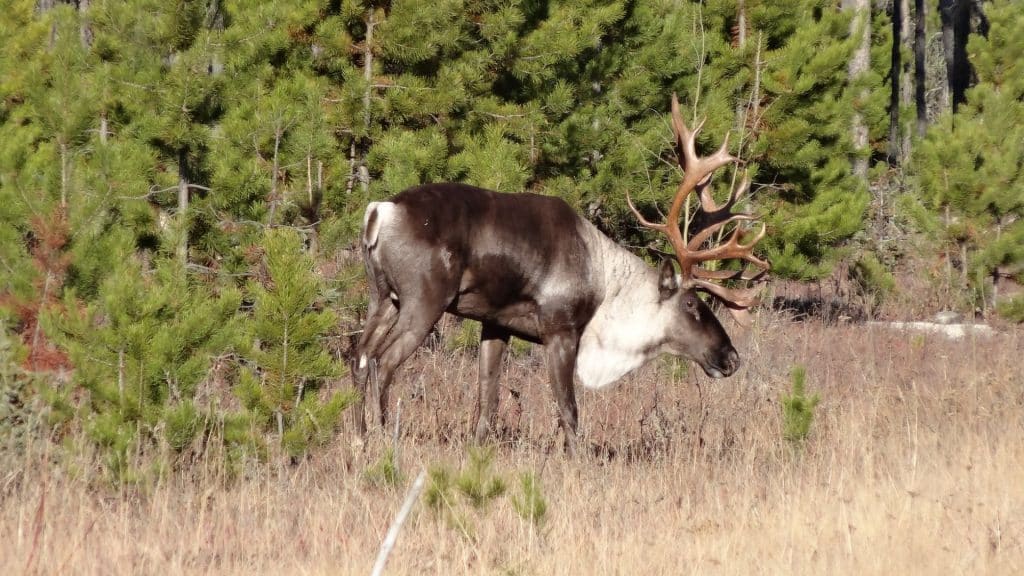
Did you get the invite to the big celebration on June 14th at Moberly Lake, the one where the BC Government, with great fanfare, pomp and ceremony announced the creation of BC’s largest new park in over a decade for an area west of Chetwynd and Hudson’s Hope?
Everyone who is anyone was there. The Premier, his top cabinet ministers, Treaty 8 Chiefs and councils, the entire Board of the Peace River Regional District (PRRD), local MLAs, and representatives from our business and industrial sectors including forestry, mining, natural gas, pipelines, guide outfitters and all other interested residents as they scrambled for invites to this monumental announcement.
After years of consultations, negotiations, platitudes and the exchange of large sums of money that ensured everyone was happy and supported the creation of this addition to the Klinse-za Park. With this announcement, Northeast BC added another 200,000 hectares to our park and protected areas list ensuring we contribute more than our fair share in helping Premier Eby meet his commitment to conserve 30% of BC by 2030 (otherwise known as 30 x 30) or known by others as one more step in the Yellowstone to Yukon Initiative (Y to Y).
Local News You Can Trust
Label us as a Preferred Source to see our stories more often
No, didn’t get one? Neither did I, as government wasn’t sure just how well they would be received so skipped the announcement about the party.
On a quiet June 14th Friday afternoon Premier Ebby and his Environment Minister posted a Press Release announcing the annexation of another piece of the Peace to become off limits to anything that remotely represents an economic opportunity. The last thing they wanted was for all communities to show up and say what they think of this new park and the process our NDP government used to create it.
If you read the Press Release and background you would think that this designation was widely supported, part of a master Land Use Planning process and great news overall. It only cost the taxpayer $43 million to send the forest, mining and petroleum tenure holders packing and looking for new investments anywhere else but here. The reparations possibly include some private landowners, guide outfitters, trappers and wind energy as there was no elaboration on who got what.
You still think it was foolish and unforeseen for Canfor to close its Chetwynd sawmill last year? Remember that our government promised that a Socio-Impact Study/Analysis would be completed and made available before any decisions were made so the impacts were fully understood by all? Contract was issued, winning bid (direct award?) was announced to a company in then Minister of Forests, Lands and Natural Resource Operations, and Rural Development Doug Donaldson’s riding, and then it went quiet. No document has ever been produced that I am aware of, as if it was, the future economic impacts would have been noted as astronomical. I wrote about the impacts that this park’s creation could cause in the Alaksa Highway News in 2019;
Latest Stories
“I also must say how sorry I feel for Mayor Allen Courtoreille of the District of Chetwynd. What a kick in the butt for your first term as Mayor.
Not even an invite to the table to witness another execution of local jobs and employment, and you, being the one person who does represent people from both indigenous and non-indigenous backgrounds. I really do hope they haven’t taken so much timber off the table that you now lose one of your sawmills.”
And still no invite for Mayor Courtoreille to meaningfully participate.
The letters of congratulations in the Press Release says it all. With exception of one, all advocate for the creation of more Parks in northern BC, live at least 1000 km away, in our southern most extremities where government has no intention of sterilizing their economic land base with more parks.
- Tori Ball, conservation director, Lands and Freshwater Program, Canadian Parks and Wilderness Society, B.C (Squamish)
- Michael Noonan, assistant professor and head of the Quantitative Ecology Lab at the University of B.C. Okanagan (Kelowna)
- Tim Burkhart, director of landscape protection, Yellowstone to Yukon Conservation Initiative (Victoria)
- Rachel Plotkin, boreal project manager, David Suzuki Foundation (Vancouver)
- Cole Burton, associate professor, Department of Forest Resources Management and Canada research chair in terrestrial mammal conservation (Vancouver)
- Brian Sullivan, chief executive officer, Conuma Resources (Tumbler Ridge) – Conuma operates the current coal mines in the South Peace and must be relieved that this new park does not render all their coal claims mute.
Notably absent from the congratulatory list was our MLA’s, PRRD Directors or Chair, Mayors or Councillors or other business leaders, or the Metis people and McLeod Lake Indian Band who both retain interests/traditional territories in the area and were also excluded.
The Press Release contained statements that this represents economic opportunities. Unfortunately, not really. Costs to manage this park will supersede any potential for revenue generation for decades to come, and certainly will come nowhere close to matching the area’s potential that its natural resources could generate.
The issue is not that this area should or should not be a park.
A park may be its best use, but the determination did not include any assessment of the north’s needs, wants, or desires, or any process that put the park advocates at the front of the room to explain the need and convince the rest of us that this is in the best interests of us all. This park’s creation was decided in the backrooms of Victoria by two First Nations and our NDP Government, behind closed doors, out of sight, out of mind and then sprung upon the rest as fait de complete. Yes, the Parks and Wilderness Society, Y 2 Y, David Suzuki Foundation and a host of other southern organization with close ties to their NDP friends at the Provincial government had their input and that was the only thing that mattered.
A bit of history on how this park was created.
The South Peace Land and Resource Management Plan (LRMP) process began in 1992 to identify areas for parks and protection (the NDP government of the day had mandated 15 % of BC would become park or protected) and guide land use planning for industries on the remainder of the Dawson Creek Forest District (South Peace). I joined the process in 1994 as a forestry representative and worked with the entire team (20+ members), which included West Moberly First Nations, one of two Treaty 8 first nations to participate. Government signed off on the LRMP in 1999
The original Klinse-za Park was part of this LRMP. I wrote the original management plan for what was then called the Twin Sisters Special Management Area, and the LRMP members then endorsed it. Much of that original plan was subsequently incorporated when the Special Area was formally adopted as the Klinse-za Park.
Contrast the LRMP process to the one used for this expansion.
1999 LRMP – a public process that created a land use planning document, including new parks that at the conclusion, all participating members signed. No lies, deceit or subterfuge involved. Bring a bunch of responsible people with diverse views, needs and wants and let them work out the plan. It worked, took time but with no protests, no counter protests and everyone agreed with the result. Although not everyone got everything they wanted, everyone did have a clear understanding what mattered to the entire community.
2020 Partnership Agreement between the governments of B.C, Canada, Saulteau First Nations, and West Moberly First Nations – a secretive process that excluded 95% of the community and community interests. A process, which our NDP government now uses frequently, and in this case, one that only involves two chiefs who wished for and were granted “government to government” negotiations at the total exclusion of their neighbors and all others affected by their decisions. The closing statement of this last Press Release says it all, and clearly outlines our NDP government’s intention and process throughout.
“The Province will work collaboratively with First Nations and other partners to develop a Klinse-za/Twin Sisters Park management plan that will also involve public engagement.”
My highlight, but clear intentions that local communities, stakeholders, and special interest groups are not “partners” and will duly be informed of the results once more closed-door decisions have been made on how this park will be managed.
My input, and being it is so special and important to our iconic species (caribou, grizzly bears, wolverine, fisher and bull trout), declare it Class A park with no hunting, fishing, trapping, gathering for everyone with a goal of excluding all humans so as not to disturb those species.
Writing about this agreement and process is not new for me. During the past five years I have written several articles in the Alaska Highway News (AHN) about the process, the outcomes and some of the potential future repercussions. Unfortunately, with the demise of the AHN, most all these articles disappeared when they shut down their servers.
Some of what I said in those articles:
AHN Dec 2018 – It Takes a Village to Raise A Herd
“Don’t do as I do, just do as I say
Where have I heard that before?
As a former resident of Chetwynd, and one who worked over a decade in their local forest industry, I can’t help feeling a sense of foreboding as I follow the saga over caribou protection measures in the area just west of town.
The more I read, and more I follow this story, the more the words “do as I say, don’t do as I do” keep coming to mind.
Both the Federal and Provincial governments have been touting new rules and big changes in their respective Environmental Assessment (EA) processes.
Headlines read, more consultation, more local involvement, more listening, more information, more studies, more First Nations input, and on and on and on it goes.
Ok, Mr. Prime Minister and Mr. Premier, what about the reverse?
What happens when you to are looking to make changes that effect the environment and local economies?
Do your new rules apply to what you do?
Do you really want to understand what your decisions might mean locally?
Are local concerns and fears relevant, or is it only what you decide that matters and when you roll out your new plan, we are all just supposed to all fall in line and ensure it is implemented?
Now, I do understand that you may be in the early stages of looking at what causes caribou population declines, what effects people and industries have on those, but this is where you should be engaging with not just First Nations, but local governments, effected industries and other impacted stakeholders.
Both of your new EA’s tout early engagement so we all can get a better understanding of not only what may be proposed, but what may be affected by your proposed project (yes, I call this a project, as if you close large areas to general public access and return them to natural conditions, then along with that comes the need to “unbuild” infrastructure and that should be subject to a full EA) …..”
AHN; May 2019 – Caribou Agreement
“If something smells like a skunk, is it really a skunk?
On March 21st, the BC government released their “draft” strategy for the protection of caribou in the South Peace area, near Chetwynd, Mackenzie and Tumbler Ridge. This, after months and months of requests by local governments and stakeholders to be involved, we now get a quick look, a quicker consultation period and voila, all will be proclaimed as law by mid summer.
The draft “Intergovernmental Partnership Agreement for the Conservation of the Central Group of the Southern Mountain Caribou” was also released. This “agreement” is between the governments of Canada, BC, Saulteau First Nations (SFN) and West Moberly First Nations (WMFN).
After a quick read, I can see why it took so long for our government to make this public.
Our government just excluded most of the area’s population from participating in major land use decisions and decision-making processes, that will affect us, our livelihoods and potentially, the viability of our communities.
These agreements do not use all available science. Nothing about the single largest cause of the collapse of these herds, that being the WAC Bennett Dam and Williston Lake, that blocked historic caribou migrations routes and that nothing in this will change that. Or that current declines are largely by predation and the not the loss of habitat.”
“…. How can our Minister of Forests, Lands and Natural Resource Operations, Doug Donaldson make the statement that; “The federal government could have unilaterally imposed measures that would only consider the habitat needs of caribou and not the needs of communities” (CBC News March 22). News flash Doug; there is nothing in these agreements that looks out for the needs of “all” area communities. You selected two to represent the rest and assumed the others will benefit.
And how can you say, as reported in the Globe and Mail; “Donaldson said some local industries might be impacted and the governments will work to ensure that the effects are limited.” Really? ….”
AHN May 2020 – South Peace Caribou Agreement Part 1
“…. On Jan 24/20, Blair Lekstrom announced his resignation as Premier Horgan’s point person for the contentious caribou conservation plan for BC’s South Peace. This followed our Premier making it very clear that he had no intention of listening to concerns or advocating on behalf of affected local communities or allowing them to be part of any decision-making processes when it came to caribou management.
When I first heard that, a vison popped into my head of Premier Horgan humming Frank Sinatra’s song “My Way (the end is near)” while he happily accepted Lekstrom’s resignation.
Note: one more irrelevant person out of his way (he set you up to fail Blair!).
A month later the Section 11 Partnership Agreement (Agreement) was signed with virtually no recognition of the Lekstrom Report’s 14 recommendations. ….”
AHN May 2020 – South Peace Caribou Agreement Part 2
“….. Which government or Chief has stated that non-band members will still be able to hunt on any lands subject to the Section 11 Partnership Agreement? They have clearly stated that the general public can fish, walk, climb, jump up and down and maybe, just maybe, snow mobile in some areas, but total silence about hunting.
Which government has promised any compensation for those losing their jobs, businesses and homes? Details seem to be very short on these subjects.
Agreements which are negotiated in secret with one segment of society that favour one segment of society will do nothing for reconciliation or the elimination of racism. ….”
AHN July 2019 – Yellowstone to Yukon Initiative
“If you followed the great South Peace caribou conservation caper from this past winter, you may have seen the acronym “Y to Y”. Ever wonder who they are and what are they trying to accomplish, does it matter, or do you even care?
I have tried to understand what it is that they are trying to accomplish. In short, from what I understand, if their vision for our resource lands came to pass, our economy would be in tatters. What they are trying to do, does matter for those who live and work in the BC Peace. ….
…. The Peace area represents a zone between the Muskwa-Kechika protected areas to our north and the national parks and protected areas to our south, that needs to be protected. Their “Healing the Break” zone (how they describe a large area of the North and South Peace) eastern boundary is just west of Fort St John and Grande Prairie, and their western boundary is just east of Prince George. It’s huge.”
AHN Jan 2022 – 30 by 30
“…. Where most of our biodiversity is threatened is where we have allowed urban areas to consume our wild and natural spaces with little to no thought about biological consequences – such places as southern Vancouver Island, Okanagan lowlands, lower Fraser Valley, and Metro Vancouver which currently account for most of our threatened species.
In the spirit of proposing solutions, I have one, which when completed will ensure BC has very few endangered species left on the list. I drop “threatened” from my solution as according to scientists, whomever they are, everything is threaten by climate change, so nothing that can practically be achieved, will change any of that.
BC should immediately begin returning four key areas of our Province from their present urban jungles back to their biological paradises. These are Saanich, Surrey, Sumas, and Summerland. Convert them from biological deserts back to their former role of providing habitat for the thousands of endangered creatures, plants and other organism that used to call these places home. We could, in a few short years, remove most species from BC’s endangered list by creating conservancies and converting thousands of homes, business and 1000’s of kilometres of asphalt back to grass, shrubs, trees, waterways, and functioning ecosystems.
Oh, you say, that would cost allot and how would we fund such an endeavor? Simple, follow the polluter pay principle we have so conveniently developed for paying our climate change bill. Premier David makes it mandatory that all residents and business living on these biologically threatened lands and endangered ecosystems begin paying a surcharge for the purchase and restoration of these endangered lands …..”
June 2024 and my parting thought.
Think of what this process means for the rest BC if we are stupid enough to elect Premier Eby and the NDP for another four years (yes, this word has not yet been banned)?
Our current government does not respect the concept that BC belongs to all of us, and decisions to change that, or how we use the lands should be made by us all. Yes, it takes time, hard work, dedication and the spirit of cooperation to make those monumental changes, but when we do, they will eventually be respected by the majority. If we don’t respect those tenants and keep making the changes in secret that only involve and favour a few, the results will the be the division of peoples where we all think less of each other.
My advice to Messrs. Kevin Falcon and John Rustad; I will personally donate to each of you one boxing glove, a pen, a piece of paper and lock you both in the outhouse until you can come to agreement on how BC United and BC Conservatives will work together and defeat David and his band of socialist elites.
Evan, and I do fear for what kind of Province our children will inherit.
Stay connected with local news
Make us your
home page
Letters to the Editor
Letters to the Editor should be exclusive to Energeticcity.ca. Include your name, address and daytime phone number. Keep letters to 500 words or fewer. Letters may be edited for length and clarity. To submit a letter by e-mail to [email protected].
Authors
Related Articles
FSJ Eats with Ed: The (bitter) beef brisket sandwich battle of 2026
Venturing to the confines of Fort St. John’s Centennial Park, Beef Brisket Sandwiches were the meal of choice during 2026 Ribfest
(Opinion) Bear Flat Dispatch: Caterpillars, Bears and Poplar Trees
Regular contributor Ken Boon writes about the turning of the seasons in Bear Flat.
(Opinion) Bear Flat dispatch: Bear Flat Museum
Regular contributor Ken Boon writes about the Bear Flat Museum, which features a “Site C Sucks Museum” cabin, a sign cabin and old farm equipment.