
Local MLA believes provincial government mismanages forestry industry
Peace River North MLA Dan Davies believes the $7 million sale of Canfor’s pulp mill in Taylor is the latest example of the provincial government’s mismanagement of the forestry industry.
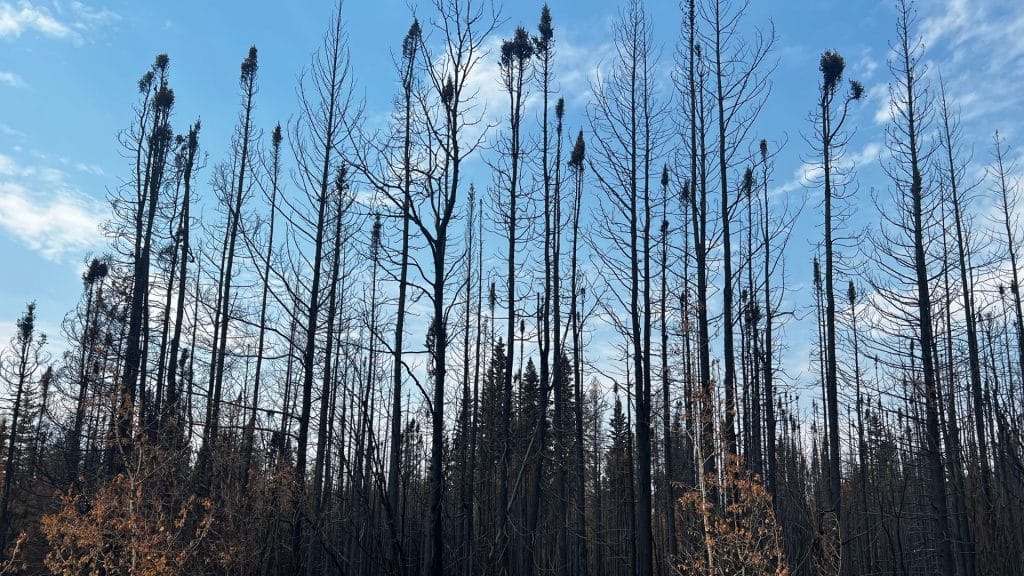
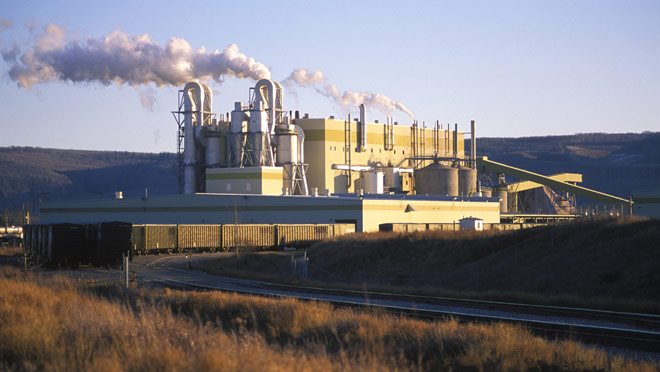
TAYLOR, B.C. — Peace River North MLA Dan Davies believes the $7 million sale of Canfor’s pulp mill in Taylor is the latest example of the provincial government’s mismanagement of the forestry industry.
Davies says it’s a tragedy the mill has closed down following months of curtailments and other closures within the province.
Local News Straight
to Your Phone
Download our app today!
Available on Android and iOS devices
Forestry is a massive industry in B.C., and according to Davies, when a large company such as Canfor starts curtailments or permanently shuts down mills — it’s “not a good sign.”
The MLA says he’s glad there was a purchase and hopes to hear more details soon, including if the mill in Taylor will reopen.
Canfor plans to release more information once the sale is completed.
Davies believes the province has poor forest management practices.
Latest Stories
“We don’t do enough prescribed burns, we don’t manage our forests, generally, as well as we should,” Davies said.
“We need to look at other jurisdictions, [such as] Finland and Sweden, who have a thriving forest industry.”
He admits there are differences, but B.C. can learn from other governments.
According to the BC Ministry of Forests, 23 cultural and prescribed burn projects covering 2,241.4 hectares were conducted in 2023, five of which were delivered in partnership with First Nations.
Currently, 61 cultural and prescribed burn projects are planned for 2024, and BC Wildfire Service (BCWS) anticipates 51 new burn plans will be developed or co-developed with First Nations.
The Ministry of Forests says amendments to the Wildfire Act passed in 2023 enable the BCWS to support First Nations and other partners on burning projects when requested.
Davies says the government doesn’t seem focused on extinguishing fires unless they’re immediately threatening infrastructure. He used the record-breaking 619,072-hectare Donnie Creek wildfire as an example.
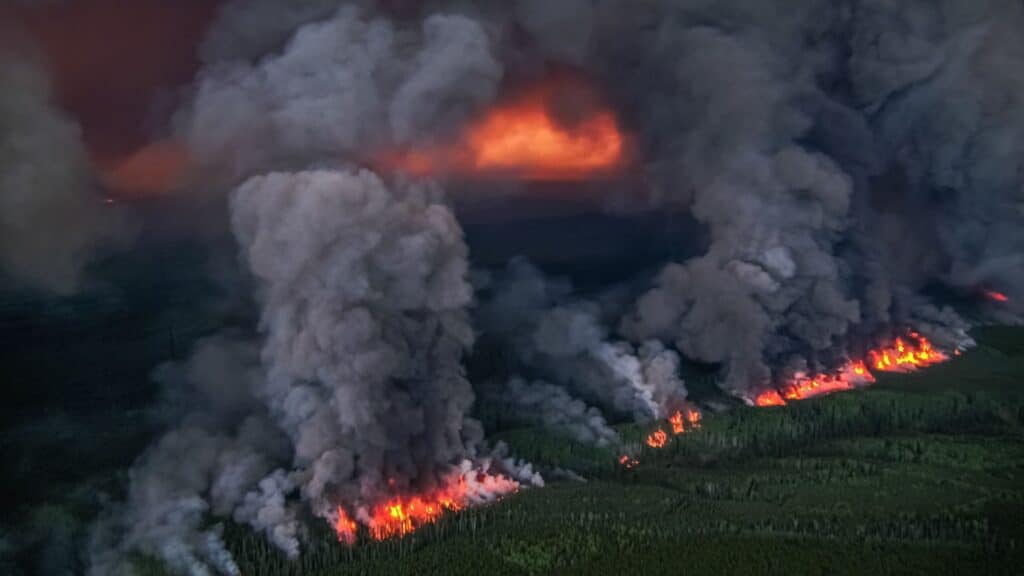
“You get these large fires, and you’re burning a resource of British Columbia, so a resource for British Columbians that in this day and age is obviously a little scarce when we’re talking about the access to fibre challenges that companies are facing,” Davies said.
The Donnie Creek wildfire ignited through natural causes on May 12th, 2023, and was a wildfire of note until days of rain in August. It remained out of control until temperatures in the region cooled.
He says another point the provincial government should consider is after fires go through an area, the ministry needs to respond quickly to salvage what it can and “get that wood where it needs to go.”
He says it would simply be a matter of logging the burnt wood because access roads already exist in many areas.
“They need to get into these areas and clean up the forests and get them replanted,” Davies said.
“This is what we see, and it’s just ridiculous when it comes to getting things moving. It takes forever.”
The Ministry of Forests says access to timber is critical for the province and that wildfire salvage is a priority to ensure minimal economic impacts and land recovery.
The steps made by the ministry to remove barriers and expedite wildfire salvage include clarifying pricing for wildfire salvage and developing new Wildfire Salvage Opportunity Agreements aimed at increasing First Nation participation.
The province has received 22 applications to salvage timber from forests burned in 2023.
The ministry says seven major tenure holders and five First Nations across the province have received permits for salvage logging for areas damaged by 2023.
In addition, BC Timber Sales developed 30 new timber sales licences totalling 563,800 cubic metres, which are scheduled for sale “in the near future.”
Davies says he has been trying to get the government to deal with the aftermath of the Red Creek windstorm for years.
On June 30th, 2021, a severe windstorm tore through the area, damaging homes and knocking down many trees.
Prespatou, Blueberry River First Nation and Doig River First Nation residents said they saw a tunnel cloud touch down, but Environment Canada said it wasn’t a tornado.
Davies says Red Creek residents are lucky the fire nearby wasn’t worse.
“I wrote multiple letters, and the government is just now starting to kind of make a plan, it seems, but it’s three years later,” Davies said.
“There’s no urgency, it seems, when it comes to forestry by this government.”
Last May, Red Creek resident Graham O’Day said volunteers in the area cleaned up trees on the roads and properties after the storm. Later, “ministry people” also came in, but they didn’t clean up the trees around the subdivision.
“Nobody wanted to accept responsibility or actually state who was gonna be responsible for cleaning up that land,” O’Day said. “It was like everybody was passing the buck.”
According to the Ministry of Forests, the Northeast Wildfire Risk Reduction program has been actively engaging community members and First Nations to reduce wildfire risk.
The ministry says knocked-down trees in the Red Creek area affected private and crown lands as well as lands selected by Blueberry River First Nations during the Treaty Land Entitlement selection process.
The ministry says it has been collaborating with Red Creek residents, Blueberry River First Nations and registered professionals under contracts to complete assessments that will enable a safe fuel management treatment.
O’Day said the assessments started in 2022, with drones and helicopters going over the area.
“All they’ve done is toured around and actually done nothing about the issue,” O’Day said.
“All these people have come out, checked it out, surveyed it, seen it, and nothing’s happened.”
O’Day said he was told the issue would be dealt with in the winter, but the Ministry of Forests provided no timeline for the assessments or any cleanup in 2024.
Davies says other challenges are being faced because “the government is just making it hard to do anything in this province,” such as acquiring permits and finding labourers.
“We’re pricing ourselves out of competition here in British Columbia,” Davies said.
The MLA believes that the current provincial government is not “pro-resources,” whether it’s forestry, oil and gas or mining.
“That’s not where their head is right now, so it’s not a priority,” Davies said.
“It doesn’t matter what industry that you look at, they’re all struggling.”
Again, he mentions looking at other jurisdictions for an example.
“Whether we’re looking in Canada or in the United States, they’re doing well, so it’s obviously something that B.C. is doing,” Davies said.
More information about the B.C. Ministry of Forests can be found here.
Stay connected with local news
Make us your
home page
Authors

Related Articles
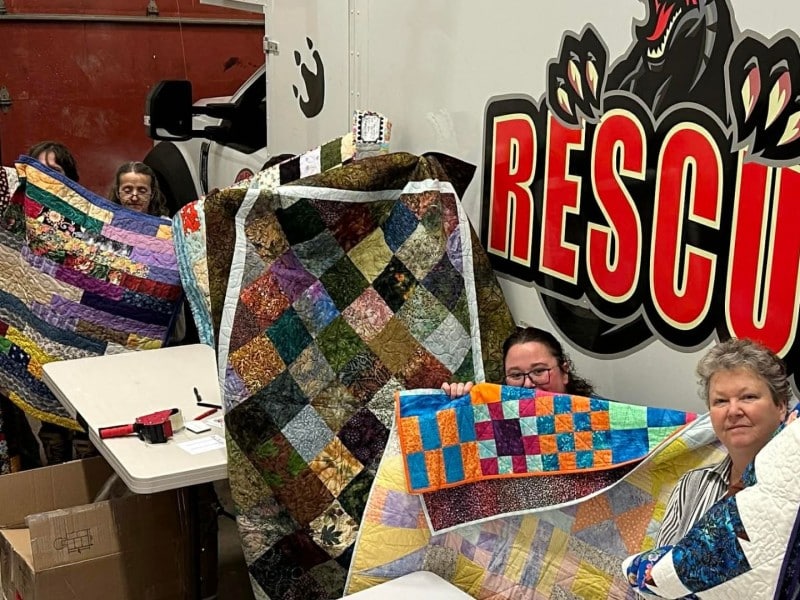
Guild distributes quilts made to spread love to Tumbler Ridge
Quilters province-wide sent pieces to Tumbler Ridge after an appeal in the wake of the tragedy in February.
City to host celebration of walking track sponsorship renewal
The City of Fort St. John is hosting an event to celebrate a renewed 15-year sponsorship licence for the walking track inside the Pomeroy Sport Centre.

Tumbler Ridge misses top Kraft Hockeyville prize
The District of Tumbler Ridge lost out to the town of Taber, Alberta, which will get $250,000 toward arena upgrades and an NHL pre-season game. As runner up, Tumbler Ridge will be given $100,000 instead.