
BC Agriculture minister stops in Fort St. John
After touring the facility, Alexis said what stuck out most to her was the state-of-the-art technology going into the plant.
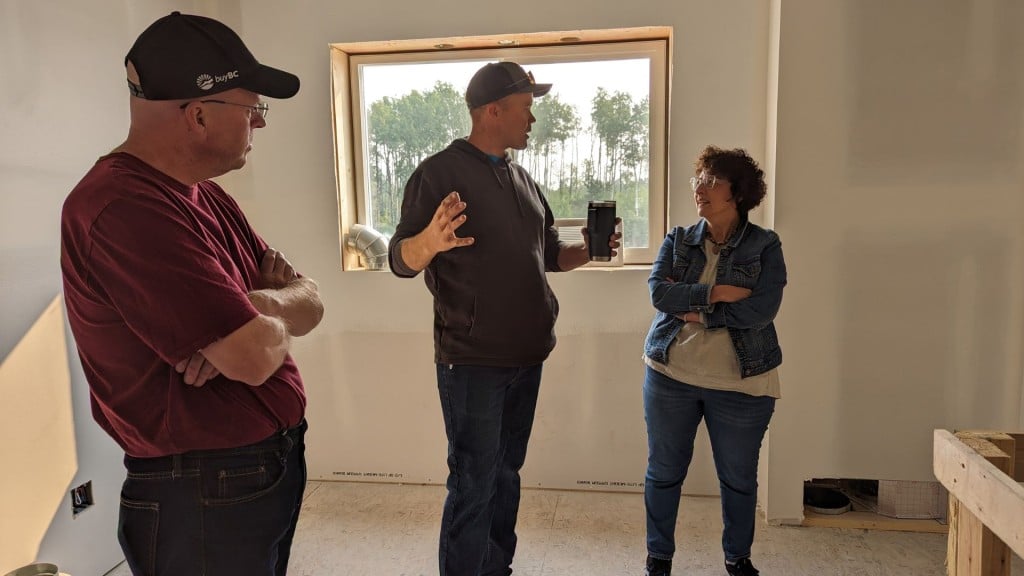
FORT ST. JOHN, B.C. — B.C.’s Minister of Agriculture, Pam Alexis, kicked off her tour of the Peace region by visiting the Fort St. John Seed Cleaning Cooperative Association’s plant on Thursday to view new upgrades currently being installed.
After touring the facility, Alexis said the state-of-the-art technology going into the plant stuck out most to her.
“I love that we can be more efficient, produce more, do it better, and there are more guarantees of success. I’m all for it,” Alexis said.
She said she was impressed that the association could use its pre-existing equipment in addition to the newer equipment, some of which is still on the way from eastern Canada due to shipping delays.
Alexis said she’s never been as far north in the province as the Peace, but she’s here to learn, adding that B.C.’s crop diversity makes the agriculture ministry “more complex, but fascinating.
“I’m just wanting to learn and understand because we’re a big province. We’re very diverse. We grow to 200 different things on land and 100 different things by sea,” Alexis began, adding that other provinces typically produce four to five different crops.
Next on Alexis’ tour, she’s off to visit some local farms impacted by this year’s drought.
Latest Stories
“I know we’ve had a terrible summer, and we’ve had a lot of disasters. I want people to know that the ministry is here to support the farmer, and I’m here to learn so that I can be more useful,” Alexis said.
In a recent survey conducted by the PRRD vice-chair Dan Rose, most farmers in the region reported experiencing much lower yields than in previous years due to wildfires and drought conditions.
Farmers in the Peace have also expressed concerns with the government programs available to support them. The BC United Shadow Minister of Agriculture also visited Fort St. John this month to speak with impacted farmers.
Earlier this week, the federal government announced a tax deferral available to livestock farmers struggling because of this year’s extreme weather conditions. Other programs available to farmers are AgriStability, AgriInsurance and AgriInvest.
Over the last year, the Fort St. John Seed Cleaning Cooperative Association has received over $1.24 million in grants to upgrade its facility from various organizations, including the Northern Development Initiative Trust, the BC Hydro Peace Agricultural Compensation Fund, and the Grain Industry Development Council.
Upgrades at the seed cleaning plant include increased seed storage, a Vistasort Optical Colour Sorter, a gravity separator and a super cleaner.
Chair of the association, Wade Sutherland, said the upgraded equipment at the plant will make the facility more efficient by reducing waste and increasing output.
“One of the biggest things we will benefit from is using the colour sorter. We’ll be able to separate foreign objects out of our grains that were not possible before,” Sutherland explained.
The colour sorter, powered by an air compressor, takes pictures of the seeds and separates them by colour.
Sutherland said historically, certain diseases, weeds and other associated grains have been mixed in with the seeds, which farmers have tried to deal with by rotating crops or using “excessive” chemicals.
He added that depending on the grain species, producers often only have a short time to process their seeds before they are unusable.
The plant’s increased output also allows the association to serve more local producers, meaning they won’t have to travel elsewhere to get their seeds cleaned.
The association has also increased its seed storage capacity, going from being able to store 30,000 bushels of seeds to 48,000.
Sutherland added that these enhancements are the most extensive upgrades to the facility since it was built in 1978.
The association anticipates the upgrades will be complete by late September.
Stay connected with local news
Make us your
home page
Authors

Related Articles

‘All of us are unified’: Premier, ministers visit Tumbler Ridge to address community after tragedy
B.C. Premier David Eby was joined by federal mininsters, B.C. MLAs and Tumbler Ridge’s mayor in a press conference on February 11th after the mass shooting on February 10th.

Prime minister to visit Tumbler Ridge in the near future, says statement
The statement says details, including the timing of the visit to Tumbler Ridge, are being worked out with community officials “based on their immediate needs.”