
UPDATE: Stoddart Creek wildfire now estimated at 18,000 hectares
The Stoddart Creek wildfire has grown to 13,000 hectares since its discovery less than 48 hours ago, according to the BC Wildfire Service (BCWS).
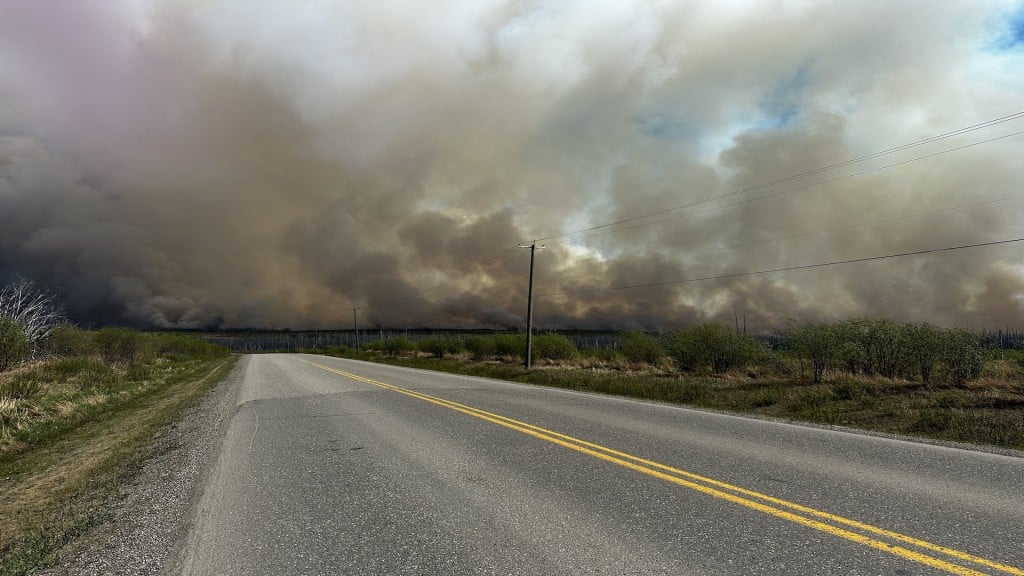
UPDATE (7:12 p.m.): The Stoddart Creek wildfire has grown to approximately 18,000 hectares.
FORT ST. JOHN, B.C. — The Stoddart Creek wildfire has grown to 13,000 hectares since its discovery less than 48 hours ago, according to the BC Wildfire Service (BCWS).
The fire started Saturday afternoon near Mile 70 of the Alaska Highway and grew to over 3,000 hectares in less than 24 hours.
Local News Straight
to Your Phone
Download our app today!
Available on Android and iOS devices
BCWS information officer for the North Peace Complex, Hannah Swift, said the wildfire has been progressively growing since it sparked.
“By Saturday evening, it was around 1500 hectares. Yesterday morning it was 3000, by last night, it was 7,500, and in the morning, it was 8,500 hectares. As we get more operational personnel out there and get more eyes in the sky, we’re able to get more accurate estimates, but it is a very fluid changing situation,” Swift explained.
She says that once the wind dies down Monday afternoon, the service expects to see further fire growth to the south and southeast.
Swift says the BCWS currently has air support, ground support and heavy equipment support on the fire, adding that there is 70 structure protection personnel being shared between the Stoddart Creek and Red Creek wildfires.
Latest Stories
She says that the entire North Peace Complex has 23 pieces of heavy equipment and 23 helicopters being shared between the Stoddart Creek, Boundary Lake, Red Creek, and Cameron River wildfires, with most resources being used on the Stoddart Creek blaze.
According to Swift, the primary objective for structure protection personnel on Monday is to work southeast of the fire and apply structure protection as needed before a shift in winds that is anticipated in the afternoon.
“They are also working northeast of the fire at Blueberry River First Nations to do some assessment and also apply structure protection as required up there as a precautionary measure,” Swift added.
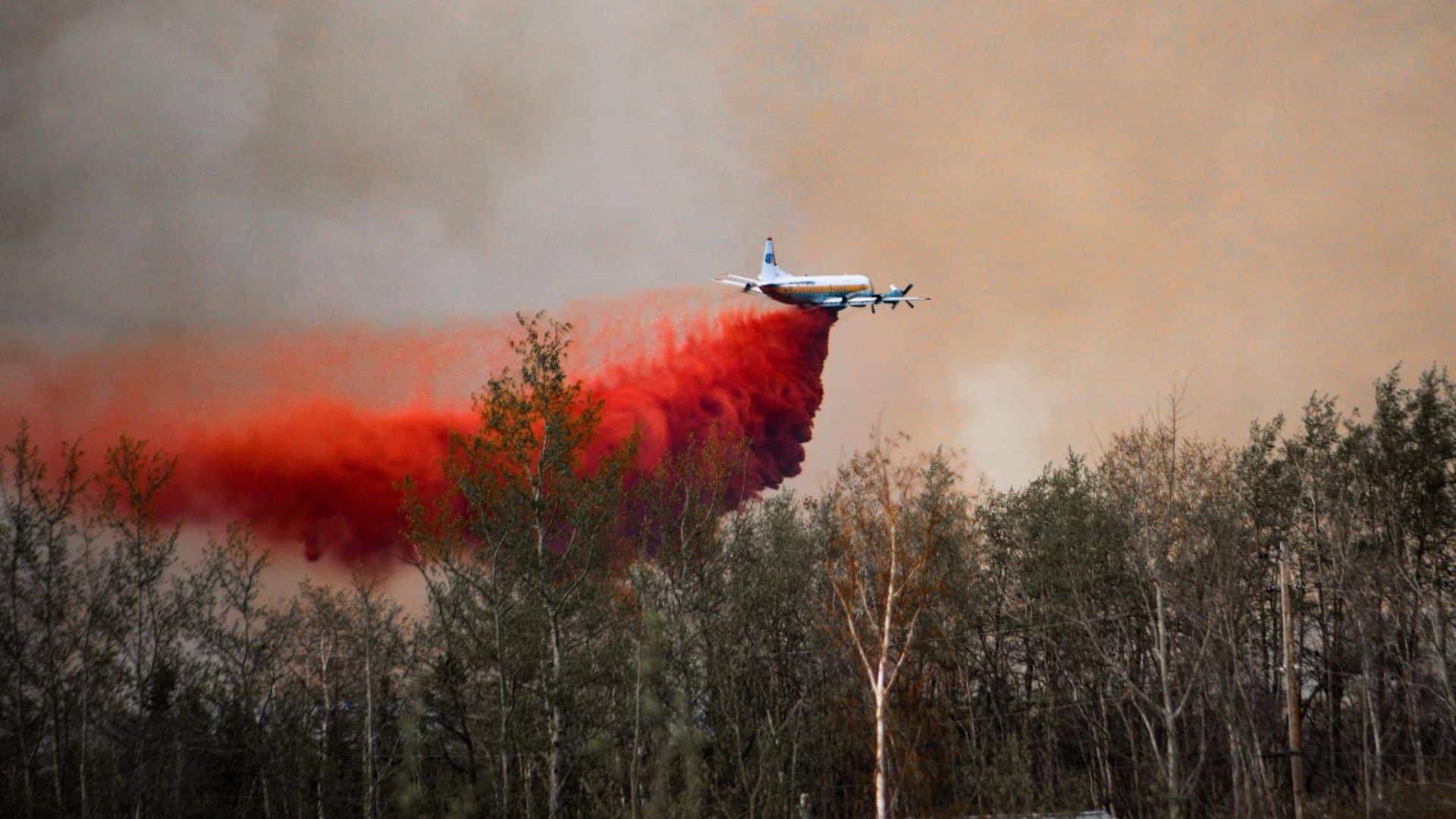
BCWS says the Stoddart Creek fire has displayed “very aggressive fire behaviour,” prompting the service to deploy air tankers yesterday to conduct aerial ignitions on the fire’s northwest and western flank.
“This was really important as we couldn’t put our crews in this area of the fire. And we did have perfect conditions for that ignition to take place.
She said carrying out these planned ignitions allowed the BCWS to get containment in an area where they wouldn’t have otherwise been able to put crews.
“Crews will now be able to go in and safely patrol and access the fire’s edge,” Swift said.
According to the BCWS, no reports of structural damage due to the Stoddart Creek fire have been received as of Monday afternoon.
The City of Fort St. John issued an evacuation alert for all properties in the city due to potential danger to life and safety on Monday afternoon.
The Peace River Regional District issued an evacuation order for the surrounding areas of the fire on Saturday evening due to immediate danger to life safety, which remains in effect.
Blueberry River First Nation also issued an evacuation order due to the Stoddart Creek fire on Sunday evening.
Donnie Creek wildfire
As of Monday afternoon, the Donnie Creek Wildfire is estimated at 33,000 hectares and is expected to grow larger in the next 24 hours due to wind activity, according to the BCWS.
“Although we have seen very light winds recently, 10 to 15 kilometres, we are expecting this afternoon to see a 180-degree wind shift. So we are expecting winds from the north, and that’s going to predominantly push our growth to the south,” said Swift.
“With those winds, what we’re seeing is a cold front tracking. That cold front is going to bring erratic gusty winds and potential lightning cells. Those winds are going to be 25 to 40 kilometres per hour sustained, so much higher winds than we’ve seen over the last week.”
Swift added that wind is one of the biggest factors that drive fire growth.
According to Swift, the growth of the Donnie Creek fire and others in the region has also been exacerbated by dry conditions, hot temperatures and low humidities.
“The fuel type in this area is very susceptive to fires at this point in time, just as a result of that drought condition. What we saw coming into the spring, we went directly from winter into snow melt and heat,” she began.
“So there was no chance for all the dead fuel to green back up and, and get any moisture. So that’s the predominant result that we’re seeing is fires are growing very quickly,” Swift explained.
The Donnie Creek fire is reportedly exhibiting rank three and four fire behaviour, meaning it has an organized flame front with intermittent crowning through the tree line.
While the area is predominantly occupied by oil and gas infrastructure, Swift says the BCWS has no concerns about the flammability of industry infrastructure at this time, stating that the service is working closely with affected industry members.
“We are working very closely with our oil and gas partners because there is infrastructure adjacent or within the vicinity of some of these wildfires that are burning in the North Peace, but we’re communicating with them on a daily, hourly basis and keeping them up to date on the infrastructure in their area,” Swift said.
“Some have come in to put protection on some of their infrastructure as well. At this point in time, we have no concerns about the flammability of those infrastructures,” she added.
Swift was unable to provide further details on the Donnie Creek wildfire as it is not being managed by the BCWS North Peace Complex.
The PRRD issued an evacuation order and an evacuation alert for the Donnie Creek and Tommy Lakes areas on Saturday due to immediate danger to life safety, which remains in effect as of Monday afternoon.
Red Creek wildfire
The BCWS says the Red Creek wildfire has not grown over the past 24 hours and remains at 2,947 hectares as of Monday afternoon.
The blaze is still classified as out of control due to “free burning edges” that crews have been unable to bring down to control lines.
Swift said as of Monday, there were 64 firefighters on site, with 20 on shift Sunday night, along with a heavy equipment task force to bolster containment lines and conduct patrols.
“Most of the resources at this point are on the Stoddart Creek fire because that’s the highest priority at this time. But [Red Creek] is very close in proximity so we can move them at a moment’s notice to the Red Creek or to a new incident as things evolve,” she said.
BCWS expects the southern control lines of the Red Creek fire will be challenged Monday afternoon due to the anticipated shift in winds.
On Monday, crews will work to get as much work done on the southern flank to bolster containment efforts before those winds hit.
“Once we see the winds from the north coming in, it may be unsafe for our crews to remain on that south flank of the fire. So right now, they’re just trying to get as much work done before we see those winds come through,” Swift said.
An evacuation order and alert for the Red Creek area remains in effect.
Boundary Lake wildfire
The Boundary Lake wildfire is now classified as being held, meaning it is unlikely to spread past pre-determined boundaries set by the BCWS.
Swift says this is due to a successful planned ignition carried out on May 13th.
“It was just the last southwestern area of the fire that was a little bit of a concern. Now that those ignition operations have taken place, we have crews working the fire’s edge,” she said.
Crews will continue to patrol and mop up any remaining hot spots on Monday. Swift says those working on the fire are using data from an aerial scan conducted Sunday night to identify any heat within 100 feet of the fire perimeter.
The PRRD rescinded the evacuation order that was in place for the Boundary Lake fire on Saturday, however, some areas remain on evacuation alert.
Stay connected with local news
Make us your
home page
Authors

Related Articles
Northeast B.C. communities to be given $86,000 for firefighting equipment
Tumbler Ridge, Pouce Coupe and the Northern Rockies Regional Municipality are the communities in northeast B.C. to receive funding for firefighting equipment from the Ministry of Emergency Management and Climate Readiness.
Wildfire training sessions to help northeast B.C. avoid ‘dangerous positions’
North America Fire Rescue is set to host wildfire training sessions in Chetwynd and Fort St. John this spring.
BC Wildfire Service readies for 2026 season with record 2,400 firefighter applications and more equipment in Prince George depot
The BC Wildfire Service has received around 2,400 firefighter applications and improved its equipment depot in Prince George in preparation for the wildfire season 2026, it said in a press release.