
New flight care paramedics improve access to medical care
The introduction of two new flight care paramedic designation will help patients across the province receive quicker access to medical care.
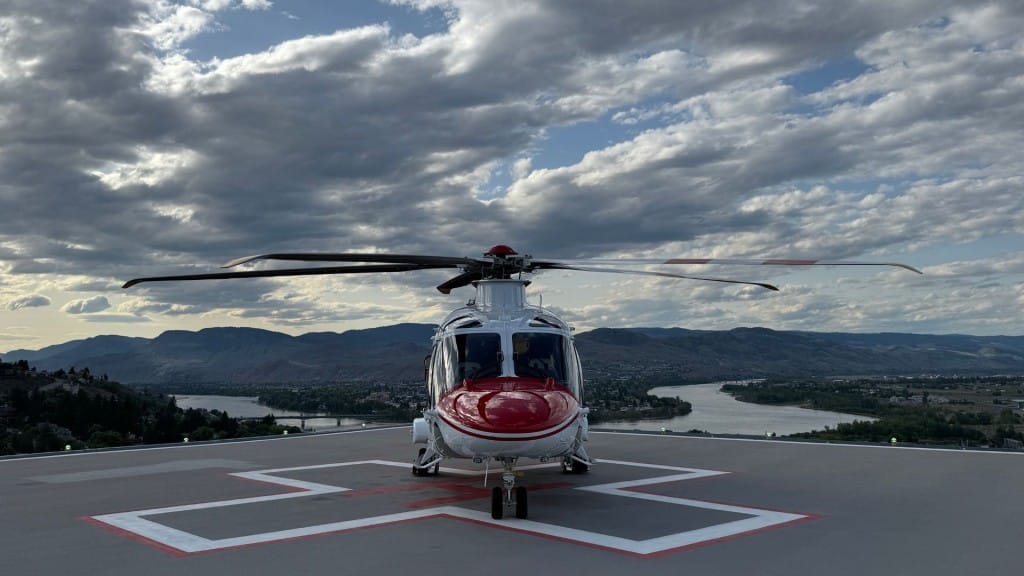
FORT ST. JOHN, B.C. — Two new paramedic designations are helping patients receive medical care more quickly.
According to the Provincial Health Services Authority (PHSA), primary care flight paramedic and advanced care flight paramedic designations were introduced in April 2025.
PHSA said the new designations are meant to strengthen interfacility air transfers across British Columbia.
“By developing primary care and advanced care paramedics to these calls, BCEHS is freeing up critical care paramedics and the Infant Transport Team to focus on the most high-acuity, complex and time-sensitive cases.”
The first set of advanced care and primary care flight paramedics began service earlier this year.
Kiera Evans is currently finishing the primary care flight paramedic program in Prince George.
Prior to joining the program, Evans worked as an emergency medical responder in Terrace.
Latest Stories
“When I was working [in Terrace], I noticed that we were transferring the critical care crews and other flight crews from the airport to the hospital and I thought ‘that would be a very interesting job to take on’ so I applied for the next position and I ended up getting it,” Evans said.
“Then I moved to Prince George so that I could continue pursuing my education here.”
According to Evans, the program’s goal is to allow paramedics to transfer patients who require minimal care, such as for medication runs or CT scans.
Evans said the program will allow paramedics to assist people in communities in the north.
“For example, in some of the rural communities up north, sometimes they need to get to a bigger hospital,” she said. “For example, Prince George, or maybe they need to go down to Vancouver.”
“Instead of taking critical care away from high acuity patients, this allows us to run some medications for these patients that need to get a CT scan done, or that kind of thing.”
Evans said during her program, she had a cohort of around eight other paramedics, including primary and advanced care paramedics.
“The difference between them [primary and advanced care paramedics] is their scope of practice,” Evans said.
“[Primary care paramedics] have a bit of a limited scope, whereas an advanced care paramedic, for example, they can intubate a patient who’s not breathing well on their own, whereas a primary care paramedic does not have that quite of a scope.”
Evans believes adding primary care and advanced care flight paramedics will benefit patients.
“I would say patients will be able to get to where they need to go a little bit faster, instead of holding up critical care paramedics,” she said. “Because for them, they need to be attending to the most [high-acuity] patients.”
“By offloading some of these patients to primary care and advanced care, that will loosen up a bottleneck.”
Flight paramedics are working out of BCEHS stations in Vancouver International Airport, BC Children’s Hospital in Vancouver, Prince George, Kelowna and Fort St. John, PHSA said.
Plans are also in place to station flight paramedics in Prince Rupert.
Stay connected with local news
Make us your
home page
Authors

Related Articles

Fort St. John leads the way in Canada Day celebrations in the Peace Region
Communities across the Peace Region will hit the streets on July 1st for Canada Day.
FSJ to work with neighbouring governments to expand emergency aid agreement
The City of Fort St. John is working with its neighbours to work on a new mutual aid agreement to provide support when a major emergency event occurs.

Communities in the Peace Region are asking residents to pay property taxes to avoid penalties
The City of Fort St. John is reminding people to pay the taxes by the July 2nd deadline to avoid penalties.