
Fairy Creek anti-logging protesters win appeal in bid for class-action certification
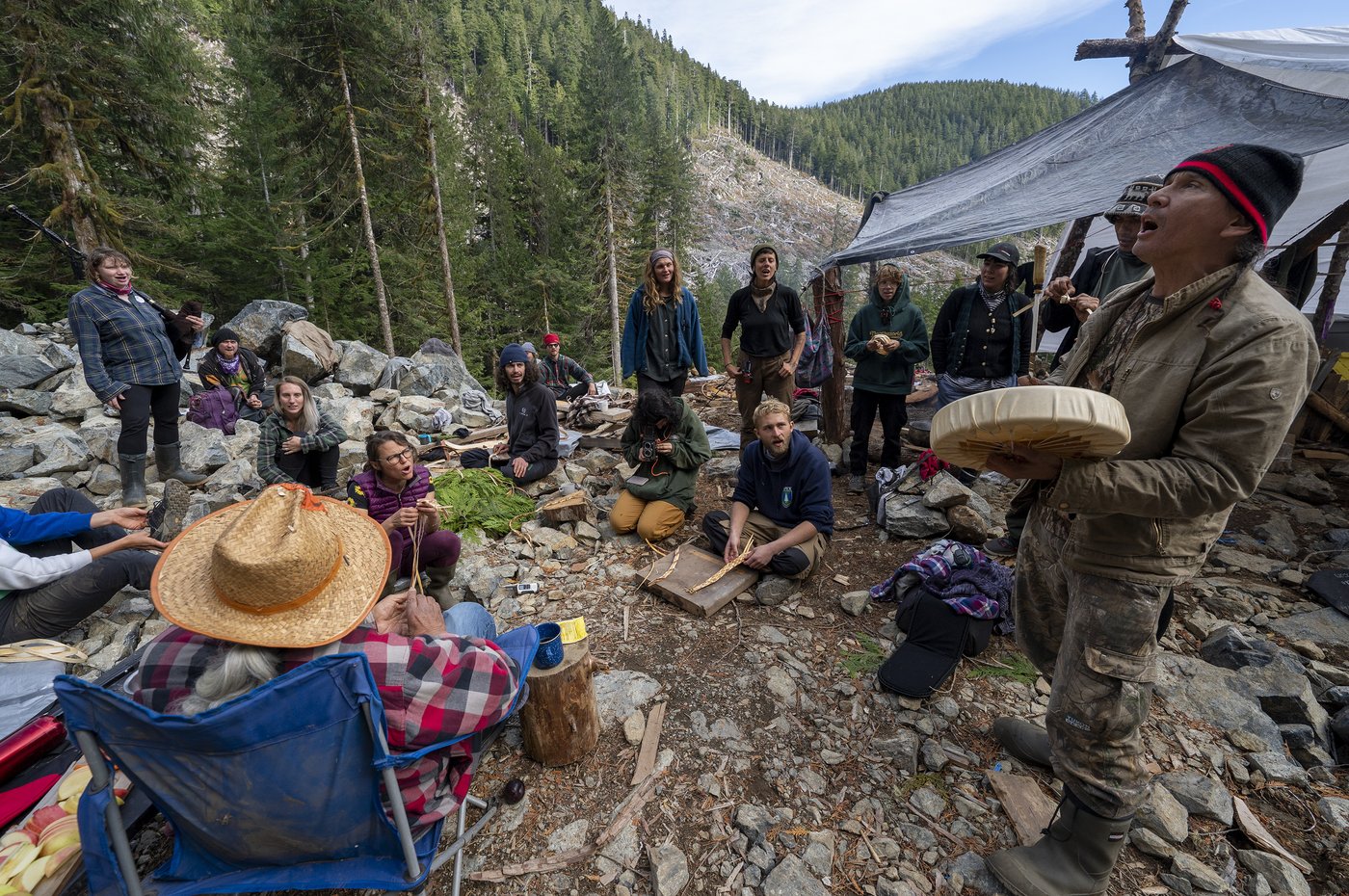
VANCOUVER — Fairy Creek anti-logging protesters have won an appeal against a court ruling that denied the certification of their proposed class-action lawsuit against the federal and provincial governments.
The class-action application now goes back to the B.C. Supreme Court for a new decision, after the B.C. Court of Appeal found the judge who rejected the claim erred on several points.
The applicants, protesters Arvin Singh Dang and Kristy Morgan, say the RCMP wrongfully barred them and others from the Vancouver Island protest site, where Teal Cedar Products had secured an injunction against the protests targeting old-growth logging.
The appeal ruling issued Wednesday notes that while the protests and logging in the area that ran from 2021 to 2023 are now over, the litigation continues.
The unanimous ruling by the three appeal judges says the original judge erred by refusing to admit affidavits that had been sworn for another application, and also by concluding that the class was overbroad.
They say claims of a breach of the applicants’ Charter rights should have been made on merits, and that the original judge was mistaken to conclude that a class proceeding was not the preferred path for a “fair and efficient resolution.”
The decision whether Dang and Morgan are appropriate representatives in the proposed class action was also sent back to the lower court.
Justice Geoffrey Gomery, who wrote the appeal ruling, said the lower court judge was mistaken to decide that Charter issues related to the exclusion zone policy lacked “commonality.”
He said a class proceeding was the preferable procedure compared with the alternatives of individual lawsuits or complaints to the RCMP’s Civilian Review and Complaints Commission.
The applicants are seeking class certification on behalf of anyone whose Charter rights were infringed by the RCMP’s enforcement of the injunction.
“The class in this case would include people who were no more than bystanders to the protests, but whose liberty of movement was nonetheless impeded by the RCMP,” Gomery wrote.
He wrote that while such a class would include people whose claims wouldn’t benefit much from a determination that the RCMP were operating an exclusion zone policy, it would not include anyone whose claim would be prejudiced by the determination.
Hundreds of people were arrested in the enforcement of the injunction.
This report by The Canadian Press was first published May 20, 2026.
The Canadian Press
Stay connected with local news
Make us your
home page
Authors