
Indigenous explainers: Beading group honours First Nations veterans
The traditional practice of beading traces back some 8,000 years with Indigenous people in North America.
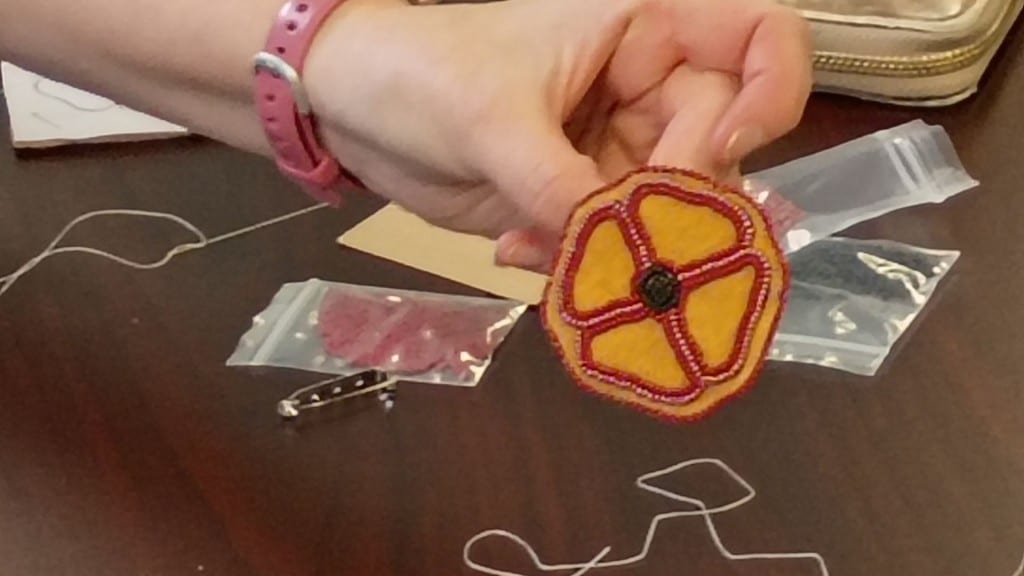
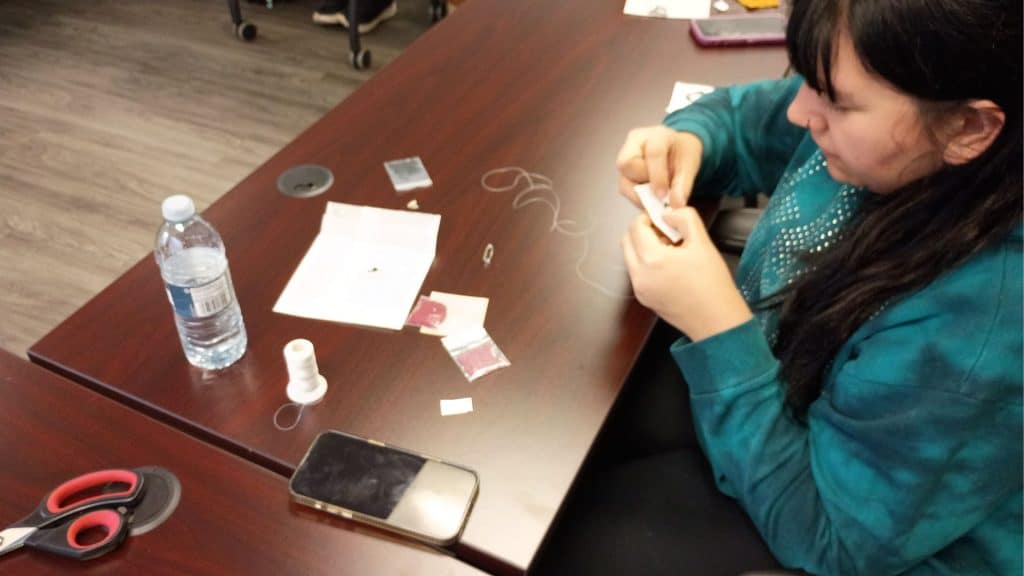
FORT ST. JOHN, B.C. — On a late October afternoon, a group of beaders stitch little by little, putting together symbols honouring Indigenous veterans.
In Fort St. John’s Nenan Dane Zaa Deh Zona Family Services Society, this is a weekly group for the public to learn the finer points of beading.
One of the finest examples of Indigenous visual art, ancient beading goes back some 8,000 years – long before the first European colonialists arrived in Canada, according to a CBC article.
Local News Straight
to Your Phone
Download our app today!
Available on Android and iOS devices
Beads came from material Indigenous artists found on their travels – those included bones, pearls, sea shells and even stone.
Weaving designs on dried animal hair, First Nations people created artwork, jewelry, dolls, clothing, and even pouches.
Materials used today are shiny, tiny beads, influenced by the ones brought from Europe when colonialists first came to Canada.
Latest Stories
Beading, along with many Indigenous practices, was outlawed when Canada implemented the Indian Act – known as a “culture ban” – from the 1880s to the early 1950s, according to the National Art Gallery of Canada.
However, during this beading class – headed by Hailey Testawitch and Michelle Elliott – participants each sew something symbolic of November: a poppy, used to recognize fallen soldiers.
“Michelle and I have been wanting to do some beading classes,” said Testawitch. “[We decided] to do beading pins for Remembrance Day and wanted funds to go to something meaningful.”
Funds raised by purchasing the poppies – which can be bought at Nenan Dane Zaa Deh Zona offices in Fort St. John – will benefit the Indigenous Veterans Initiative through the Last Post Fund.
The non-profit’s aim is to provide services through the Veterans Affairs Canada’s Funeral and Burial Program, while also providing services with the Indigenous Veterans Initiative.
Launched in 2019, its goal is to commemorate and honour the memory of over 18,000 Indigenous veterans, many of whom are thought to lie in unmarked graves.
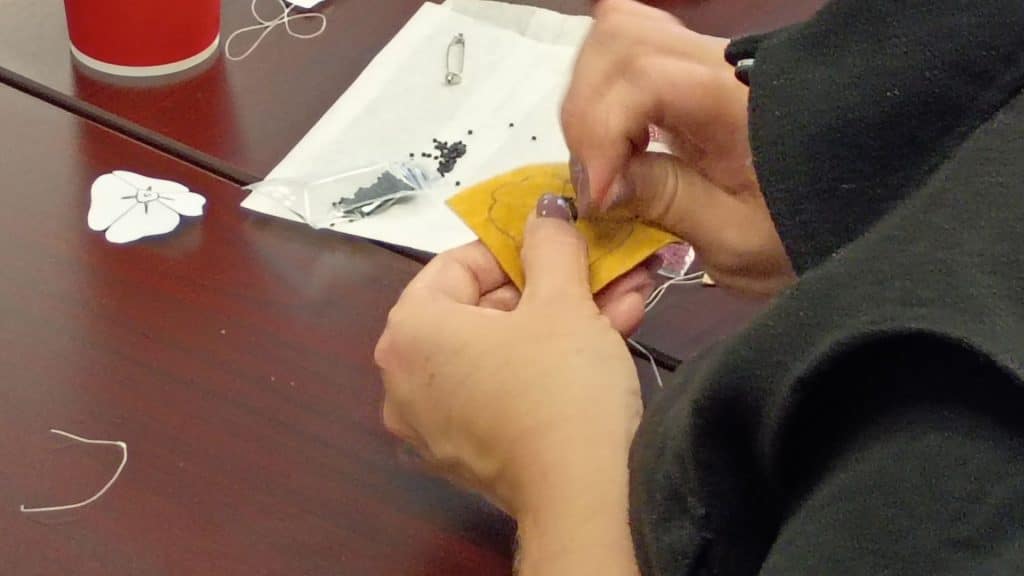
“We learned about this organization where the funds go back,” said Testawitch. “The primary goal is to place headstones with ones who have passed away, whether that was due to duty or whatever that may be.”
The method of beading is done by placing beads on twine, then following a paper design backed onto a piece of raw animal hide.
Elliott, a member of Blueberry River First Nations, picked up the craft last summer, and described the hobby as something therapeutic.
“I bead when I have a lot going on and I just want to take some time to myself,” said Elliott. “I also like to bead when I am learning something. If I’m watching videos or doing something I have to do for school, then I bead while I’m doing it, because then I can focus.”
Poppies can be purchased by donation by visiting Nenan Dane Zaa Deh Zona Family Services Society during its hours of operation at 10615 102nd Street in Fort St. John from 9 a.m. to 4 p.m. Monday to Friday.
To learn about other aspects of Indigenous culture, check out Energeticcity.ca‘s Indigenous Explainer series.
Stay connected with local news
Make us your
home page
Authors

Related Articles
Setback for Nawican Friendship Centre as it seeks funding for celebration
The Peace River Regional District (PRRD) denied an application by the Nawican Friendship Centre to provide $50,000 of funding for its $60,000 joint celebration in August, but said it would recommend alternative avenues.
Local Métis organization to host Indigenous awareness event
The Peace Region Métis Community Association’s awareness event on May 5th will introduce new Canadians to the history of Indigenous peoples.
Doig River First Nation ‘taking break’ with no 2026 language revitalization event
Doig River First Nation held ‘Reawakening of our Language’ events in 2024 and 2025, in partnership with Northern Lights College and the University of British Columbia, but it is taking a break in 2026.