
(Opinion) Evan Saugstad: My guide to Trump’s trade war and tariffs
Regular contributor Evan Saugstad’s guide aims to simplify U.S. President Donald Trump’s trade war with countries around the world.
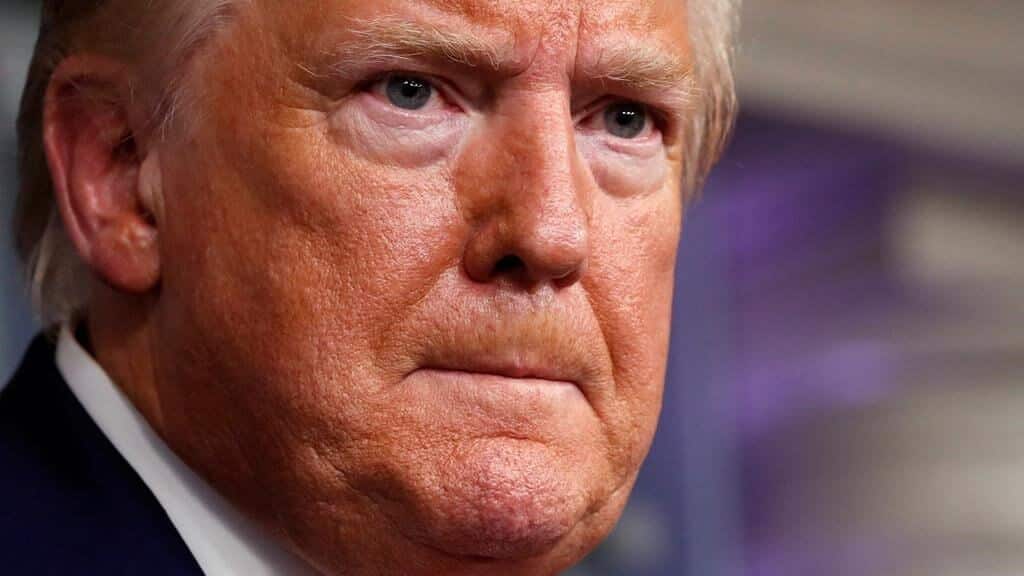
As I write this, I wonder what Donald will change, add, subtract or expand on in terms of his trade war. Seems something new or different happens every day, making it hard to write anything that is up to date.
On March 13th, Canada sent a delegation to Washington DC to talk to the U.S. Secretary of Commerce Howard Lutnick about tariffs and trade. It was said to be a positive meeting, nothing more or nothing less. Follow up meetings are currently scheduled.
If you are one who is tired of the rhetoric and tired of the endless do loops, don’t despair: I believe you are in the majority. The final results of a trade war may not be known for months or years, so there are a few things one should understand to keep things in perspective.
Local News Straight
to Your Phone
Download our app today!
Available on Android and iOS devices
Some common definitions on tariffs and taxes.
Definition of tariff, according to taxfoundation.org: “Tariffs are taxes imposed by one country on goods imported from another country. Tariffs are trade barriers that raise prices, reduce available quantities of goods and services for U.S. businesses and consumers, and create an economic burden on foreign exporters.”
Definition of retaliatory tariff, according to Google AI: “A retaliatory tariff is a tax (duty) imposed by a country on imported goods from another country, in response to that country’s imposition of similar tariffs or trade barriers on its own exports, essentially a ‘tit-for-tat’ approach to trade disputes.”
Trump on reciprocal tariffs, as reported by DW: “I have decided for purposes of fairness, that I will charge a reciprocal tariff, meaning whatever countries charge the United States of America, we will charge them. No more, no less.”
Latest Stories
Definition of a tax, according to Merriam Webster: “A charge usually of money imposed by authority on persons or property for public purposes.”
Definition of a value added tax (VAT) or in Canada, known as the goods and services tax (GST), according to Wise: “VAT (value added tax) is a type of consumption tax. The Canadian government applies it on the sale of goods and services. VAT isn’t paid by businesses — instead, it’s charged to consumers in the price of goods, and collected by businesses, making it an indirect tax.”
Definition of a free trade agreement (FTA), according to Google AI: “An agreement between two or more countries to reduce or eliminate trade barriers, like tariffs and quotas, to encourage international trade and investment.”
Most every country on earth has one form of tariff or another and their own tax system. Rationales and amounts charged vary by country.
So why is Donald doing this? After all, he signed a trade agreement on behalf of the U.S. with Canada and Mexico that is still in affect – USMCA (United States Mexico Canada Agreement) or as it is known in Canada, CUSMA (Canada United States Mexico Agreement).
The U.S. Congress has the authority to execute and approve trade agreements, including USMCA. To date, they have shown no inclination to unilaterally cancel this agreement prior to its expiry in 2036. A joint review is scheduled for July 1st, 2026, where the three parties can decide to make changes and extend the agreement for another 16 years. If there is no agreement USMCA stays in effect until 2036 (as Donald laughs and laughs at this thought!). By mutual agreement, the review may be sped up.
The USMCA is a problem for Donald, as he wants to place tariffs on all imports from the U.S.’s largest trading partners, Canada and Mexico. Currently he has the power to place tariffs or trade restrictions in times of a “national emergency”. No problem for Donald, as he declared fentanyl, illegal border crossing and money laundering in Mexico and Canada constituted just that, and until he is satisfied these “emergencies” have been dealt with to his satisfaction, he is free to do what he wishes to penalize his trading partners.
Of note, not all companies have registered their products with USMCA as no duty was applied or collected. Donald’s tariff wars have now implemented duties on all products not USMCA “compliant”, which means some companies are now scrambling to get their products listed as USMCA compliant.
I believe it is now well known his rationales are a sham and his ultimate goal is to force companies and businesses in the rest of the world to relocate to the U.S. For those who don’t, he will charge them tariffs that will make America “rich” under his planned new Department of External Revenue. Would he attempt to eventually replace the Internal Revenue Service and eliminate the need for U.S. citizens to pay income taxes?
At the same time as he is increasing tariffs and trying to compel companies to move to the U.S., he is also trying to reduce the size of government, which reduces government spending; reduce government regulations, which encourages business; and reduce taxes to allow U.S. citizens to better cope with high prices and the steady rise in the cost of living.
Donald’s hurdle to overcome is that tariffs result in the cost of goods and services going up, which means inflation. Inflation means interest rates won’t come down as fast as he wishes, or if inflation is high enough, interest rates will actually increase and put the lower-costs plan in jeopardy.
Donald has promised to reduce the cost of living, and so far it isn’t happening, but he says have patience.
I believe the most important piece in his plan is the need for the cost of energy (oil) to come down. In that energy costs are a large part of the cost of almost everything we buy and do; lower energy costs would reduce the cost of living. Get the world price of oil down to $50/barrel and affordability looks much better.
To accomplish that, I believe Donald needs:
- OPEC+ (the Organization of the Petroleum Exporting Countries plus 10 other countries, including Russia) to sell more oil, which it has promised to do in April.
- The U.S. to drill more and increase its production, which is hard to accomplish if the price drops. It is reported that the U.S needs to increase the world price by about $10/barrel to get the drillers back to work.
- Someone to build the Keystone Pipeline to get more Canada oil into the U.S.
This is where I believe his plan is in most jeopardy.
The U.S. wants to rid Iran of its nuclear ambitions and to do that, Donald should embargo all Iran oil production and/or destroy its oil fields. This then takes oil off the world markets and forces prices up. To counteract the loss of Iranian oil, he wants Ukraine to capitulate to Russia so he can then lift all Russian sanctions and allow its substantial oil reserves back on the market to drop prices. It’s hard to say how all this will work or how successful Donald will be, as forecasts show oil prices climbing as the world struggles to meet future oil demands.
Factoring into this is Donald’s desire for Canada to be annexed, I believe so he controls enough energy and critical minerals to meet the U.S. needs and reduce reliance on the rest of the world.
Mixed in all his messages are truths, falsehoods and fabrications. Much of what Donald says is not the full story. For example:
- Twenty-five per cent tariffs on aluminum and steel. Truth be told, aluminum is made from bauxite which is imported. While Canada has sufficient energy for the manufacturing process, the U.S. does not. The U.S. currently produces about 50 per cent of its aluminum, with most of its imports come from Canada. They are about 90 per cent self-sufficient in steel and have plenty of iron ore.
- Donald claims Canada imposes tariffs greater than 200 per cent on U.S. dairy. This is partially true. The USMCA recognizes Canada’s supply management of dairy products and tariffs are applied to any U.S. dairy imports which exceed quotas as established in the USMCA. Canada gave up other concessions in the agreement to the U.S., such as sugar quotas, to which the U.S. can apply steep tariffs if Canada exceeds its export quotas.
Next month, currently April 2nd, the world will find out what Donald is doing in terms of implementing reciprocal tariffs. In all likelihood, the U.S. will manufacture its own set of numbers that do not reflect the reality of what other countries charge for tariffs on U.S. goods. We will soon find out what the Donald factor will be.
Donald has also taken aim at other country’s VAT, or GST in Canada. The U.S. does not have national sales tax – while individual state taxes vary from 0 per cent to 7.25 per cent. VAT or GST are applied to all sales in individual countries, whether they be domestic produced or imported. In some countries, foreigners can apply to get their VAT back when they leave.
Donald likes to compare the cars manufactured in the U.S. and then exported to the E.U as compared to cars manufactured in the E.U. and then exported to the U.S.
The U.S. imposes a 2.5 per cent import tariff on E.U. cars while the E.U imposes a 10 per cent tariff on U.S. cars. The E.U. also charges an average 21.8 per cent VAT on all sales within the E.U., according to the Tax Foundation, including imported U.S. vehicles. VATs are not applied to exports so E.U cars sold in the U.S cost less than they do in the E.U., while U.S. cars cost more in the E.U. than they do in the U.S.
The U.S. car in the E.U is $50,000 + 10 per cent ($5,000) + an average 21.8 per cent ($11,990) [depending on the E.U. country] = $66,990
The E.U car in the U.S. is $50,000 + 2.5 per cent ($1,250) = $51,250 + state sales tax of zero per cent to 7.25 per cent.
I expect Donald will call VATs and GSTs a ‘tariff’ and use them to help determine what the reciprocal tariff amounts will be.
What Donald doesn’t say is that the U.S. imposes 25 per cent tariffs on all imported pickup trucks that are not part of USMCA.
So who do you believe? CBC, Fox, CNN, Donald or Carney? If you don’t watch them all to hear the differences in the same story and try to figure out the whys, then watch the stock markets to see who is winning or losing in the battle to reduce costs and improve profits. The markets usually get it correct. Profits down, cost up = falling markets. Profits up, costs down = rising markets.
And if all this isn’t enough, how about U.S. monetary policy? Still to come is if or when Donald makes good on the possibility of devaluing the US dollar.
Hope this helps a bit in understanding part of what is happening in the wacky world of following flip-flopping Donald.
Evan
Stay connected with local news
Make us your
home page
Letters to the Editor
Letters to the Editor should be exclusive to Energeticcity.ca. Include your name, address and daytime phone number. Keep letters to 500 words or fewer. Letters may be edited for length and clarity. To submit a letter by e-mail to contact@energeticcity.ca.
Authors

Related Articles

Letter to the editor: I say no beds for seniors, no fancy pool
David Blaney writes about the project to replace the North Peace Leisure Pool and the recent news that the long-term care facility in Fort St. John has been delayed by the provincial government.

(Opinion) Bear Flat Dispatch: Why rhetorical questions?
Regular contributor Ken Boon lets his mind wander to some rhetorical questions in this latest column.

(Opinion) Bear Flat Dispatch: Interactions with flora and fauna
Regular contributor Ken Boon talks on his experiences with the flora and fauna of Bear Flat in 2025.