
Evan Saugstad: Oh Canada! A point of view from a small town guy living in rural Canada (part 4 as the Canadian takeover saga continues)
Regular contributor Evan Saugstad on how he believes Canada should react to the threats of U.S. tariffs from Donald Trump.
Although it was yet to be determined when this was written what or if Donald’s threat of imposing punishing tariffs on all goods and services exported into the U.S. will come to pass, Canada will still need to be prepared and respond if necessary.
Canada should and must take the lead, but each province and territory has a large part to play. By virtue of its location, B.C. is positioned to play an oversized part if our government so chooses to participate.
B.C. has an advantage that the rest of Canada does not. Not only will we probably be the least affected by U.S. tariffs, but we also have more room to move and adjust. We have the best access to foreign markets via the Pacific Ocean, and especially that of Asia, the world’s largest market by population.
Local News Straight
to Your Phone
Download our app today!
Available on Android and iOS devices
I believe B.C. also has one of Canada’s largest disadvantages: our NDP government who I believe tends not to favour, promote or appreciate the value and wealth private business and industry brings to our everyday lives. Instead, our government is more focused on growing the public service sector (its base voters) which in turn tends to create more obstacles that hinder private-sector growth.
B.C. has struggled to grow our private-sector economy since the NDP came into power, while the public sector (government) has been increased exponentially. According to a Fraser Institute study, between 2019 and 2023 public sector jobs have increased by over 20 per cent while private-sector jobs have increased by less than one per cent.
In contrast to the rest of Canada, B.C. exports about 50 per cent to the U.S., at the low end of the scale as over 75 per cent of what Canada produces is exported into the U.S. Oil and other petroleum products are Canada’s dominant export. Washington, California and Oregon are the top destinations for B.C. products, with softwood lumber and natural gas/oil being our largest exports (but that depends on which year this is calculated).
Although we would like to believe that the public sector could help increase exports and reduce our reliance on the U.S., the reality is they cannot.
Latest Stories
I believe the number one change B.C. should make to grow our economy is to get out of the way by implementing regulations and policies that promote the development of our vast natural resources and then help facilitate private sector trade with Asia and beyond. The list is long on what else B.C. could do, yet questions remain.
B.C. currently is a bureaucratic and expensive jurisdiction in Canada for private sector companies to operate in. We also have legislation that limits or prohibits development of our natural resource economies.
Case in point: we would rather “protect” B.C.’s lands by ensuring we do not harvest “old growth” trees, increase our already substantial parks and protected areas to 30 per cent of the province and make them off limits for any resource development. Any of you remember Windy Craggy, one of the world’s largest and best copper deposits located in northwest B.C. that a previous NDP government cancelled by declaring a park over the potential mine?
We are also still stuck on having a low-carbon petroleum industry, which I believe means low production. Promotion of pipelines as a way to grow our economy in B.C. feels like it’s as foreign as penguins in Haida Gwaii.
We would rather side with the misaligned federal government policies and shut down all of BC’s open-net salmon farming industry, despite that it employs a few thousand coastal peoples in small communities.
We can remove the environmental assessment process for wind farms and speed up their development. Notice that the already-approved PGRT natural gas pipeline to the Nass River was conveniently omitted from this “speedy” approval process as government tries to cancel its approval based on a new definition on whether construction has started or not (it has).
We can sign comprehensive agreements with B.C. First Nations that give them yet-to-be defined vetos over development and then tell our citizens that the province is not giving away control over our lands and destinies. We can promote the virtues of signing the United Nations Declaration on the Rights of Indigenous Peoples (UNDRIP) and creating the Declaration on the Rights of Indigenous Peoples Act (DRIPA), yet what does this mean to the orderly development of B.C.’s economy which ensures we can all support and feed our families? Let alone in times like these, when we want to be able to swiftly react to Donald’s all-out assault on the Canadian economy.
We can present a less-than-stellar defence to a court challenge on the right of prospectors to explore lands and stake new mineral claims and then create a new process that will create so many obstacles and impediments that prospecting may go the way of the dodo bird (by the way, all mines start with a prospector cracking a rock and finding a prospect).
These are just some of the impediments, but despite their ominous tones, we can still have hope.
We have some progressive and aggressive First Nations who are fighting our province government at every level to grow their, and by extension, the B.C. economy with projects that will significantly add to our economy, such as Cedar LNG (Haisla) and Ksi Lisims LNG (Nisga’a).
Remember how the B.C. Liberal government committed funds to construct high-voltage power lines along Highway 37 (Stewart Cassiar) and how that investment has now resulted in multiple new mines being constructed?
B.C. could do much more of the same and instead of trying to spend most of our infrastructure dollars trying to decongest Metro Vancouver, start spending in B.C.’s north on upgraded highways that connect our mines to our ports; to develop Kitimat, the Nass and/or Stewart as viable ports for the export of our natural resource; and to support the twinning of the rail lines to Prince Rupert and the redevelopment of the former B.C. Rail line to Squamish into something that can be used.
We could increase the amount of coal exported, both thermal and metallurgical. We could end the U.S.’s ability to send its thermal coal through Vancouver and replace it with coal from the Canadian Rockies and northeast B.C. We could increase the number of coal mines in northeast B.C. simply by decreasing the number of protected areas whose purpose I believe is to prevent coal mining (yes, I know the pretense is to protect the caribou).
We could support east/west pipelines for offshore export and enact legislation that mandates these pipelines can be constructed in our province.
We could suspend the restrictions on harvesting trees and make more timber available that can help our few remaining sawmills survive and compete on world markets.
And yes, we have committed to reducing barriers to interprovincial trades. Great for the Canadian economy, but maybe not always great for B.C.
Easy to rah rah for B.C. wines to be sold elsewhere, but what happens if we discover Ontario wines are better and B.C. wine sales drop?
Will Alberta now be able to purchase B.C. raw logs, and haul them to their processing facilities where production costs are substantially less? The result will be more B.C. mills closing while our government continues to beat the old drum that logs should be processed in the nearest community whose mills have already been closed.
While we are talking timber and raw logs, how about lifting the restrictions on raw logs going to the U.S. and let them bid on all B.C. timber sales? As perverse as this may sound in times of trade wars, this could make a good case to lift the U.S. duties on B.C. lumber and return billions back into our economy, and maybe, just maybe, help a few struggling communities and the remaining mills stay alive.
And here in northeast B.C., with a reduction in regulatory restrictions on inter-provincial trade, now allow Alberta-based companies to completely take over the development, construction and operations of the natural gas and oil industry, bringing all their workers and equipment in efforts to reduce their costs? It would be interesting to see how our new Peace River North Conservative MLA would vote on this one after voting against any B.C. retaliation of U.S. tariffs on B.C. products!
And not lost in the upcoming melee is the need for B.C. to begin reducing the size and scale of government with corresponding tax cuts that would help our residents and incentivize business to move to B.C. and grow our economy, instead of chasing them away.
Evan, and next article, a bit more rhetoric on why Donald is not the savior of Canada.
Part 1 – President Trump’s wish to annex Canada
Part 2 – Canada’s response, so far
Part 3 – Canada’s options
Stay connected with local news
Make us your
home page
Letters to the Editor
Letters to the Editor should be exclusive to Energeticcity.ca. Include your name, address and daytime phone number. Keep letters to 500 words or fewer. Letters may be edited for length and clarity. To submit a letter by e-mail to contact@energeticcity.ca.
Authors

Related Articles

Tumbler Ridge shooting victim Maya’s mom says UFC boss offering to fund care
The mother of Tumbler Ridge shooting victim Maya Gebala says Ultimate Fighting Championship (UFC) president Dana White has offered to pay for her daughter to be treated in California.
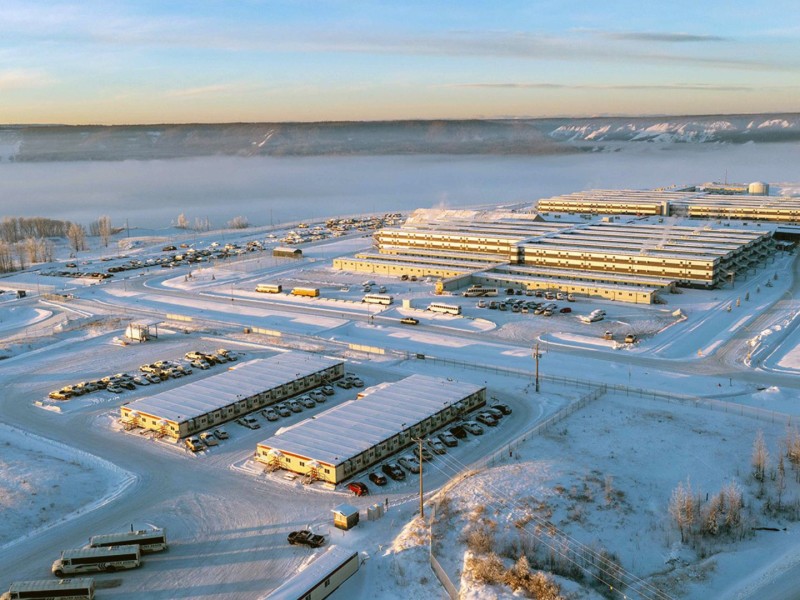
Society reimagines Site C camp conversion after initial idea deemed ‘too complex and costly’
The North Wind Wellness Centre society is looking for support from the Peace River Regional District for its new proposal for converting the BC Hydro Site C workers’ camp.

Dawson Creek rancher raises alarm about cut to ‘very important’ Farmers Information Service
Dawson Creek’s Talon Gauthier, a director of the BC Cattlemen’s Association, is advocating to keep the Farmers Information Service.