
PRRD talks regional protections for endangered species
The Ministry of Water, Land and Natural Resources met with the PRRD about plans for new boreal caribou ranges in northeast B.C.
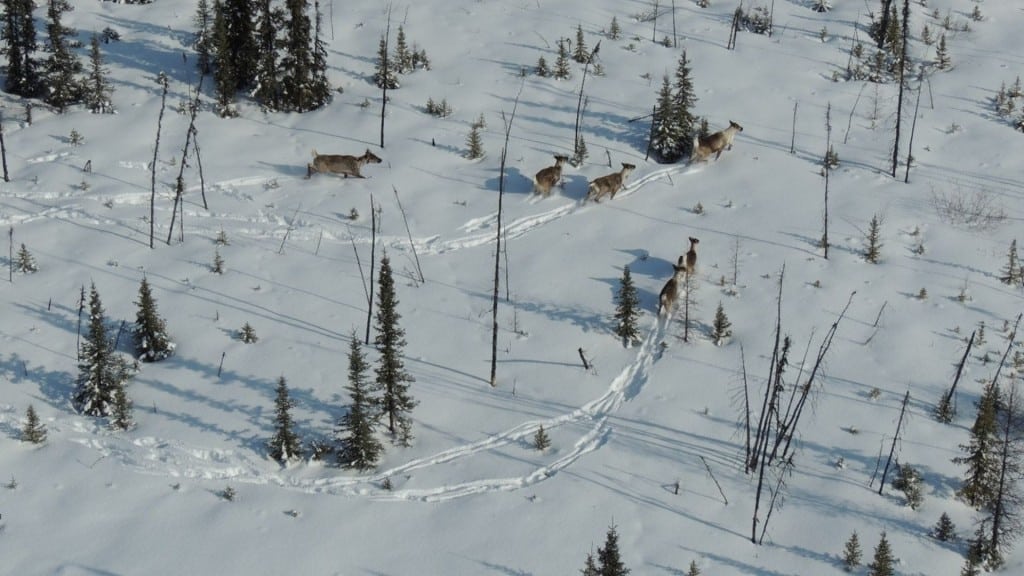
FORT ST. JOHN, B.C. – An expansive plan to protect endangered boreal caribou herds was presented to the regional board of directors by ministry experts.
During the January 23rd regional board meeting of the Peace River Regional District (PRRD), a delegation from the Ministry of Water, Land and Natural Resources spoke about a recovery plan designed to protect four herds of boreal caribou in the Fort Nelson and Fort St. John region.
The Boreal Caribou Protection and Recovery Program was developed by the ministry in partnership with Fort Nelson First Nation and collaboration with the Northern Rockies Regional Municipality.
Scott Schilds, a habitat section head based in Dawson Creek, explained the anticipated impact on the region and the benefits it is expected to have on boreal caribou in the northeast.
“Over the last three or four years we’ve seen strong growth rates from three out of four of those herds, three to four per cent per year, which is about what you can expect without more serious intervention,” Schilds said.
The ministry noted the herd in the Calendar region, the most fire-affected herd of the four, has experienced sharp population declines. Schilds stated this was likely due to the significant wildfire activity in the region in recent years.
Schilds explained the ministry anticipates the herds needing between 10 and 15 years of intense monitoring and protection before the regional population is no longer classified as “severely threatened”.
Latest Stories
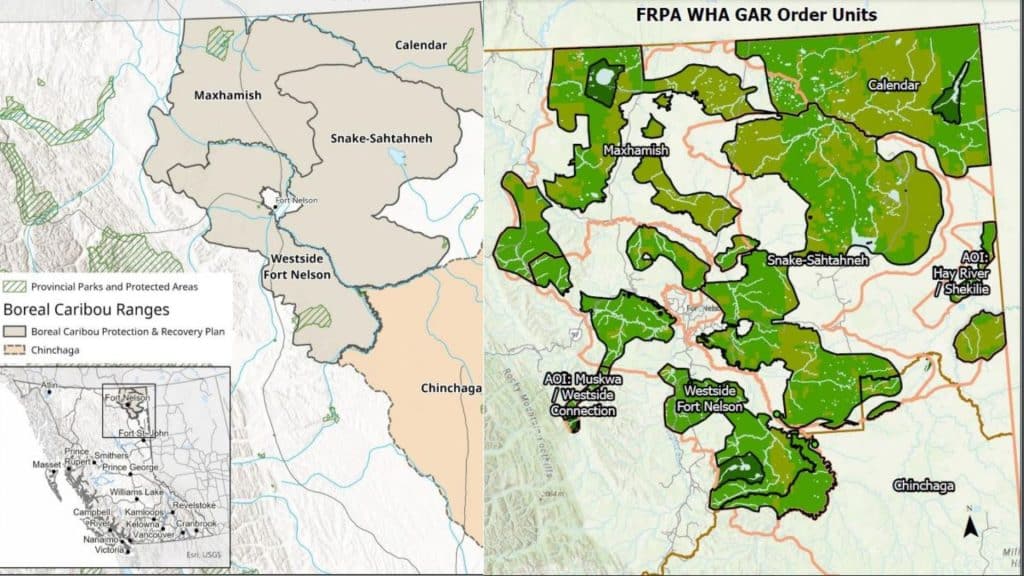
The 2.4 million hectare area identified in the plan is split into eight different “order units” to allow for “administrative flexibility”.
This flexibility allows the ministry to implement changes in specific areas, rather than make sweeping decisions.
“The intention and plan for each of these orders is the same, the only reason they’re divided up is so that we can have some nuance in how they’re administered,” Schilds said.
Of the 2.4 million hectares, 2.3 million hectares are in the Fort Nelson timber supply area, while 97,000 are in the Fort St. John timber supply area.
As some of the land included in the plan already has some protections on it, the “net new” land seeing new protections is 1.6 million hectares.
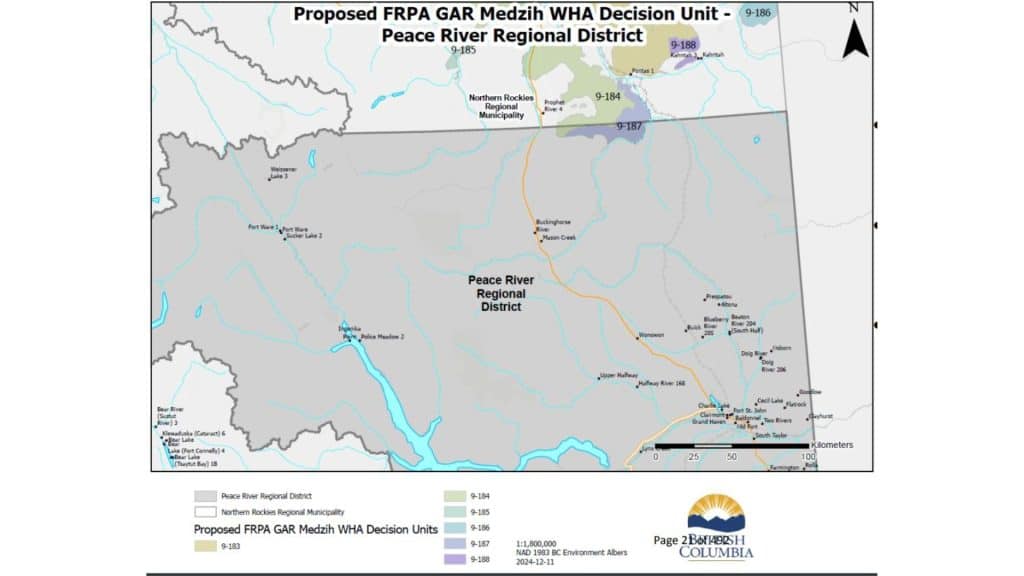
Public engagement on the plan was completed in 2022 and 2023, and the ministry sent a letter of notice to the PRRD in August 2024 regarding the project. After reviewing the notice, the PRRD extended an invitation to the ministry to present the plan in more detail to the board and address their concerns.
Schilds explained the protected areas will have restrictions on activities under the Forest and Range Practices Act, including forestry activities such as forest harvest, building forest service roads and other associated activities. Habitat restoration, wildlife enhancement activities and prescribed burning will be allowed.
The ministry has also provided leeway in the recovery plan for an exemption process to allow activities such as post-wildfire salvage, pest control and other sanitation activities if deemed to “align with the intent of the order”.
“The intent of the order is to maintain caribou habitat, so it’ll be a little bit of a case-by-case basis for how [exemptions] roll out,” Schilds said.
When discussing the 97,000 hectares of PRRD land included in the plan, Schilds explained that the ministry does not anticipate any impact to recreation access or tenure holders. Any previously-issued permits will also not be impacted; they will be grandfathered in.
Schilds also noted the region in the PRRD overlaps with areas identified under the Blueberry River Implementation Agreement.
“The timing isn’t ideal, in that we got our direction to move forward with this prior to [the Blueberry River] agreement being signed, but we’re in regular communication with that team to make sure that we’re not cutting the legs out from any other tables,” Schilds said.
While the allowable annual cut, the annual quantity of timber allowed to be harvested on a sustainable basis within a specific forest area, is set by the Officer of the Chief Forester, the ministry estimates the impact on harvest land in the Fort Nelson timber supply area will be no more than 405,000 cubic metres each year.
In the Fort St. John area, the ministry predicts an annual impact of 60,000 cubic metres, or less than two per cent of the allowable annual cut in 2019.
Following the presentation, the board voted to invite the ministry back for an update in July or August, when the directors are preparing for the 2025 Union of British Columbia Municipalities.
Stay connected with local news
Make us your
home page
Authors

Related Articles
Energeticcity.ca Weekly Review: 100 Episodes of This Week in the Peace
In this edition of the Weekly Review, we celebrate 100 episodes of This Week in the Peace. Plus, the most-read stories of the week.

(UPDATE) Cell, landline service disrupted in Fort St. John
Three major service providers are reporting phone and landline outages in the Fort St. John area.

Recycle-It hosting 2026 Free Stuff Weekend
Residents in Fort St. John will be able to get rid of their unwanted household items while searching for free stuff thanks to Free Stuff Weekend