
Ambulance workers voice concerns over new overtime policy
Ambulances sit empty across British Columbia as the union and the province clash over a new overtime policy which is negatively impacting caller wait times.
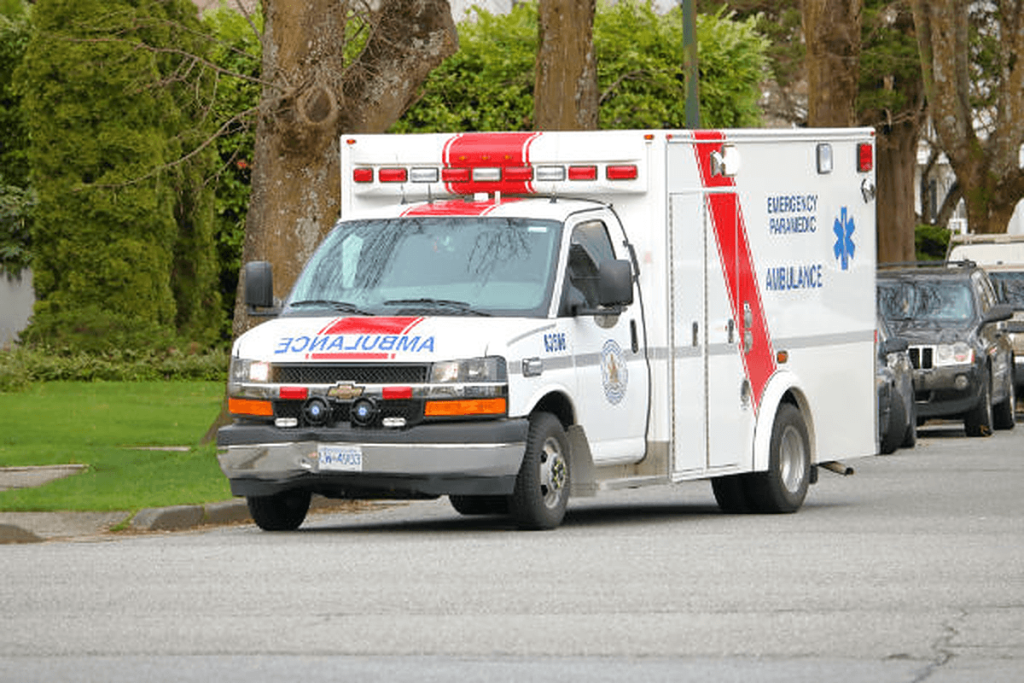
FORT ST. JOHN, B.C. – Ambulances sit empty across British Columbia as the union and the province clash over a new overtime policy which is negatively impacting caller wait times.
Ambulance Paramedics of British Columbia (APBC), the union representing around 6,000 dispatchers and paramedics across the province, is reporting ‘a significant number’ of ambulances sitting empty due to a lack of overtime approvals.
The union released a PSA warning provincial residents about the negative impacts of a new overtime ban instituted by British Columbia Emergency Health Services (BCEHS) on January 1st.
Local News Straight
to Your Phone
Download our app today!
Available on Android and iOS devices
The ban was to cut costs to adjust to a ‘significant budget deficit,’ which has also led to cuts to ambulances and negatively impacted response times. The union explained that BCEHS has ongoing struggles with staffing levels, with approximately 25 per cent of ambulances unstaffed on a daily basis.
“Our members are reporting dozens and dozens of ambulances across the province sitting empty when they show up to work, and it’s not getting any better,” Jason Jachson, President of Ambulance Paramedics of BC, said.
Jackson explained the union has attempted to work with BCEHS, the Provincial health Services Authority, and the provincial government, but states they do not appear willing to admit that staffing levels are reaching ‘critical levels again.’
“We know we have hundreds of open and unfilled positions in the province. These are predictable vacancies that can be staffed well in advance. There is just no reason to wait to the last minute to start calling people to come in.”
Latest Stories
Jackson stated that the PSA was issued as a warning to the public that if they call 911, they will be waiting, possibly a long time, if the call is not critical.
“Our low acuity calls are waiting longer than ever, and BCEHS’ deployment changes are hurting patients. We’re hearing about patients sitting for hours on the floor, or with first responders when they need to be transported to hospitals by paramedics immediately,” Jackson said.
In an interview with Energeticcity.ca, APBC Communications Director Ian Tait stated that workers are willing to take on overtime, but the policy changes have altered the procedure.
Now, instead of getting advance notice on which shifts are overtime, and allowing workers to pick up shifts, workers are receiving calls on the day of shifts and having to make decisions on the fly.
“They’re still willing to pay the overtime, but it’s almost like they’re hoping if they leave everything to the last minute that somehow the shifts will get filled before they need to go overtime,” Tait said.
Tait explained that the new policy is disproportionately impacting rural and remote communities in the interior and the north of B.C., where staffing was critically low even before the policy change, and ambulances sat empty without staff.
“In places like Fort St. John, Mackenzie or Merritt, or other communities, when the hospital shuts down, it’s the ambulance service that becomes the health care system,” Tait said.
Tait explained that BCEHS has had aggressive hiring processes over the last several years; however, around 400 full-time positions have yet to be filled.
With the new policy, which does not allow for staff to prepare and adjust to cope with the lack of employees, ambulances end up sitting empty without workers to staff them, increasing patient wait times.
Tait expressed the union’s desire for the provincial government and BCHS to ‘take ambulance staffing seriously.’
“We’ve seen wait times go up. We’ve seen low acuity times go up. We’ve seen high acuity times go up. We’ve seen response time targets not get met. And if we’re not going to finally take this staffing seriously and try to correct it with some proper initiatives, we’re going to be in a real pickle,” Tait said.
“We always get [patients] to advocate for themselves, and at the end of the day we don’t want people to wait. There’s nobody that wants people to suffer less than paramedics.”
Tait recommends that patients seeking ambulance aid call immediately and relay as much information as possible to the dispatcher. High-acuity calls, categorized as such due to the life-threatening nature of the patient’s situation or injury, have faster response times during this time than low-acuity calls.
Depending on the staffing situation and distance from the ambulance, patients may be waiting longer than usual; however, Tait encourages patients to be wary of travelling to emergency rooms on their own.
“Every call is different, so if you have a 12-year-old that, say, had a broken thumb, that is very different on how you could get to the hospital versus a senior that has a broken hip, or a possible broken hip. You can call back, keep an eye on it, advocate for yourself, and hopefully, we can be allowed to staff these ambulances in a more appropriate manner sooner than later.”
Stay connected with local news
Make us your
home page
Authors

Related Articles

Quicksketch: Who’s who in the NDP leadership race
WINNIPEG — The next NDP leader will be announced on Sunday. There are five candidates on the ballot and voting concludes Saturday. Here’s a quick look at the candidates and…
Site C work camp moved to support nation-building project in northern B.C.
VANCOUVER — BC Hydro says it’s relocating and repurposing the majority of its work camp for building the Site C hydroelectric dam to support the construction of the North Coast…

Joint federal-provincial commission into Tumbler Ridge shooting an option: minister
VICTORIA — A joint federal-provincial commission could look into the shooting that killed eight people in Tumbler Ridge, B.C., says British Columbia’s public safety minister. Nina Krieger says a joint…