
Evan Saugstad: I fought with Ford and…? (part 2 of 2)
Evan Saugstad’s dispute with Ford continues.
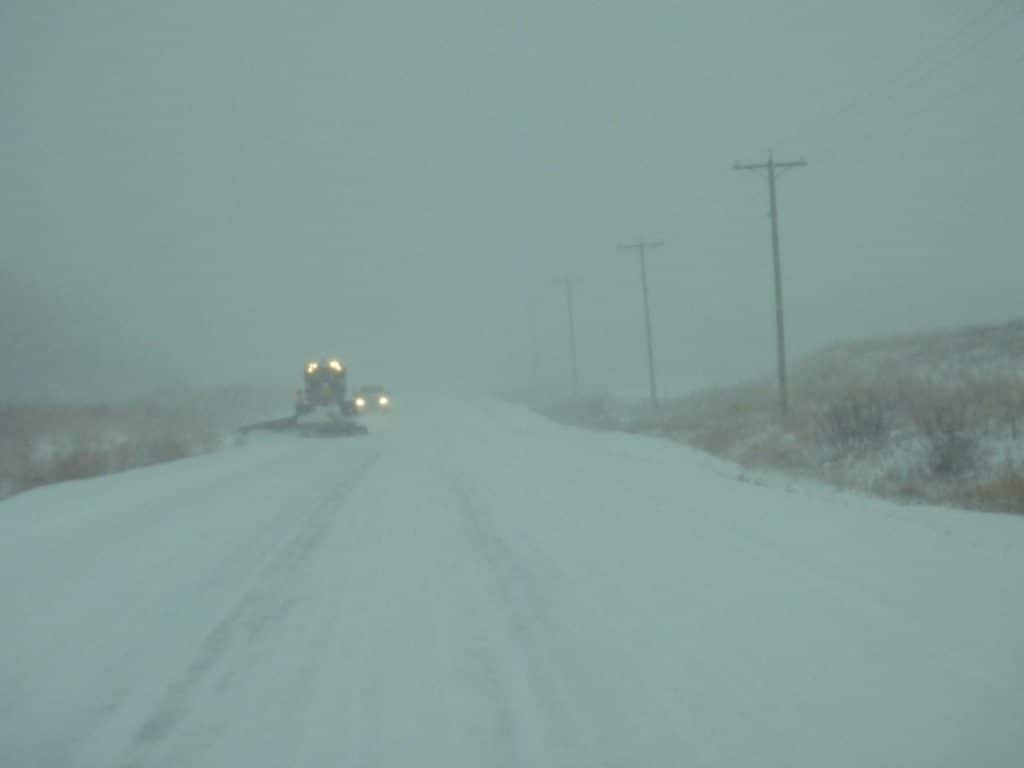
Evan versus FORD Canada …. Who do you think would win?
In Part 1 I wrote about how I discovered that the Electronic Shift on the Fly (ESOF) in my 2022 FORD SUPER DUTY F350 4×4 did not work in cold temperatures and as a result, got stuck in a friend’s driveway.
How after that I wrote to the FORD Canada CEO explaining my/their problem and ask that she order it fixed, as the local dealer said there were no “fixes”, and upon being ignored by her, that I discovered and used a process called Canadian Motor Vehicle Arbitration Plan (CAMVAP) which deals with warranty disputes. Major auto manufacturers fund the process, use professional arbitrators, and can be completed online and with ZOOM calls.
Local News Straight
to Your Phone
Download our app today!
Available on Android and iOS devices
I had two hearings, one in January 2023 to dispute FORDS assertions that this was not subject to a hearing (which I won) and the second to hear my claim in February 2023.
I received the Arbitrator’s decision on Feb 21st.
In part it read:
Issue 1: Is the Electronic Shift on the Fly working properly?
Latest Stories
Issue 2: If the Electronic Shift on the Fly is not working properly, is it repairable?
Issue 3: If the Electronic Shift on the Fly is not working properly and is not repairable, does this issue warrant a buy-back of the vehicle?
Reasoning and Analysis:
Issue 1: is the ESOF working properly?
Evidence and Argument: The evidence of the Consumer is that when using the ESOF at temperatures below -25 C the dash indicates that the vehicle has engaged 4 wheel drive. However, while the transfer case has engaged 4WD, the front hubs have not electronically locked and therefore 4WD is not working. Not only is the 4WD not working, but this creates an unsafe situation as the driver believes they are operating the vehicle in 4WD.
The Manufacturer acknowledges that the ESOF does not lock in the front hubs at temperatures below -25 C. The Consumer and Manufacturer basically agreed to use the -25 degrees Celsius temperature as disclosed in the Manufacturers service bulletin. The Manufacturer provided a service repair bulletin that states that this is the case and that there is no repair available for this issue. The bulletin further states that a repair attempt should not be made. The Manufacturer stated that the Consumer has the option of manually locking in the hubs at temperatures below -25 degrees.
The Consumer countered that this is not the description or recommendation of operation in the owner’s manual and that the Manufacturer does not advise customers of this system issue or alternative unless a customer enquires. Further the owner’s manual suggests reduced fuel economy and increased wear when operating the vehicle with the hubs locked in.
The Manufacturer stated that there is no excessive wear by having the hubs manually locked when using 4WD. Increased wear is only created when 4WD is engaged in circumstances like dry pavement operation.
Findings: While the ESOF system is not operating as advertised, there is a relatively simple method to lock the front hubs manually and safely operate the vehicle in 4WD. This may not be as the system was designed as there is no reference to this in the owner’s manual.
Issue 2: If the Electronic Shift on the Fly is not working properly, is it repairable?
Evidence and Argument: The service bulletin provided by the Manufacturer states very clearly that there is no repair available for the ESOF system not locking in the front hubs at temperatures below -25 degrees C.
The Consumer acknowledges this bulletin however, they suggest this is a design defect and that Consumers are not made aware of this defect unless they enquire. In addition, the dash indicators do not inform the driver that the hubs are not locked in. At a minimum the dash indicator should be corrected to properly inform the driver.
The Manufacturer stated that this issue is a characteristic of the vehicle and is not a defect. The ability to manually lock in the front hubs is provided for a reason and the severe weather would be one of those reasons.
The Consumer contends that as the instrumentation indicates that the vehicle is operating in 4WD when it is not, this is a defect and not a characteristic. If this were the case the owner’s manual would provide instruction to manually lock in hubs at temperatures below -25 C.
Findings: The ESOF system, as it pertains to electronically locking in the front hubs at temperatures below -25 C, is not repairable as per the Manufacturers service bulletin. The deficiency of the owner’s manual in not describing this issue is acknowledged. This owner’s manual deficiency, on its own is, not enough to be able to characterize the ESOF hub locking issue as a manufacturing defect. Changes to the dash indicator system would be helpful to
consumers, however this fix would appear to be a software issue, which is not eligible for a CAMVAP arbitration.
Issue 3: If the Electronic Shift on the Fly is not working properly and is not repairable, does this issue warrant a buy-back of the vehicle?
Evidence and Argument: The Consumer contends that as the ESOF system is not locking in the front hubs as advertised, this creates a potentially unsafe operating condition. They further state that this is not how the system was advertised and promoted by the Manufacturer which is supported by the lack of information in the owner’s manual. The Consumer also stated that -25 C temperatures are not an unusual situation in most of Canada
and that if this issue was known by the Manufacturer they should have informed customers at
the time of purchase, or at least once it became known. This has not happened,
The Manufacturer provided an explanation that the vehicles 4WD system will operate properly in temperatures below -25 C by locking in the front hubs manually. While an inconvenience the 4WD system can still be utilized reliably in -25 C conditions by using this manual method. They also advised that this does not result in unusual wear of the hub components.
The Consumer was asked, and they confirmed, that they are now aware of the operational remedy of locking in the front hubs manually at temperatures below -25 C, but they stated this was only because of their enquiry and repair request, not because the Manufacturer advised them previously.
Findings: The requirement to lock in the front hubs manually does present some inconvenience to the Consumer, but it also results in safe operation of the vehicle when using 4WD. Whether this inconvenience is significant or minor is a subjective determination, and I acknowledge that this was not described in the initial sale process of the vehicle, nor was it described in the owner’s manual. It is my determination that this inconvenience is not substantial enough to warrant buy-back of the vehicle.
Additional information.
The Consumer is concerned that this situation exists for many similar trucks operating in cold temperatures and that this issue creates a potentially dangerous situation for those consumers and others. The Arbitrator explained that the CAMVAP process deals with an individual Consumer only and awards are specific to an individual Consumer and their specific vehicle.
Conclusion:
For all of these reasons, I find in favour of the Manufacturer in this case.
Order:
I now order as follows:
The Manufacturer has No Liability with respect to .
Dated this 14th day of February 2024
Although I understand the reasoning behind CAMVAP not being able to order FORD to redesign my truck to ensure the hubs work in normal cold weather conditions, I do not agree with FORD that -25 C is extreme or abnormal weather for most of Canada and much of the USA. My research showed that all Canadian provinces and territories and 50 of the 52 US states have experienced -25 C at some point in their history (Florida and Hawaii)
I did not understand why the CAMVAP process states they cannot address “software” issues related to the instrumentation displaying that the vehicle is shifting into 4×4 and that upon completion, the 4H light comes on. Would the issue be any different if the speedometer changed with the temperature, or the high beam indicator only worked at above freezing temperatures, or the gas gauge changed along with the temperature?
Without software, my truck would not even start, and I have already had FORD fix one other software issue. All newer SUPER DUTY trucks have a digital thermometer that could be linked to the ESOF so that as temperatures fall below -25 C, a warning pops up that manual hubs are required for 4×4 operations.
Unfortunately, there is no way to dispute or revisit the Arbitrators decision. It is final and binding, unless challenged and changed in and by a court of law.
I also believe that the Arbitrator knew if he found against FORD that his decision would be challenged in court as FORD had too much to lose on this one. This defect affects 10’s of thousands SUPER DUTY trucks, if not 100’s, and if they did anything to allow my claim, that would eventually be applied to all SUPER DUTY 4×4 vehicles. FORD would not leave this unchallenged while the Arbitrator reasoned that I would be much more unlikely to do so.
As part of this process, I had to agree that the decision of the Arbitrator is final and binding, so other than turning to the courts to argue the process was not followed (I have as much time as FORD, but my bank account against FORD’s?), so ended this process, but not the battle.
After receiving the decision, I bundled all my information and sent to Transport Canada’s Defect Investigations and Recalls Division. I asked them to investigate as this issue affects the safety of thousands of drivers and applies to thousands of SUPER DUTY FORD 4×4 vehicles, – F250 to F650 for multiple manufacturing years.
On March 18, 2024, Transport Canada (TC) acknowledged receipt of my complaint, assigned it complaint number 2024-0746 and asked for permission to forward it to FORD for a response, to which I did. They also advised it is not normal for them to respond directly back to me with their determination unless they require additional information.
As of today, November 19th, I still wait to see if TC will investigate and if their weight is greater than that of FORD and whether or not I receive, at a minimum, an advisory from FORD acknowledging that my truck does not always work as it is supposed to and that my truck’s instrumentation can give me the wrong information to base my driving too.
Given that I have not had any follow up or received any notice from FORD advising of my vehicles fault, I can only guess what happened. Transport Canada asked FORD for comment and they stated they had not received one complaint that this fault had lead to or caused an accident. This, in itself, is not unsurprising.
If SUPER DUTY drivers out there did not realize their vehicle did not shift into 4-whell drive after the instrumentation told them it had, why would they believe the lack of 4-wheel drive was a contributing factor in their accident/incident?
Interesting, while doing my research this past spring I discovered FORD has eliminated the lock-in hub on the passenger side of their F350 SUPER DUTY trucks and now have only one lock-in hub on the driver’s side, with the passenger side permanently locked in. Have been told they snipped and capped the vacuum line to the passenger side and directed all vacuum pressure to the driver’s side so maybe the 2024’s front hubs will work in temperatures colder than -25 C and the dash instrumentation will give you the correct information. Checked the 2024 Owners Manual and still couldn’t find any acknowledgement that there is an issue, so who knows.
I have asked other SUPER DUTY FORD owners about this and have not found one who was aware they did not have any 4-wheel drive capability when using the ESOF at temperatures at or below -25 C. Some did say they thought something wasn’t quite correct but had yet to figure out why.
If you have one of these trucks and need more information, stop by the service counter at the FORD dealerships and ask them how this all works, as we are now back into the season where -25 C is a regular occurrence.
I have often wondered how many accidents have occurred when a FORD SUPER DUTY driver thought they were in 4-wheel drive and drove accordingly, only to end up in the ditch, or in a collision with another vehicle when their vehicle spun out and skidded because they were still in 2-wheel drive, and they applied throttle in the wrong sequence to avoid the skid. And after that, being accused by the police, or vehicle owner that they were not driving according to conditions, and they had no defence as to why when they did not know they were not in the 4-wheel drive the instrumentation told them they were.
I fought FORD and FORD won, sort of, at least for now, but they did change the front hubs, sort of.
But then again, FORD can conduct vehicle software updates remotely and maybe, just maybe, my truck will mysteriously shut down when they see I am 30 miles back in the bush and in for a long walk home!!
Evan, and yes, it is always worth the time to try make things right, even when on appearances, one loses. Still can’t figure out why Transport Canada has not instructed FORD to advise every SUPER DUTY owner of this defect that under the right circumstances, lead to tragic outcomes.
Stay connected with local news
Make us your
home page
Letters to the Editor
Letters to the Editor should be exclusive to Energeticcity.ca. Include your name, address and daytime phone number. Keep letters to 500 words or fewer. Letters may be edited for length and clarity. To submit a letter by e-mail to contact@energeticcity.ca.
Authors

Related Articles

(Opinion) ‘Replace the Taylor Bridge, B.C. can’t afford to wait’
Chris Gardner, president and CEO of ICBA, is urging the B.C. provincial government to replace the Taylor Bridge. ICBA represents more than 4,500 member companies across British Columbia and Alberta.

(Opinion) Bear Flat Dispatch: Canada geese on ice
Regular contributor Ken Boon writes on the new Site C dam and how it has impacted the gaggle of geese who move onto his property each year.

Letter to the editor: I say no beds for seniors, no fancy pool
David Blaney writes about the project to replace the North Peace Leisure Pool and the recent news that the long-term care facility in Fort St. John has been delayed by the provincial government.