
Evan Saugstad: You Paying Your Fair Share?
Peace region resident Evan Saugstad shares his thoughts on the capital gains tax increase.
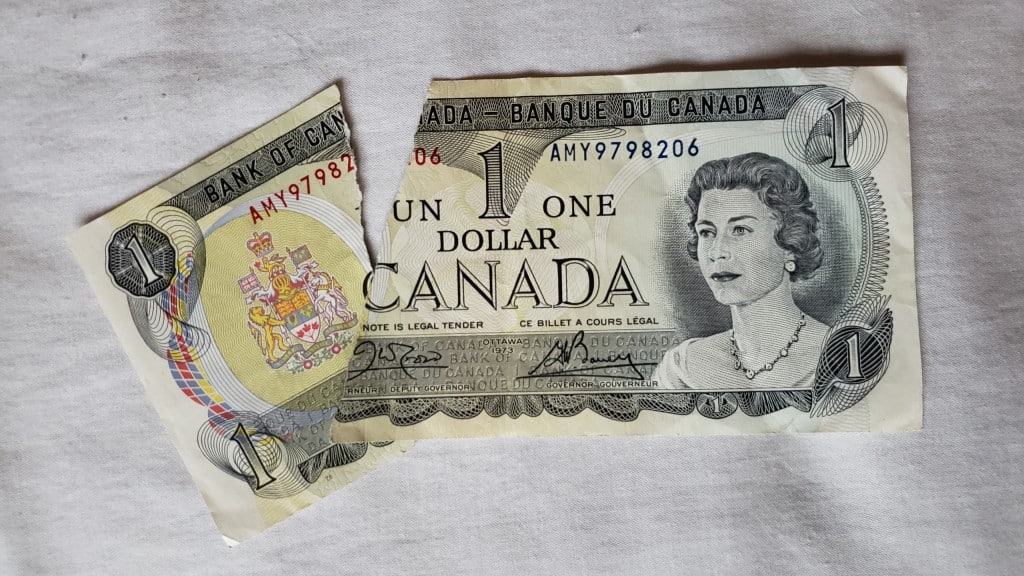
FORT ST. JOHN, B.C. — Canada, land of plenty and a country where the less you do, the more you get, and the more you do, the less you keep.
On June 25th Finance Minister Chrystia Freeland’s increases to the capital gains tax came into affect. “We know now is the time to invest in Canada and Canadians. The responsible way to pay for those investments is to ask those at the top to contribute a little bit of money.” (Reuters June 10th)
In other words, the harder you work, the more you make, the more government will take. But not from me, it only applies to those rich people, who ever they are.
Local News You Can Trust
Label us as a Preferred Source to see our stories more often
Actually, it is worse than that. As reported in the Financial Post (June 11th); “Upon release of the material, Freeland went one step further and basically asserted in a bizarre “speech” that the capital gains proposal was necessary to help hungry kids and pregnant teens in what was an obvious shot at potential political opposition to certain of the government’s Robin Hood income-redistribution programs.
The most offensive quote in her speech: “Do you want to live in a country where those at the very top live lives of luxury, but must do so in gated communities behind ever higher fences, using private health care and airplanes because the public sphere is so degraded and the wrath of the vast majority of their less privileged compatriots burns so hot?”
The class warfare message here is dangerous and offensive. There is no straight line between the capital gains inclusion rate proposal and “higher fences.” There is no good tax policy at play here. Instead, this is politics at its worst and, unfortunately, it will contribute to continued divisiveness.” (Financial Post June 11, 2024)
Pierre Poilievre and the Federal Conservative voted against the increase to capital gains. The Financial Post (June 11th) reported; “Poilievre also promised that if he were elected, he would create a new tax cut that would reduce “the share of taxes paid by the poor and middle class while cutting tax-funded corporate welfare and cracking down on overseas tax havens …. Instead of promising to repeal the tax if he’s elected, however, Poilievre said he would create a “tax reform task force” made up of “entrepreneurs, inventors, farmers and workers.”
Latest Stories
As usual, Justin and his Finance Minister disagreed and want to leave things they way they are. Our federal Liberals (supported by their sidekick Jagmeet) and our BC NDP, are quite happy as they like the “just make the rich pay more philosophy” and work hard to convince Canada that those with money are somehow cheating the system and that wealth redistribution is the solution.
I agree with Peirre and believe we need to not only reform our tax system to make it a whole lot simpler, but also need to reform governments spending habits and stop the ever-increasing tax rates to pay for the ever increasing and wasteful spending.
Ever ask yourself, “How much of my annual income goes to paying taxes?” And then as you try to summarize that thought and if you end up with a; “I don’t know”, “lots” and “too much”, you are not alone.
Although many may not realize it, we are luckier than most as Fort St John is one of Canada’s more affordable places to live.
“The average house price is just over $400,000 and a two-bedroom apartment can be rented for less than $1,000 a month. Our standard of living is high: The median household income is $102,000 (Statistics Canada, 2021), which puts us second in B.C. and seventh in Canada.” (City of Fort St John website).
Cost Of Living Quick Facts (AreaVibes.com)
- The cost of living in Fort St. John is 27% lower than the British Columbia average
- The cost of living in Fort St. John is 10% lower than the national average
- Fort St. John housing is 45% lower than the national average
- British Columbia general sales tax is 17% higher than the national average
- British Columbia state income tax is 40% lower than the national average
So, what do we have to complain about? Easier to afford life in Fort St John than many other places in Canada, but then one looks at how much tax we pay and compare that to what we get in return. If you make more than the average wage earner, you pay more in taxes, while at the same time, the less you get back in the form of rebates, tax breaks, or as some call these, “government kick backs to buy your vote”.
Prime Minister Justin and Premier David both seem convinced that if you can afford life, that somehow you are avoiding paying your fair share of Canada’s tax bill and they would like you to pay more.
On the bright side, if we had to pay all of our taxes before we got to keep any of our income for ourselves, we would now be free to keep all of what we make for the rest of the year. (Unfortunately, that almost took half the year!!)
The Fraser Institute calculated that Canada’s 2024 Tax Freedom Day was on June 13th, when the “average family has earned enough money to pay the taxes imposed by all three levels of government—federal, provincial, and local. In other words, if Canadians were required to pay their taxes up front, Tax Freedom Day is the day that families get to start keeping the money they earn.”
They went on to explain; “this calculation does not consider the implications of the budgetary deficits run by governments this year. Based on budget forecasts the federal government plans to run a $39.8 billion deficit in 2024, and adding in budgetary balances from the provinces yields an expected net cumulative deficit for Canada of $69.9 billion.
Today’s deficits will be paid for by taxes, as money borrowed today must ultimately be paid back in the future, which means that the $69.9 billion in combined federal and provincial deficits for 2024 should be considered deferred taxes. To illustrate this point, we calculate a “Balanced Budget Tax Freedom Day” to show when Tax Freedom Day would arrive if Canadian governments had to raise taxes today to balance their budgets, instead of financing spending through borrowing. That day is June 23—10 days after the original June 13 estimate—representing nearly half the year.
“Balanced Budget Tax Freedom Day” also varies by province, depending on the state of government finances. The scale of deficits varies greatly between the eight provinces that are running deficits, and the only two provinces projecting budgetary surpluses are Alberta and New Brunswick.
Among those provinces running deficits, three stand out as running the largest annual provincial deficits in 2024—Quebec ($11.0 billion), Ontario ($9.8 billion), and British Columbia ($7.9 billion). While the scale of deficits in all three provinces stands out, B.C.’s deficit is particularly noteworthy given the province has a significantly smaller population than Quebec and Ontario.”
Do you remember back in the “old” days when life and taxes were much simpler? When one could fill out our own Income Tax forms and mail them free of charge for processing? Do you still do that or are you like me and pay someone else to figure out what has become a very, very complex tax system?
Do you even know how many taxes Canada and BC have? First few are easy; Federal and provincial income tax, municipal (property) tax, general services tax (GST), provincial sale tax (PST) and capital gains tax.
Then there are all the other Federal taxes:
- Underused Housing Tax (vacant or underused housing)
- Luxury Tax (on certain vehicles, aircraft and vessels)
- Customs tariff (duties and tariffs)
- Fuel charge; includes carbon (fuel charge on certain types of fuel and combustible waste)
- Air Travellers Security Charge (air travellers security charge (ATSC))
- Excise duties (beer, wine, spirits, tobacco, cannabis and vaping products)
- Excise taxes (fuel-inefficient vehicles, automobile air conditioners, certain petroleum products and insurance premiums)
- Payroll deductions (including contributions to Employment Insurance (EI) and the Canada Pension Plan (CPP)).
BC also has its own suite of taxes (I don’t list all the fees that we must pay for what are considered services):
- Motor fuel carbon tax (Motor fuel tax and carbon tax apply when you purchase or use fuel such as gasoline, diesel and propane, unless a specific exemption applies.)
- Tobacco tax (Tobacco tax applies on all tobacco products sold in B.C., including cigarettes, heated tobacco products, cigars, loose tobacco products (e.g. fine cut, pipe or chewing tobacco) or other products that contain tobacco in any form.)
- BC Vacant Housing tax
- BC fossil fuels combustion appliance PST (extra PST on natural gas and oil fire furnaces and water heaters)
- BC sales tax on used vehicle sales (extra PST)
- BC PST on “sugary” drinks (food is generally tax exempt)
- BC Speculation Tax (vacant homes)
- BC Home Flipping Tax (tax on homes that are bought and sold within 730 days of each other)
Do you know our Federal and Provincial income tax rates?
Federal income tax rates for 2024 are:
- 15% on taxable income up to $55,867
- 20.5% between $55,867 and $111,733
- 26% between $111,733 and $173,205
- 29% between $173,205 and $246,752
- 33% on taxable income over $246,752
BC Provincial income tax rates (in addition to the federal taxes) for 2024 are:
- 5.06% on taxable income up to $47,937
- 7.70% between $47,937.01 and $95,875
- 10.50% between $95,875.01 to $110,076
- 10.50% between $110,076.01 and $133,664
- 14.70% between $133,664.01 and $181,232
- 16.80% between $181,232.01 and $252,752
- 20.50% over $252,752.
Add the Federal income tax rate to the BC rate and that is what you pay on your earned income. If your income is $50,000 you pay $11,359, on $100,000 you pay $31,000 and at $252,752 you pay a whopping $123,222.
A 2023Fraser Institute’s report suggests that the top income-earning families — those making just under $250,000 — pay the majority of Canada’s taxes. It found that the top 20 per cent of income earning families pay 61.9 per cent (that’s nearly two thirds) of all the country’s personal income taxes, while accounting for just under half of its total income. As well, the study found that those top income earning families pay 53.1 per cent of total taxes (CBC April 20 24).
And Justin and Crystia have the gall to say that the rich just need to pay a little bit more to reach “their fair share”?
It is not only the amount we each pay that needs review, but the entire system. The following is a list of credits that you may qualify for which can then be used to reduce the amount of income tax payable.
- Pension adjustment
- Registered Pension Plan (RPP) deduction
- Registered Retirement Savings Plan (RRSP) deduction
- Deduction for elected split-pension amount
- Annual union, professional, or like dues
- Child care expenses
- Disability support deduction
- Business investment loss
- Moving expenses
- Support payments made
- Carrying charges and interest expenses
- Deduction for Provisional Parental Insurance Plan (PPIP) premiums on self-employment income
- Exploration and development expenses
- Other employment expenses
- Clergy residence deduction
- Canadian Forces personnel and police deduction
- Employee home relocation loan deduction
- Security options deductions
- Limited partnership losses of other years
- Non-capital losses of other years
- Net capital losses of other years
- Capital gains deduction
- Northern residents deduction
- Basic personal amount
- Age amount
- Spouse or common-law partner amount
- Amount for an eligible dependent
- Amount for infirm dependent age 18 and older
- Canada Pension Plan (CPP) or Quebec Pension Plan (QPP) contributions on self-employment and other earnings
- Adoption expenses
- Caregiver amount
- Disability amount
- Disability amount transferred from a dependant
- Interest paid on your student loans
- Tuition, education, and textbook amounts
- Tuition, education, and textbook amounts transferred from a child
- Amounts transferred from your spouse or common-law partner
- Medical expenses for self, spouse or common law partner, and your dependent children born in 1989 or later
- Allowable amount of medical expenses for other dependants
- Donations and gifts
- Public transit passes amount
- Children’s fitness amount
- Provincial Parental Insurance Plan (PPIP) premiums paid
- Provincial Parental Insurance Plan (PPIP) premiums payable on employment income
- Provincial Parental Insurance Plan (PPIP) premiums payable on self-employment income
- Federal foreign tax credit
- Federal political contributions
- Investment tax credit
- Labour-sponsored funds tax credit
- Federal dividend tax credit
- Overseas employment tax credit
- Minimum tax carryover
- Total income tax deducted
- Refundable medical expense supplement
- Canada Workers Benefit (CWB)
- Refund of investment tax credit
- Part XII.2 trust tax credit
- Provincial or territorial credits
Then if this list isn’t long enough, we have PM Justin and Premier David’s favour kickback schemes, called rebates, primarily designed to keep their faithful base voting them into power. (I would list them but that would take a couple more pages and a few thousand more words).
Rebates such as the recent ICBC kickback and BC Hydro cash back (just charge me less, please), carbon, heat pumps, window and door replacements, electric cars, air conditioners, e-bikes, BC Family Benefits, children’s benefits, school lunches, dental, sports and a whole host of others for just about everyone who makes less than the average salary (sorry rich people, you get the bill, but can vote for Conservative and BC United).
Pierre Poilievre is entirely correct in stating we need a tax review.
In trying to comprehend what I have just written, does it make sense we have a system that no one completely understands, including those who we pay to do our taxes? A system that collects most taxes from the “rich”, then depending upon how much you make, who you are, where you live, how long you have been in the country and where you came from, how dangerous your occupation, how many children you have, what and how you invest, who you donate too, etcetera, etcetera, you redistribute it back to somehow make it seem fair?
Do you know eight US states have no income tax (Alaska, Florida, Nevada, South Dakota, Tennessee, Texas, Washington, and Wyoming), but have higher rates for other things such as sales, property and excise taxes to keep their budgets balanced?
Do you know Canada ranks #25 in the world for highest taxes if we’re looking at the highest federal income bracket, 28 places higher than the US? Then wonder why so many “rich” people tend to leave Canada for places to the south, or why our best hockey and golf players gravitate to Florida and Texas?
Yes, it is time for a tax review, and personally, I favour a flat tax rate where we all pay the same rate, and then use rebates or supplements to give back portions of what individuals paid to make up for the lower incomes or disadvantaged individuals who need the help.
Evan, and after doing a bit of research, still do not understand what I could be entitled too, if I so chose.
Stay connected with local news
Make us your
home page
Letters to the Editor
Letters to the Editor should be exclusive to Energeticcity.ca. Include your name, address and daytime phone number. Keep letters to 500 words or fewer. Letters may be edited for length and clarity. To submit a letter by e-mail to [email protected].
Authors

Related Articles
FSJ Eats with Ed: The (bitter) beef brisket sandwich battle of 2026
Venturing to the confines of Fort St. John’s Centennial Park, Beef Brisket Sandwiches were the meal of choice during 2026 Ribfest

(Opinion) Bear Flat Dispatch: Caterpillars, Bears and Poplar Trees
Regular contributor Ken Boon writes about the turning of the seasons in Bear Flat.

(Opinion) Bear Flat dispatch: Bear Flat Museum
Regular contributor Ken Boon writes about the Bear Flat Museum, which features a “Site C Sucks Museum” cabin, a sign cabin and old farm equipment.