
Evan Saugstad: The great divide – rural versus urban
Canada needs both our rural natural resources and our urban centres to help fund their development and ensure the materials and technologies exist to help them develop and grow.
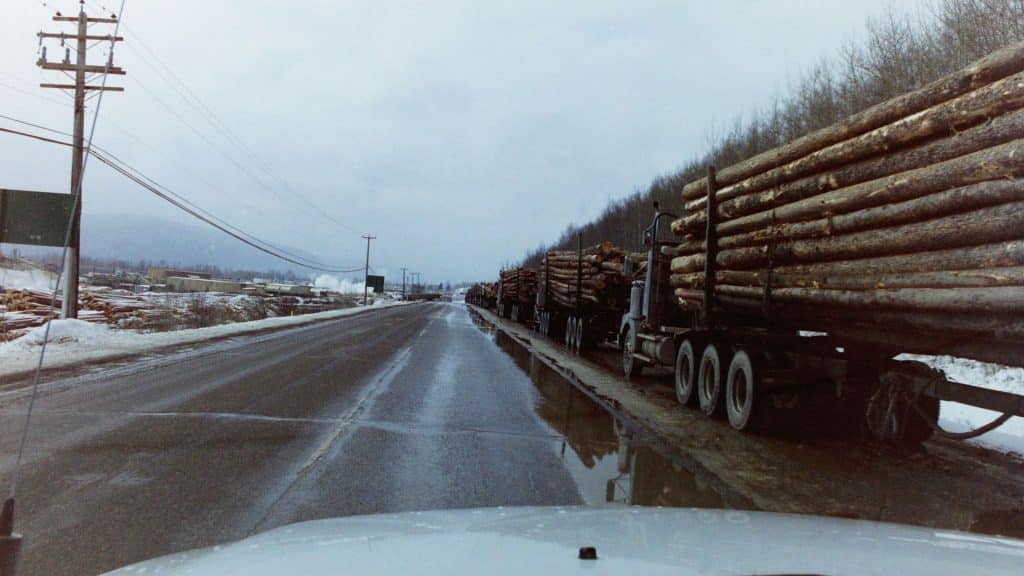
FORT ST. JOHN, B.C. — In January, West Fraser Timber announced the closure of its Fraser Lake mill. On May 9th, Canfor announced the closure of its Polar Sawmill (Bear Lake) near Prince George, the closure of one production line in its Northwood Pulp Mill in Prince George, and the cancellation of plans to build a new sawmill in Houston to replace the one it closed in 2023.
Although some of the rationale contributing to these closures was based on the mountain pine beetle epidemic from the early 2000s that decimated our lodgepole pine forests and, more recently, subsequent wildfires and spruce beetle attacks, the primary rationale for these last closures is the overall lack of available timber supply. The key word here is “available”.
For various reasons, our NDP government has deemed our forest unfit for harvest. Figures quoted by Canfor state that BC is currently cutting about 43% of the available timber supply (Annual Allowable Cut, or AAC). Canfor attributed government policies to this reduction in harvest. Forest policy changes include moratoriums on logging old growth, First Nation tenure transfers and consultation bottlenecks, a 30 by 30 conservation goal (doubling BC Parks), and eco-system-based land management initiatives.
Local News Straight
to Your Phone
Download our app today!
Available on Android and iOS devices
This news was not unexpected for those who follow and understand what is happening to our forest industry. These closures are no longer attributed to the pine beetle epidemic, as those mill closures have already occurred, and the industry has downsized as a result. The current rationales are not unique to BC or just our forest industry.
On April 30th, Preston Manning wrote an Op-ed for the Globe and Mail titled “Natural resources are more important to the economy than city-dwellers realize.”
For those of you who care to remember, Preston helped found and lead the Reform Party, which then joined with the federal Conservatives when the right woke up and realized that two right-leaning parties could never defeat the federal Liberals. (Sound familiar with what is happening in BC with the provincial conservatives believing that splitting the right-of-centre vote will get rid of our NDP?) Preston served as leader of the Official Opposition from 1997 to 2000.
In part, he stated, “…. area-wise, we are the second-largest country on Earth, which means that we have the second-largest, or perhaps even the largest, stock of natural resources on the planet – an enormous source of strength and responsibility if we would only recognize it, capitalize on it, and make its future development and stewardship a national priority.
Latest Stories
Unfortunately, the current federal government tends to regard the natural resource sectors as relics from the past and even as environmental liabilities. It gets away with this negative posture because Canada’s increasingly urban population does not fully recognize how many urban jobs and incomes are actually dependent on the health and performance of the rural-based natural resource sectors – agriculture, energy, mining, forestry, and fisheries. These are truly fundamental building blocks of the Canadian economy as a whole, and this fact needs to be more fully appreciated.”
His article could also apply to BC and our current government’s view of our rural natural wealth, its opportunities, or lack thereof, and the current spate of sawmill closures.
What was interesting to read were the comments to Preston’s assertions that rural Canada is important to us all.
Many commentators, mostly urban and many from Toronto, were offended that anyone could say that Canada needs our rural wealth to ensure Canada has a strong and prosperous economy. Comments such as Bay Street, the centre for many of Canada’s largest corporations, banks, and Toronto Stock Exchange, is where Canada’s wealth is created and that our rural economies could not exist without them.
Lost was the fact that the relationship is symbiotic, that Canada needs both our rural natural resources and our urban centres to help fund their development and ensure the materials and technologies exist to help them develop and grow. Also lost was the fact that no city is self-sustaining and that most everything it needs to exist comes in by wire, pipe, truck, boat, plane, or rail.
Similar comments were made for the most recent BC mill closures. The city folk blame overcutting, greedy corporations, the need for more parks to play in, unsettled land claims, etc.
Lost in our metro cousins is the need to responsibly develop our natural resources to ensure we sustain our lives and economy. Yes, easy to see and draw a straight to the results in small communities such a Chetwynd, Houston, and Bear Lake. But, not always so apparent to our big city cousins as the effect of a diminished rural economy will have on them or our current Provincial government in Victoria, which believes economies balance themselves.
Recently, PM to be, Pierre Poilievre has been strongly advocating that the average Canadian needs to tell government what we want and need. This also applies to how our rural natural resources should be developed and managed. If they don’t want a sawmill, mine, commercial fishing or farms and ranches, then the average city dweller, such as those working as waiters, plumbers, stylists, or technology entrepreneurs, needs to understand that their bills are also underwritten by what our rural resource economies generate and provide, in an indirect way, to them.
If our rural industries closed, removing the billions and billions that they generate, the effect will be felt across the entire province, not just in the small communities that so readily stand out.
As for those who think it is only the “greedy” corporations who bale when the profits dwindle, think of this.
Where I grew up in the Bella Coola Valley, the major employer, forestry, left and then there was insufficient local timber to sustain their operations for many of the same reasons as today.
As a result, the province offered up two Community Forest Licenses, one for the local First Nation and one for the rest of the community. Both harvested their quota and prospered for a few years, but then times changed. New forest policies and the government mandate that every cutting permit “must” be agreed to by the local First Nation(s), otherwise it will not be issued, has meant one Community Forest receives all its permits and cuts its quota, while the other has not been able to receive a single permit for multiple years and cuts nothing. One has a future, one doesn’t.
Like Canfor or West Fraser, if the small fry do not get their permits, they too will go out of business, and when they do, all of BC suffers.
This is Evan, I said it before, and I will say it again and I am still advocating for a strong, resource-based rural economy so we all can prosper and supply the rest of the world with the natural resources they so desperately want and need.
Stay connected with local news
Make us your
home page
Letters to the Editor
Letters to the Editor should be exclusive to Energeticcity.ca. Include your name, address and daytime phone number. Keep letters to 500 words or fewer. Letters may be edited for length and clarity. To submit a letter by e-mail to contact@energeticcity.ca.
Authors

Related Articles

(Opinion) ‘Replace the Taylor Bridge, B.C. can’t afford to wait’
Chris Gardner, president and CEO of ICBA, is urging the B.C. provincial government to replace the Taylor Bridge. ICBA represents more than 4,500 member companies across British Columbia and Alberta.
(Opinion) Bear Flat Dispatch: Canada geese on ice
Regular contributor Ken Boon writes on the new Site C dam and how it has impacted the gaggle of geese who move onto his property each year.

Letter to the editor: I say no beds for seniors, no fancy pool
David Blaney writes about the project to replace the North Peace Leisure Pool and the recent news that the long-term care facility in Fort St. John has been delayed by the provincial government.