
Watt’s Happening: The quiet revolution of cooperatives
I am just going about my day-to-day affairs, but each of my actions expresses a fundamentally different way of viewing the world. It is the way of the cooperative.
FORT ST. JOHN, B.C. — I push my cart down the aisle and pick up a few groceries. Grab a coffee and say howdy to some familiar faces. Stop at the gas bar, fill my tank and buy a magazine. Cross the street to the credit union to pay a few bills and pick up some cash.
I am just going about my day-to-day affairs, but each of my actions expresses a fundamentally different way of viewing the world. It is the way of the cooperative.
The Dawson Co-op Union is a food and materials co-operative, credit unions are financial cooperatives and Peace Energy Co-op is a renewable energy investment cooperative.
Local News Straight
to Your Phone
Download our app today!
Available on Android and iOS devices
There are also worker cooperatives, where the employees own and democratically govern their own businesses, and producer co-operatives, where farmers and others band together to market their products. It’s a remarkably versatile business model.
CO-OPS ARE DIFFERENT
Co-ops are profit-making entities, but they are not profit-maximizing. In other words, it’s a model designed to serve customers and workers while not taking as much profit from them as possible. And it does not funnel wealth up to the top but rather distributes it evenly among its members.
Cooperatives are intensely democratic, governed from the bottom up, not from the top down: each member has one and only one vote. Co-ops are designed to serve not just their members but also their communities and often have a clear commitment to the environment and principles like “fair trade.”
Latest Stories
CO-OPS ARE BIG
Even though it has grown side-by-side with the corporate economy for some two hundred years, few people realize the size and scope of this distinctly different economic model.
How big is the co-op movement today? The numbers are impressive: three million cooperatives worldwide with 1.2 billion members (that’s 12% of all the people on Earth) employing 280 million people, and within the G20 nations, accounting for 12 percent of all jobs, with annual revenues of over US $3 trillion.
CO-OPS ARE ENERGY
Renewable energy co-ops are new to Canada but growing in number. Toronto Renewable Energy Co-op (TREC) was Canada’s first, and Dawson Creek’s Peace Energy Cooperative was the second in Canada and the first in Western Canada.
A national conference in Ottawa last May spearheaded the creation of a renewable energy “league” that will bring all of Canada’s renewable energy co-ops under one umbrella organization: co-ops helping co-ops grow and prosper, sharing resources and experience.
Renewable energy lends itself to the cooperative model of distributed local ownership because renewable energy itself tends to be distributed and local. The old-fashioned conventional energy sources tend to rely on massive, centralized generating facilities from which electricity is then sold to the masses. Renewables like solar and wind power tend to be distributed over wide areas: the sun shines on my roof, and the wind blows across my neighbourhood as well as yours.
With a solar array on your roof, you can now become an energy producer, not just a consumer, and over time, that can save you a lot of money on your electrical bills.
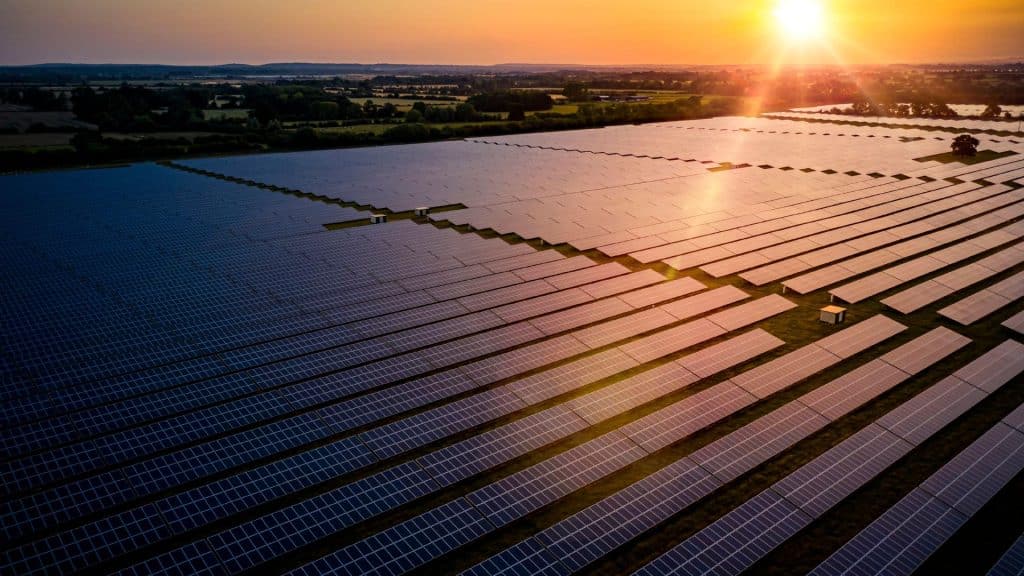
Western Canada’s first cooperatively financed, owned and operated solar farm is also about to become a reality in the Peace Country, thanks to Peace Energy Co-op’s efforts. To find out more, check out their website at peaceenergy.ca.
CLEAN ENERGY CO-OPS IN EUROPE
Germany provides a good case study on how cooperatives can rapidly increase the growth of distributed clean energy. Today, roughly half of Germany’s renewable energy facilities are in the hands of farmers, citizen groups, and almost one thousand cooperatives.
Like the clean energy they produce, the profits from these co-ops are distributed to local owners and members and their communities, not sucked out of the country by foreign investors. There are now 1.4 million solar power installations and 29,000 on-shore wind turbines owned locally in Germany, creating over 400,000 jobs.
CO-OPS DISTRIBUTE WEALTH
Co-ops help to decentralize not only energy production (increasing climate change resilience) but also political power and, of course, wealth. Finding a method of distributing wealth instead of collecting it in the hands of the top one percent is proving to be one of the most critical and difficult problems of our troubled times. Co-ops of all kinds are helping.
Stay connected with local news
Make us your
home page
Letters to the Editor
Letters to the Editor should be exclusive to Energeticcity.ca. Include your name, address and daytime phone number. Keep letters to 500 words or fewer. Letters may be edited for length and clarity. To submit a letter by e-mail to contact@energeticcity.ca.
Related Articles

(Opinion) ‘Replace the Taylor Bridge, B.C. can’t afford to wait’
Chris Gardner, president and CEO of ICBA, is urging the B.C. provincial government to replace the Taylor Bridge. ICBA represents more than 4,500 member companies across British Columbia and Alberta.

(Opinion) Bear Flat Dispatch: Canada geese on ice
Regular contributor Ken Boon writes on the new Site C dam and how it has impacted the gaggle of geese who move onto his property each year.

Letter to the editor: I say no beds for seniors, no fancy pool
David Blaney writes about the project to replace the North Peace Leisure Pool and the recent news that the long-term care facility in Fort St. John has been delayed by the provincial government.