
Updates needed on Charlie Lake’s sewer system
Updates and repairs are needed on Charlie Lake’s sewer system, according to a presentation from McElhanney to the Electoral Area Directors Committee last month.
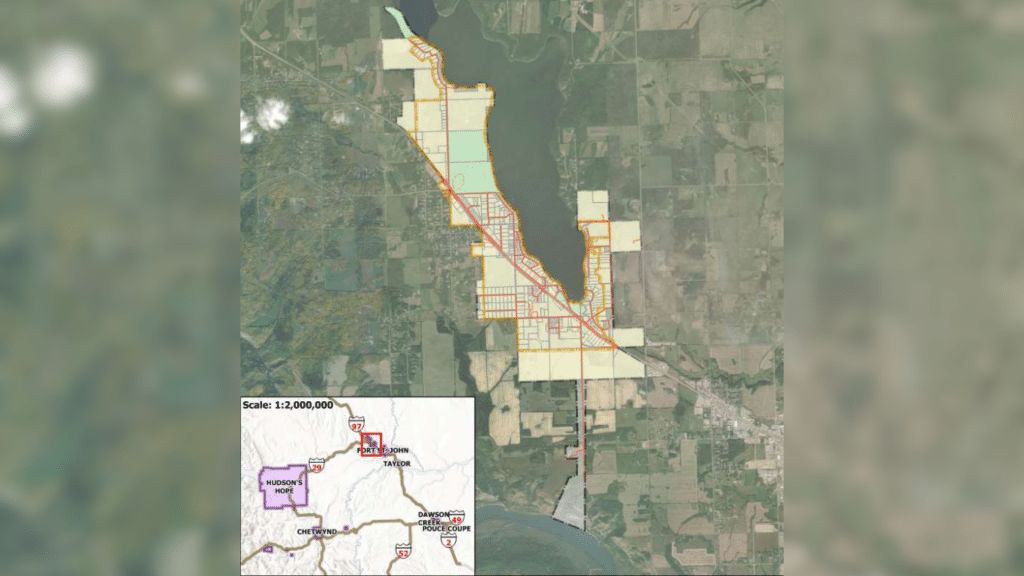
CHARLIE LAKE, B.C. — Updates and repairs are needed on Charlie Lake’s sewer system, according to a presentation from McElhanney to the Electoral Area Directors Committee last month.
McElhanney was hired by the Peace River Regional District to evaluate the existing sewer system, collection system, lift station and wastewater treatment plant and draft a capital improvement plan, including recommendations.
According to the company, the recommendations made are expected to take place over the next several years at a cost of over $28 million.
Abbi Kau with McElhanney said they also created a new capacity tracking tool to help evaluate the sewer system, as the previous program was based on an Excel spreadsheet, and it was not an automatic process.
“We ended up creating a new capacity tool based on PCSWMM,” Kau said.
“We took the available [Peace River Regional District] GIS date, we imported it, we generated this model, and it looks at the system based on pressure.”
Kau said Charlie Lake’s sewers operate on a STEP system, where each residence or industrial lot has a septic tank and an effluent pump.
Latest Stories
Solid wastes are stored in the septic tank, and the effluent flows into the main collection system by pipes to the lift station, then to wet wells before continuing onto the sewage treatment plant and the aerated lagoons. It is then eventually discharged into the Peace River.
Kau said the system has expanded over the years as new homes were added to the area.
Over the years since the system’s construction in the 1990s, homeowners have complained about the smell coming from the system, resulting in many of the blow-off valves in the system being closed.
“Gases in the pipes are stuck there now. They can’t get out. So that may have contributed to some of the seized gate valves we’re now seeing,” Kau said.
She said the operators are nervous about operating a lot of the valves in the system because they don’t know if they’re seized.
“One of our recommendations is to have an emergency response plan in place, go through and operate them, see what’s broken, see what’s working,” Kau said.
Kau added that most of the flow monitoring stations are not currently operable, mainly due to communication errors.
“Evaluating the communications and making sure that those flow monitoring stations can transmit data is important,” Kau said.
She said this helps operators identify leaks because if there is a leak in the system and they can only check the flow at the lift station, the leak could be anywhere. Since 2015, there have been three noted leaks that have been repaired.
The flow monitoring stations also help with model calibration.
Kau explained that the recommendations for the lift station are to clean up any infrastructure not being used and ensure all of the current equipment is working.
Capacity is not a concern at this time, according to Kau, because there is enough room with the two existing wet wells.
However, corrosion is an issue which may have arisen from the closed valves in the system, causing gas to sit in the pipes until it gets to the lift station, which increases the H2S concentrations.
Other concerns with the lift station include the second backup pump and a flow monitor that is not connected to the SCADA system, used for data collection.
“It has its own separate system. You have to go online and look at what those flow rates are,” Kau said.
In 2024, Kau said McElhanney made recommendations to investigate the possible issues, including connecting the flow monitor to SCADA and ensuring the emergency backup system is operational.
Karen Sutherland, also with McElhanney, said additional sampling in each step of the sewage treatment plant is planned mainly in 2024, and other upgrades include a backup power supply, desludging plant components and covering the complete mix tanks.
The full PowerPoint McElhanney presented can be found below:
Stay connected with local news
Make us your
home page
Authors

Related Articles
Homicide investigation launched over death following ‘altercation’ at Charlie Lake boat ramp
The Fort St. John RCMP were called to the Charlie Lake boat ramp at around 11:10 p.m. on March 13th to reports of several people in an “altercation.” One person has died after the incident and a homicide investigation has been launched.
First Nation to host wellness, trauma workshop with help from former NHL star
Former National Hockey League star Theoren Fleury will join a free wellness, trauma and grief workshop to take place at the school on the Prophet River First Nation reserve from March 17th to 19th.
B.C. Conservatives leader candidate talks energy and healthcare in Fort St. John visit
Iain Black is a former MLA and CEO running for the Conservative Party of B.C. leadership position, who visited Fort St. John in March 2026.