
North Peace Savings is uniquely placed to provide the perfect financial services to our members to help them achieve their dreams and realize their ambitions.
Sponsored Sponsored content What Percentage of My Income Should My Mortgage Be?
Here are a few considerations to help you determine what percentage of your income should your mortgage be.
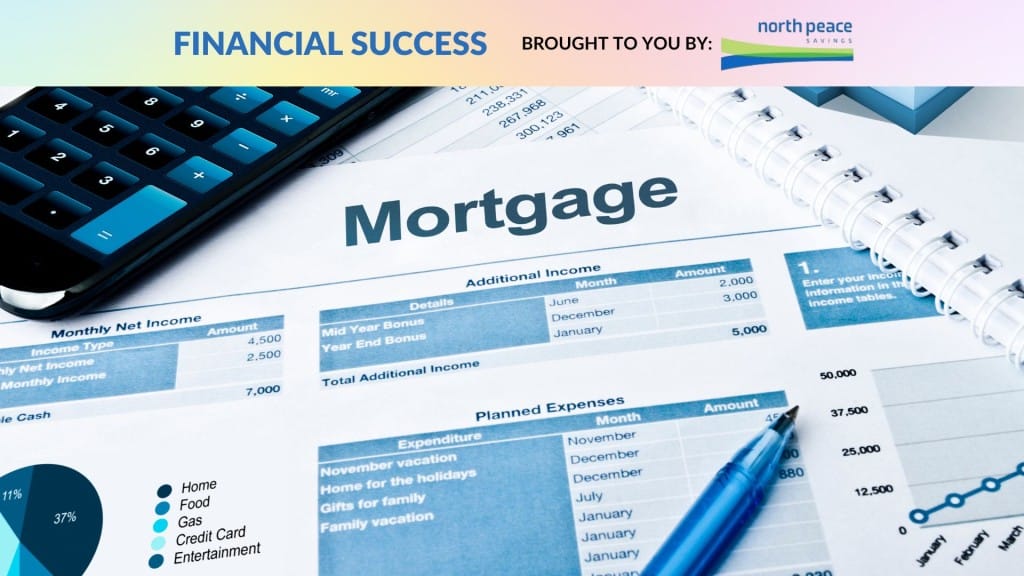
If you’re looking to purchase your first home or thinking about selling your current home to make an offer on something new and exciting, you may be wondering how much of your budget should go towards a monthly mortgage payment. The answer is both simple and complex — generally speaking, no more than a third of your net income should go to housing costs, but your housing costs involve a lot more than just your mortgage payment. And some people have unique financial situations that change that ratio.
Personalized guidance from an expert advisor is always best but, in the meantime, here are a few considerations to help you find the right balance for your family.
General Guidelines on Mortgages, Housing Costs and Your Budget
Looking for something to do?
Check out our new Events Calendar!
Every person or family’s financial situation is unique and nuanced, so as we mentioned before, personalized advice is key to achieving your goals. Even so, there are some general rules to guide you as you pursue your goal of homeownership or consider a subsequent home purchase.
Ideally, no more than 33% of your net monthly income should go to housing costs. However, your housing costs don’t end with your rent or mortgage payment. Look at the big picture: your house, the mortgage and everything associated with home ownership. For example, it’s important to factor in mortgage insurance, home insurance and property taxes (these bills may be paid monthly or on another schedule). You should also consider home maintenance and utilities as well as unexpected property-related costs, as these expenses will impact your bottom line. And, if you live in a condo, be sure to factor in monthly condo fees. A $1200 mortgage plus a $500 condo fee is a $1700 expense each month, and that needs to be accounted for.
Homeownership is a wonderful feeling, and you don’t want it to create stress. The idea is to get the best possible home within your means in order to avoid feeling ‘house poor’ or running into consumer debt. When you’re aware of your limits and plan within them, you’ll feel more confident in your choices and be able to enjoy more of your discretionary income.
Why Personalized Advice Matters
Latest Stories
While the one-third rule is a fairly good guideline for the average Canadian, it’s not right for everyone. If you have specific financial goals — for example, saving for a trip or a vacation home, or planning an early retirement — your budget should reflect this. Similarly, if you’re carrying debt, you may need to adjust your monthly budget to include significant interest and/or principal repayment costs. It also matters whether or not you have children or other dependent family members, how secure your household income is and what sort of benefits you have at work. A financial advisor can help you identify opportunities and challenges while determining how much mortgage you can truly afford.
At North Peace Savings, we pride ourselves on providing the best advice to our members and would be happy to help you on your path to home ownership. Contact one of our Account Managers at 1-877-787-0361
Stay connected with local news
Make us your
home page
North Peace Savings is uniquely placed to provide the perfect financial services to our members to help them achieve their dreams and realize their ambitions.
Personal banking is a business relationship we take personally. We take the time to get to know our members, their families and their plans for the future – so we can help make them happen.
We are committed to our members’ banking needs, and work harder and closer with our clients to find the right solutions to the challenges they face. As a local financial institution we understand them well. This has led to breakthrough products and services that meet the needs of our members, from simple day-to-day banking to complex business transactions.
Authors

Related Articles

Sponsored Sponsored content Make It Untouchable
Find out how you can make your money untouchable to save in the long term by partnering with your investment specialist.

Sponsored Sponsored content Market Volatility, Dollar Cost Averaging and Your Savings
If long-term financial success is your goal, dollar cost averaging is a simple and effective way to achieve it.

Sponsored Sponsored content What is a Mortgage Rate Hold – And Do I Need One?
Looking into a mortgage? Learn what a mortgage rate hold is and if you need one from the experts at North Peace Savings