Environmental groups wanted to see clear decarbonization commitment in pipeline plan
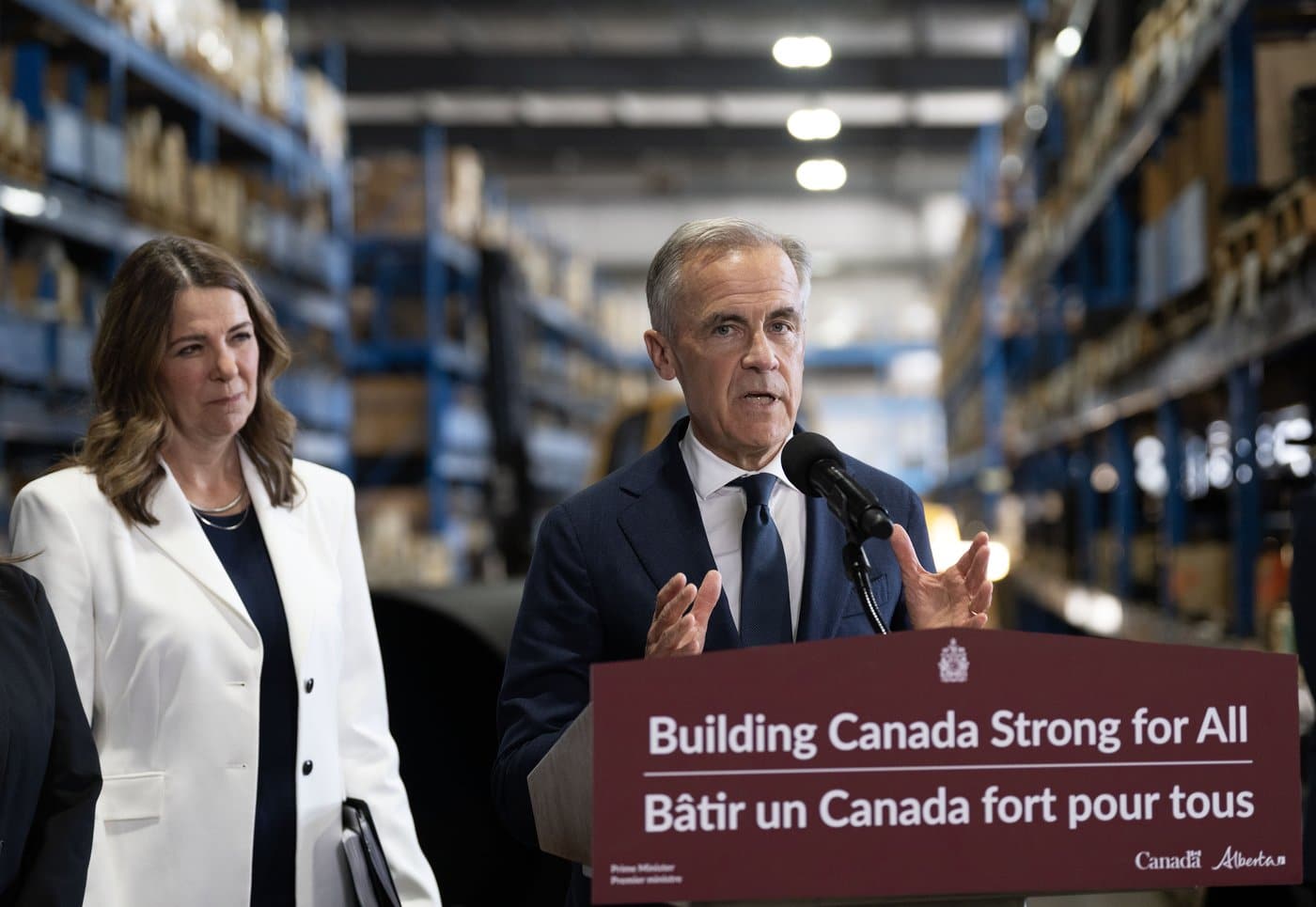
OTTAWA — Environmental groups say they wanted to see a more concrete commitment to decarbonization in the proposal put forward for a pipeline to the B.C. coast backed by the Alberta and federal governments.
Representatives from both the Pembina Institute and Clean Prosperity said Friday the proposal should have included a solid commitment to finalizing the Pathways carbon capture project.
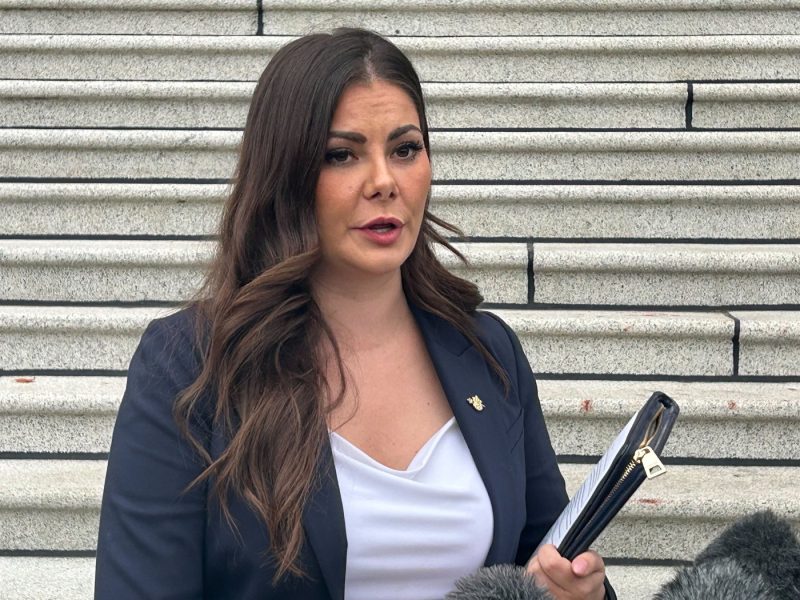
“I think it’s time to completely discount the notion that the Pathways project is an actual real project that’s going to contribute to emission reductions,” Chris Severson-Baker, the Pembina Institute’s executive director, said in an interview from Calgary.
“I actually think that the prime minister putting as much stock in it without putting any conditions on proponents to actually do it will finally expose it for what it is.”
The deal signed between Prime Minister Mark Carney and Alberta Premier Danielle Smith last year made a pipeline conditional on advancing carbon capture and storage.
The two leaders announced Thursday that they are close to finalizing an agreement with the Oil Sands Alliance on the construction of the Pathways project.
A media release issued by the federal government Thursday said the project is expected to cut emissions by 16 million tonnes annually once it’s fully operational.
Severson-Baker said that in order for a second pipeline to make sense along the existing Trans Mountain route, oil companies will have to dramatically increase production.
The cost of the new pipeline is estimated at between $35.2 billion and $43.7 billion. The Alberta government is partnering with the federally owned Trans Mountain Corp and Calgary-based Pembina Pipeline has an initial 10 per cent stake in the project.
“The amount of risk that’s being taken on by taxpayers is enormous. It’s really telling that no private proponent is interested after all the effort that the premier and the prime minister have put in to remove every single obstacle that there is,” Severson-Baker said.
“I think Canadians are also going to be wondering what is the plan to deal with greenhouse gases. That concern is still there, the imperative to address climate change is still there, and Canada has no plan to achieve it.”
Michael Bernstein, Clean Prosperity CEO, said Thursday’s pipeline announcement offered “positive but modest climate action ambition.”
“I think that if the two parties are going to adapt the agreement to respond to circumstances as they did, to take on ownership of the pipeline … then I think there should be scope also to look at how to … strengthen the climate aspect of the deal too,” Bernstein said.
Both clean energy groups said they are encouraged by the agreement Carney announced Thursday with B.C. Premier David Eby to, among other things, expand clean electricity in the province.
“I think the announcement with B.C. has some really big potential in it in terms of having B.C. and the federal government to lead a conversation nationally about how to make carbon markets really work effectively,” Bernstein said.
Eby is opposed to the proposed pipeline but has said his government will not fight it in court.
The B.C. government under Premier John Horgan unsuccessfully challenged the Trans Mountain pipeline expansion in court when Eby was attorney general.
Duane Bratt, a political-science professor at Mount Royal University in Calgary, said that he sees the two Thursday announcements as Carney’s attempt to get both Eby and Smith on board for a nation-building project.
The agreements included Carney pledging to maintain the ban on oil tankers off the northern coast of British Columbia, a ban which has been roundly criticized by Alberta and federal Conservative Leader Pierre Poilievre, but which Eby and Coastal First Nations in B.C. had said must be maintained.
The B.C. agreement also includes funding for mining, forestry and other B.C. infrastructure.
“David Eby had been more receptive to a southern route than he ever had been to a northern route and then the extra money for tunnels and other infrastructure projects obviously didn’t hurt,” Bratt said.
Albertans are gearing up to vote this October on whether to hold a future referendum on separation from Canada. Bratt said the pipeline announcement won’t sway hardcore separatists but could persuade those with softer grievances against the Justin Trudeau era.
Bratt said the public-private sponsorship model reflects the difficulties involved in getting major cross-jurisdictional projects built in Canada.
“Name me a company that would want to put $40 billion out there, right? Given what we have seen with Northern Gateway, Keystone, Energy East, Kinder Morgan, with Trans Mountain,” he said.
Bernstein said while he sees the potential benefits of having another West Coast pipeline, he would have preferred to see the private sector take a greater stake in the project.
He said if the global market wants more oil, Canada should use that as a way to support broader decarbonization efforts.
“When it comes to carbon pollution, it’s also true that that production is likely to have occurred elsewhere if it’s demanded by what is the global market. So we’d rather see those benefits come to Canada, and in so doing, that should create additional space to pursue decarbonization at the same time,” Bernstein said.
This report by The Canadian Press was first published July 3, 2026.
— With files from Chuck Chiang in Vancouver and Jack Farrell in Edmonton
David Baxter, The Canadian Press
Stay connected with local news
Make us your
home page
Authors