
West Kelowna’s ‘deep understanding’ of fire gets credit in B.C.’s first test of year
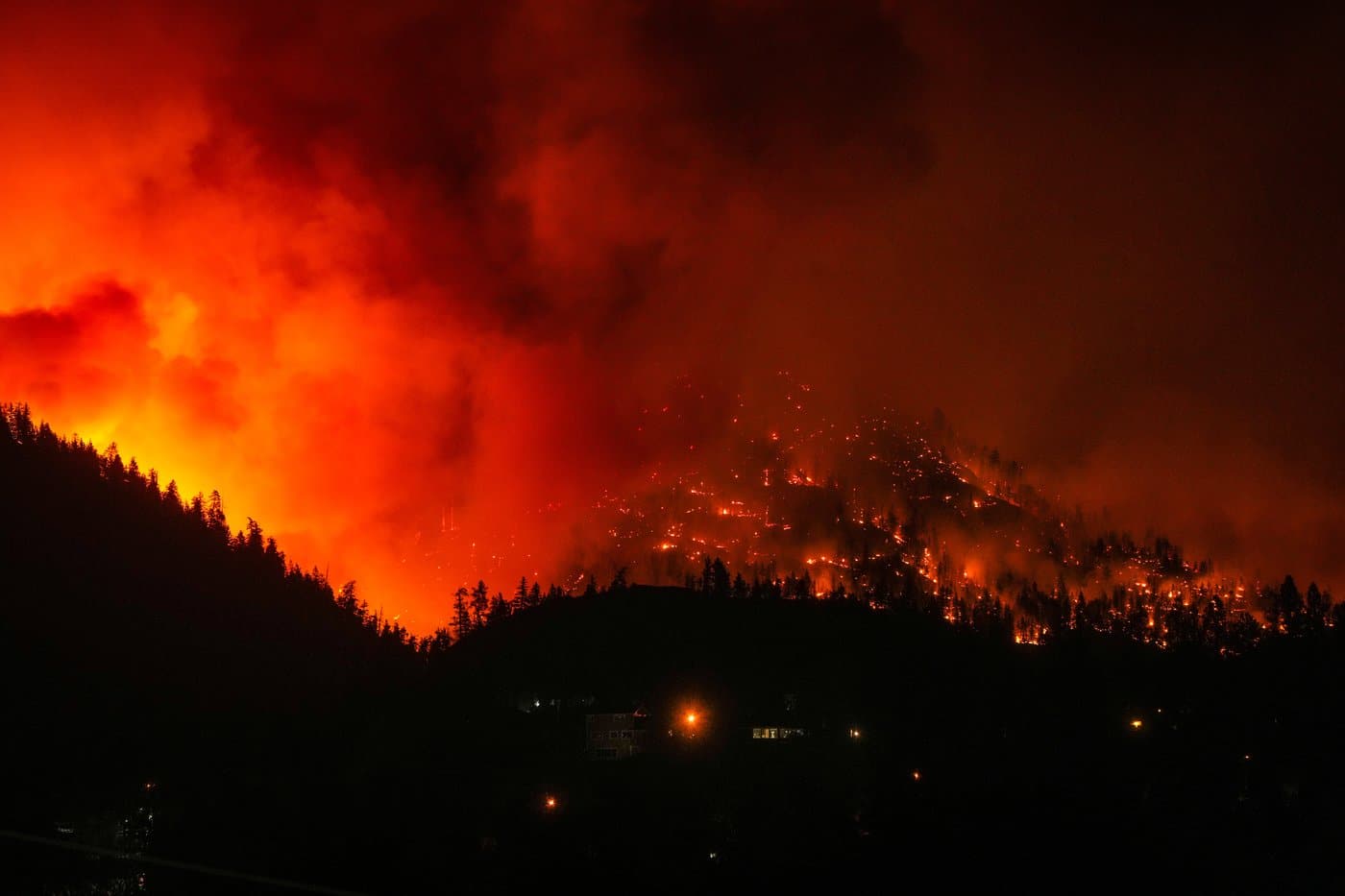
KAMLOOPS — West Kelowna fire chief Jason Broland says that for better or worse, residents and emergency responders of the community in British Columbia’s Okanagan region now have a “deep understanding” of wildfire.
Those instincts were put to the test on Wednesday when an out-of-control blaze forced the evacuation of about 350 properties, and gave firefighters their first serious test of the season in B.C.
“It’s tough to think, but the majority of residents in our region have either been evacuated or know someone who has,” Broland said in an interview Wednesday.
He cited the devastating 2023 McDougall Creek wildfire, which began about 10 kilometres north of the city, forced the evacuation of thousands and scorched nearly 140 square kilometres of land.
“Every time it happens, unfortunately, we get a little bit better,” he said.
He said the so-called Kalamoir Park wildfire began on Tuesday in a regional park within the city’s jurisdiction amid hot and windy weather.
“However the scope of the fire and what we were faced with quickly overwhelmed our fire department’s ability and we very early called for assistance,” he said in an interview Wednesday, noting that help came from the City of Kelowna and the BC Wildfire Service groundcrews, aircraft and helicopters.
“We do have a great plan for this in our region and in the province that allows this stuff to happen on very short notice.”
The Kalamoir Park wildfire was downgraded to “being held” on Tuesday afternoon and the Central Okanagan regional emergency management centre downgraded the evacuation order a few hours later, allowing people to return home.
The blaze was further downgraded to “under control” as of Wednesday and was listed as 9.4 hectares in size. The emergency operations centre for the Central Okanagan said an evacuation alert would remain in place overnight for 742 households, meaning residents should be ready to leave at short notice.
“We had a lot of success in suppressing the fire and the wind dying down was a big factor in doing so,” Broland said Wednesday. “We’re very happy that everyone was able to go home to a home that was still standing.”
He said the only structure the fire claimed was a “small pergola with a picnic table.”
Broland also credited the smooth response and evacuation to proactive mitigation work done within the park and to residents’ FireSmart planning.
Crews had a quiet night on the fire, which stayed within its perimeter, Broland said.
“They’re working within the existing perimeter to deal with hot spots, smouldering stumps and areas of smoke,” he said of the crews.
“They’ve worked all day. I understand they’re making good progress and they’re feeling confident, so we’ll continue that work today and then re-evaluate at the end of the day to determine if that needs to continue for another day or not.”
Broland said the cause of the fire is still under investigation, though officials believe it was human-caused.
The Regional District of Okanagan-Similkameen has meanwhile issued an evacuation alert for properties in a community west of Princeton, B.C., due to an out of control wildfire.
The BC Wildfire Service said the so-called Grasshopper Mountain fire was about 57 hectares in size and is believed to be human caused.
Two other wildfires had been listed on the BC Wildfire Service website as burning out of control on Wednesday — a designation that means the blaze is spreading or is anticipated to spread — but both were later downgraded.
A blaze on Vancouver Island near Port Alberni is now listed as “under control” while the third fire that was burning along Highway 97 in the Cariboo region, north of the Village of Clinton, was classified as “out” by mid-afternoon Wednesday.
BC Wildfire Service Information Officer Cassidy Martin said in an interview that there were 46 firefighting personnel working on the Grasshopper Mountain blaze on Wednesday, as well as three helicopters and air tankers supporting.
She said crews had worked overnight and were seeing an elevated, visible, open flame surface fire with some pockets of more intense flames, with moderate growth.
“So (it’s) still not a huge fire behaviour situation, but with the winds in the area yesterday, it did get really smoky,” she said. “That can be concerning, but it was mainly the wind picking up the smoke.”
When asked about lessons learned as the season ramps up, Martin said the service is encouraging the public to download the BC Wildfire Service app, where they can report wildfires and include photos of the blaze.
“When our operations team and our crews are able to kind of see those photos beforehand, it’s really nice to see and help them make their operational decisions,” she says.
“I think it’s a great resource that the public can use and it really, really helps us.”
The wildfire service was reporting about 14 active fires burning across the province as of Wednesday.
Neal McLoughlin, superintendent for predictive services, told a Tuesday news conference that current drought patterns are worse compared with those recorded at the same time of year in the historic fire seasons of 2017, 2018 and 2021.
This report by The Canadian Press was first published June 17, 2026.
Brieanna Charlebois, The Canadian Press
Stay connected with local news
Make us your
home page
Authors

Related Articles



Man receives life sentence for 2024 murders of wife and son
Orlan Dennis was found guilty of second-degree murder after an attempt to retract his guilty plea was denied.